Barcelona was shaken by the death of Antoni Gaudí on 10 June 1926, three days after a tram accident on Gran Via de les Corts Catalanes. The architect was injured on 7 June at 18:05 while crossing the junction with Carrer de Bailèn, and died at the Hospital de la Santa Creu.
Gaudí, aged 73, misjudged the speed of an approaching tram and was struck. A Civil Guard officer and two passers-by helped him first, but they did not recognise him. His plain clothes and lack of identification meant several taxi drivers refused to take him, and he was only taken to the Casa de Socors de Sant Pere after four attempts.
At the Casa de Socors, staff recorded him as unknown, despite his attempts to say his name. Doctors then ordered his transfer to Hospital Clínic, but no beds were available, so he was sent on to the Hospital de la Santa Creu, the old hospital that traditionally served Barcelona's poor.
Meanwhile, concern grew at the community around the Sagrada Família, where Gaudí kept a fixed daily routine and lived in his workshop. He had left work around 18:00, telling an operative, "Tomorrow we will do very beautiful things." By 22:45, he had not returned. The porter alerted Father Gil Parés, who went to the Casa de Socors and then, with Domènec Sugranyes, checked Hospital Clínic before finding Gaudí in bed 10 of the Sant Tomàs ward at Hospital de la Santa Creu.
Gaudí's condition was critical. He suffered a cerebral concussion, broken ribs, leg contusions and several injuries to the left side of his face. Doctors considered moving him to a private clinic, but the risk was too high. He remained in room 19 in the Immaculada ward, received the sacraments, and then fell into a coma. News of the accident spread quickly, and La Veu de Catalunya reported it in its evening edition on 8 June.
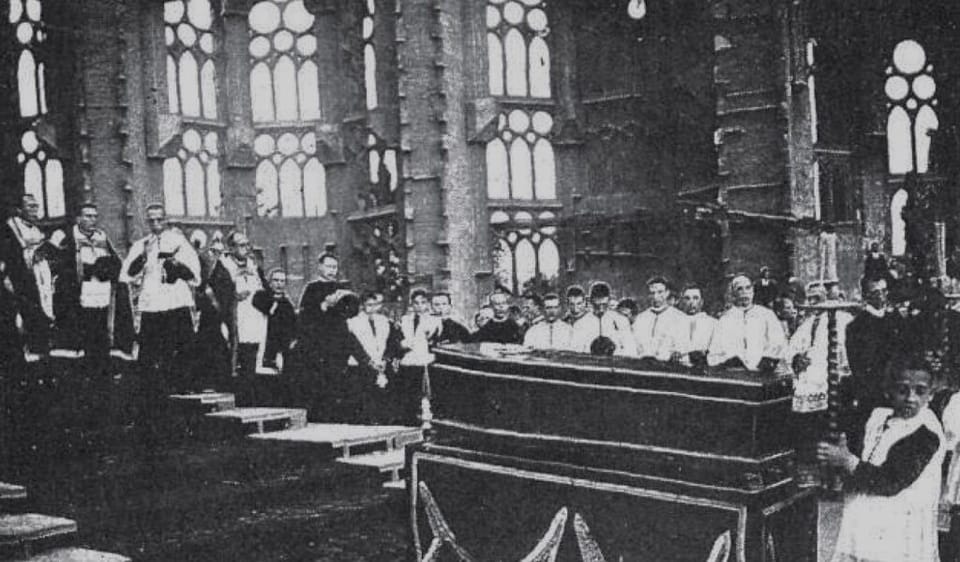
He died at 16:00 on 10 June, surrounded by priests and architects. Gaudí had asked for a simple burial without official honours, but Barcelona still turned out in large numbers. His body was dressed in the habit of the Servite order, with a crucifix and rosary, and laid in rest at the Gothic hospital building. Architects and students from the School of Architecture kept watch overnight, while a long line of people filed past the chapel of rest the next morning.
His funeral on 12 June became one of Barcelona's major public farewells. The procession moved from the hospital to the cathedral for a requiem mass, then on to the Sagrada Família, where the Orfeó Català sang under the direction of Lluís Millet. At 20:45, Antoni Gaudí i Cornet was laid to rest in the Chapel of Mare de Déu del Carme in the crypt of the basilica. For more local coverage, see our sport and community pages.