

The planned liberalisation of Badia del Vallès public housing has been abruptly halted. New regional legislation has frozen the transition of over 1,200 homes to the free market. This unique municipality, built entirely as social housing, was scheduled to complete this process in February 2026. However, the new Catalan law protecting “stressed market areas” has stopped it. Consequently, these homes will retain protected status. We previously covered the growing housing crisis in Catalonia’s housing crisis is set to worsen in 2026.
Badia del Vallès Public Housing: A Unique History
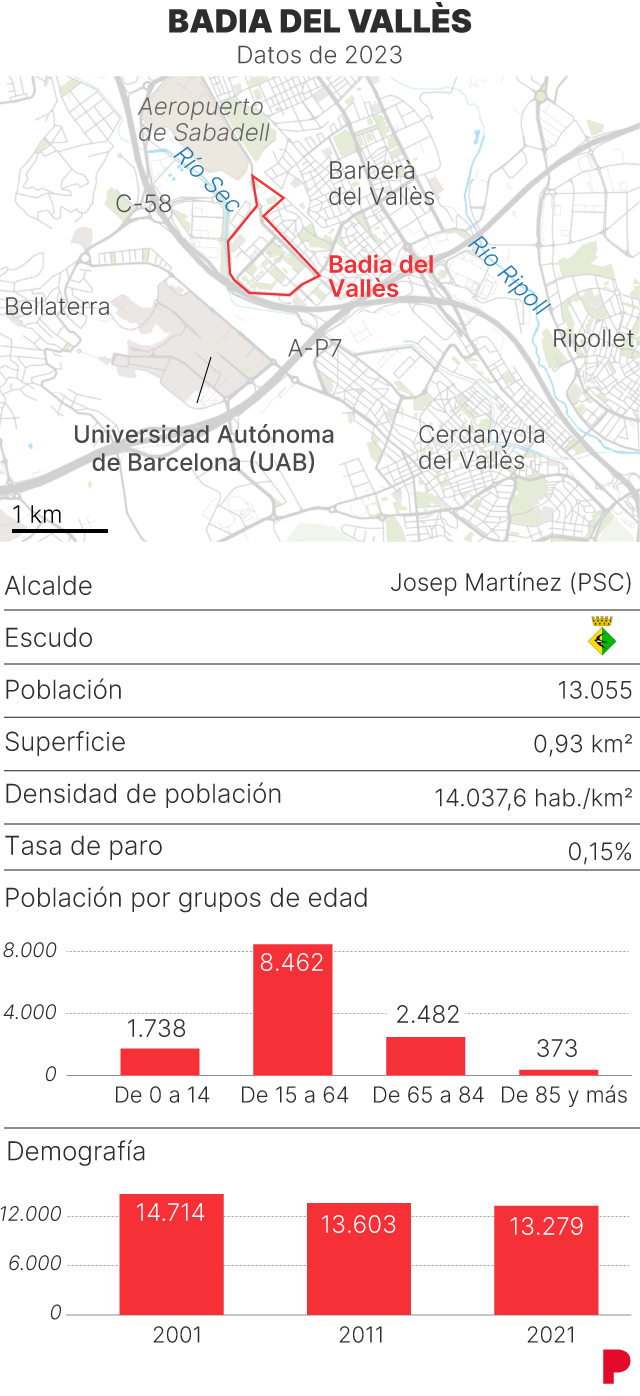
Badia del Vallès holds a distinct place in Spanish urban history. This small municipality of 13,000 residents in the Barcelona metropolitan area was built half a century ago. Significantly, it was the only town composed 100% of Officially Protected Housing (VPO). This designation provided affordable living for working-class families. Therefore, its planned transformation is a major shift. For more context, see Barcelona City Council’s recent €49 million investment in public housing.
Your browser does not support the video tag.
Home » Badia del Vallès Public Housing: Liberalisation Halted by New Catalan Law
The town began a significant transformation in 2023. At that time, 4,156 properties were released from the official protection regime. This move allowed most apartments to operate in the free market. The final phase targeted the remaining 1,216 homes for February 2026. However, new legislation has now blocked this. Meanwhile, other innovative housing solutions are emerging, like the innovative cohousing project for seniors in Badalona.
Impact of the New Legislation on Public Housing
The final stage of liberalisation has been blocked by the new Law on Housing Measures. The Catalan Parliament approved this in December 2025. Importantly, it mandates indefinite official protection for properties in “stressed markets”. These are zones where prices are excessively high relative to local income.
Because Badia del Vallès falls under this classification, the 1,216 homes will retain protected status. In addition, another 104 protected homes managed by the Housing Agency of Catalonia also remain under the regime. This includes 32 Category A homes allocated for young workers.
Demographic Challenges and Future Plans
Housing defines the identity of Badia. Initially, 66% of apartments were for public sector employees. The remainder housed workers migrating from Andalusia, Castilla-La Mancha, and Extremadura. Today, the town faces an ageing population. Many elderly women live alone in large apartments. Meanwhile, younger generations leave due to a lack of available housing.
Mayor Josep Martínez (PSC) has outlined a vision to reinvent the municipality. The council aims to transform Badia into a university district. It is linked to the nearby Autonomous University of Barcelona (UAB), just a 15-minute walk away. The goal is to attract a younger demographic to reverse population decline.
“Recover the families that left and give a welcome to the children of those who arrived decades ago,” Martínez stated. He emphasised the need to balance attracting youth with caring for the elderly residents who built the community.
New Student Residence Underway
In line with this new direction, construction began this January on Badia’s first university residence. This private project, on the border with Sabadell, will provide 319 places. It is expected to be operational for the 2028-2029 academic year.
The residence is part of a broader urban expansion plan covering 11 hectares in the west of the city. This will include both residential and commercial spaces. Mayor Martínez described the project as a “turning point in the sociological evolution of the municipality.” It marks a shift from a traditional dormitory town to a more dynamic living environment.
Apply to join our community of Entrepreneurs, Senior Executives and Founders at Bizcelona .
