

Barcelona air pollution has fallen to historic lows for the third consecutive year. Consequently, 800 fewer people died from causes linked to poor air quality in 2025 compared to pre-pandemic levels, according to new city figures. This improvement brings Barcelona within touching distance of strict European Union targets set for 2030.
The latest data indicates a significant drop in nitrogen dioxide levels across the entire monitoring network. City Hall reports that average pollution levels decreased by between 4% and 12% at every station in 2025 compared to the previous year. Therefore, this suggests the city is no longer just managing pollution spikes but is seeing a structural shift in air quality.
Your browser does not support the video tag.
Home » Barcelona Air Pollution Hits Historic Low as Deaths Drop in 2025
How Much Has Barcelona Air Pollution Improved?
The most striking improvements appeared in areas that have historically struggled with heavy traffic fumes. For example, the Eixample district, typically the city’s most polluted area, saw nitrogen dioxide levels fall from 33 micrograms per cubic metre (µg/m³) in 2024 to 29 µg/m³ in 2025.
Other busy areas showed similar progress. The station at Gràcia-Sant Gervasi recorded an annual average of 25 µg/m³, down from 27 the previous year. This figure is now 15 points below the current threshold. Meanwhile, data from the Public Health Agency of Barcelona monitoring network confirms the downward trend is consistent across neighbourhoods including Poblenou, Sants, and Vall d’Hebron.
Deputy Mayor Laia Bonet emphasised that the figures are not accidental. “All stations show the same downward trend,” she said. “These are good data that show we are on the right track and urge us to continue working in the same way.” This focus on air quality fits within the wider scope of Barcelona’s housing and urban priorities under the current administration.
What Is the Public Health Impact of Reduced Barcelona Air Pollution?
The reduction in toxic particles translates directly into lives saved. Health Councilor Marta Villanueva revealed that deaths attributable to pollution have dropped sharply. Between 2018 and 2019, the city attributed 1,900 annual deaths to poor air quality. In 2025, that figure fell to 1,100.
“Breathing cleaner air is a health issue,” Villanueva stated. She noted that despite the progress, the city government still views the remaining health impact as a priority concern. The ultimate goal is to reach the EU’s 2030 target of 20 µg/m³, a standard the city is now rapidly approaching.
Why Is Barcelona Air Pollution Falling?
City officials point to the renewal of the vehicle fleet as a primary driver of cleaner air. Older, more polluting cars are gradually disappearing from the streets. This shift is enforced by Barcelona’s Low Emission Zone regulations. Vehicles displaying ‘Eco’ and ‘Zero’ emissions labels now account for 31% of all traffic in Barcelona. This is an increase of three percentage points from last year.
When looking specifically at private passenger cars, the shift is even more pronounced. Now, 38% are classified as low-emission vehicles. Conversely, vehicles with the ‘B’ label—older petrol and diesel models—have dropped from 15% to 12% of the total fleet. This trend aligns with a record use of public transport, which also reduces the number of cars in circulation.
Where Is the New Barcelona Air Pollution Monitoring Station?
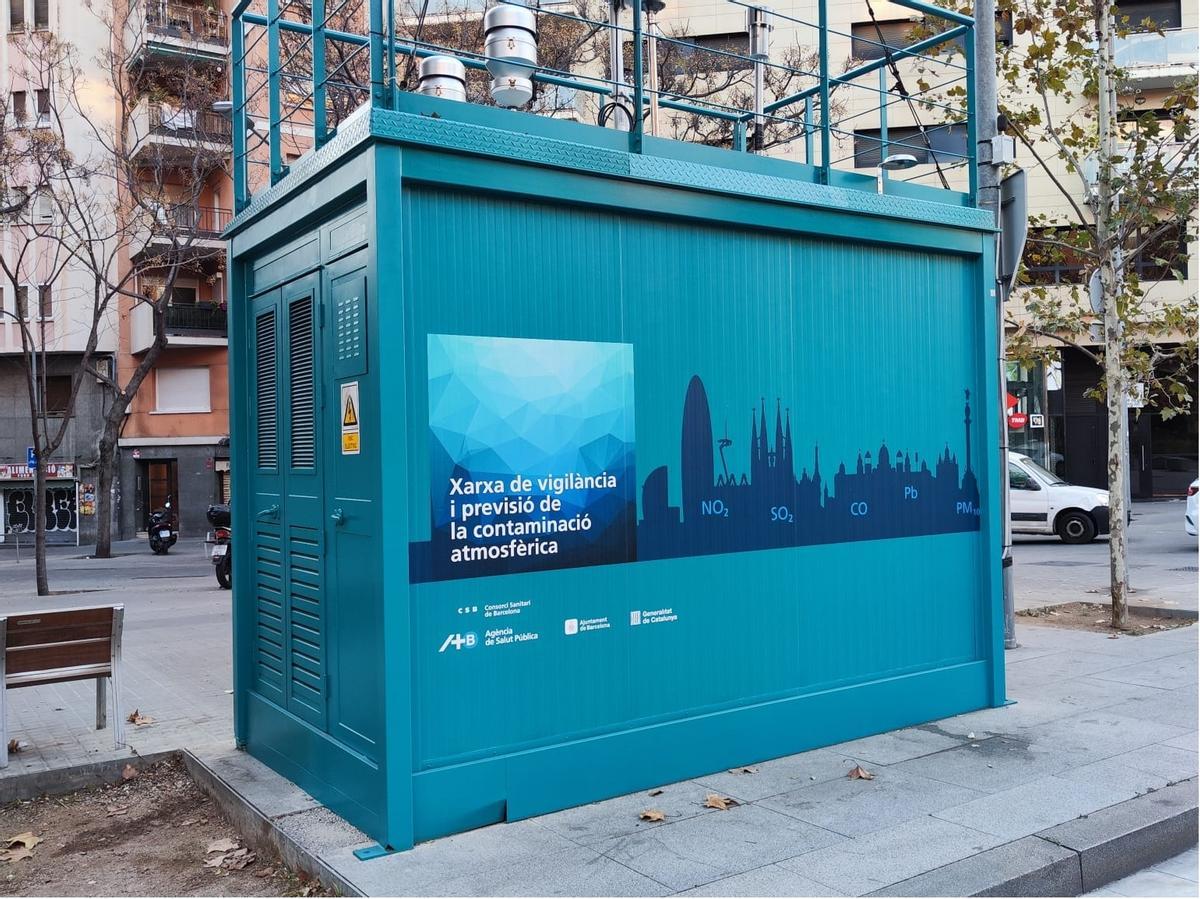
To ensure data remains accurate as traffic patterns change, the city has added a new monitoring station on Avinguda Meridiana. Located at number 216 in the Navas neighbourhood, this station measures air quality on one of the city’s main arterial roads.
The new equipment tracks pollution levels in an area where traffic flow is heavily influenced by commuter hours and school schedules. Officials expect this station to record levels similar to other high-traffic zones like the Eixample. In addition, it will provide a clearer picture of the challenges that remain in the city’s busiest corridors.
Join Barcelona English Speakers WhatsApp Community .
