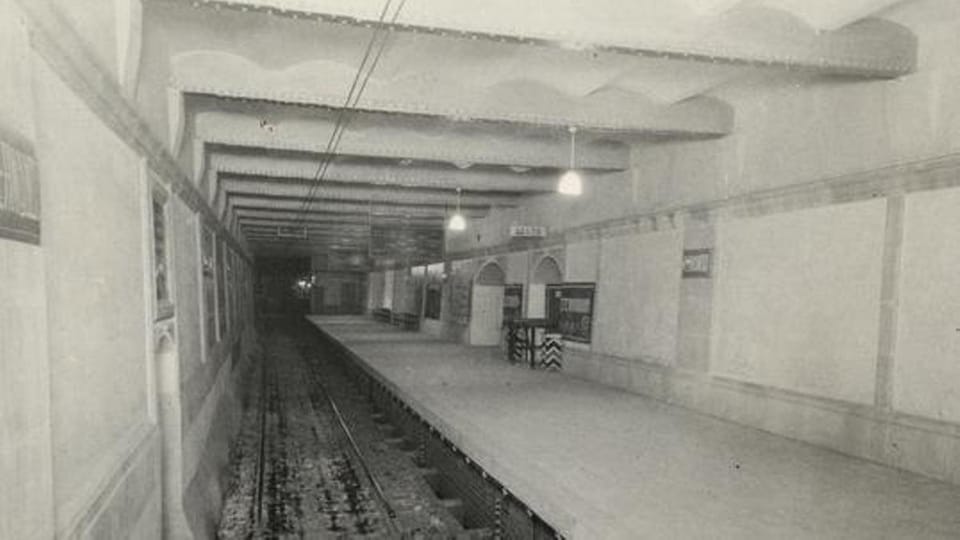
According to the Fundació TMB, Barcelona's Fernando Metro station, a fleeting part of the city's transport network, marks 80 years since its service began this April 2026. The station, which opened on 15 April 1946, operated for only 22 years before its closure in 1968.
Located between the current Ferran street and La Rambla, Fernando station was part of the extension of the Gran Metro de Barcelona's Line I, now known as L3. Its opening was understated, with only a small press notice announcing its service alongside new entrances at Liceu station, just 145 metres away.
The station featured a simple, functional design, including a single track, one vestibule, white walls, and long wooden benches, according to Liceu–Drassanes section of L3. However, its close proximity to Liceu station ultimately led to its demise, as their functions were deemed to overlap significantly.
The decision to close Fernando station came in the 1960s, following the merger of the Gran Metro with the Ferrocarril Transversal and the municipalisation of the service. These changes prompted several network modifications, including the extension of the Liceu, Drassanes section of L3.
Construction for this extension began in June 1965, culminating in the opening of the new Drassanes station on 14 December 1968. Fernando station ceased operations shortly before this inauguration, becoming one of Barcelona's most ephemeral transport hubs.
Residents Protested Closure
According to the Fundació TMB, the closure of Fernando station did not receive universal approval from local residents. Many people in the area regularly used the Fernando stop for their daily commutes.
They sent numerous letters of complaint to both the transport company and the Ajuntament de Barcelona, with some even appearing in the local press at the time. Despite these objections, the station remained permanently out of service.
Barcelona's Evolving Metro Network
The closure of Fernando station highlights the dynamic nature of Barcelona's public transport infrastructure, which continually adapts to urban development and passenger needs. The L3 line, for instance, now serves over 80 million passengers annually, connecting key areas from Zona Universitària to Trinitat Nova.
This evolution ensures efficient movement for the city's 1.6 million residents and millions of tourists. The metro system remains a vital artery for daily life and economic activity in the Catalan capital.
While Fernando station is largely forgotten today, its brief existence offers a glimpse into the historical challenges and strategic decisions that shaped Barcelona's extensive metro network. The city continues to refine its transport offerings, balancing historical preservation with modern demands.
Sign up for our new entrepreneurs community Bizcelona, now accepting our second wave of applicants.
Originally published by El Periódico Barcelona. Read original article.