

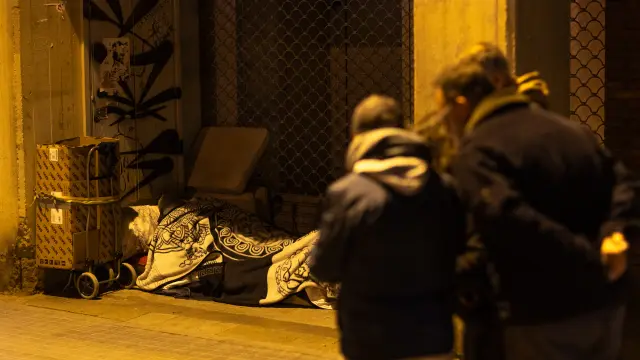
Barcelona homelessness protocols are under intense scrutiny. Officials claim the city maintains the most extensive support network in Catalonia. However, opposition parties argue the current system is failing those most in need. This intense debate regarding social protection erupted during the Commission of Social Rights. It was triggered by the deaths of several homeless people during recent cold spells. These incidents highlight the severe local impact of Catalonia’s worsening housing crisis.
The government of Mayor Jaume Collboni faced sharp criticism regarding its emergency response systems. Deputy Mayor Raquel Gil defended the administration’s record. She stated that Barcelona provides a “different response” compared to neighbouring municipalities. Furthermore, she argued that the city possesses the “largest and most stable” support mechanism in the region. Consequently, she rejected claims of systemic negligence.
Your browser does not support the video tag.
Home » Barcelona Homelessness Protocols: Council Reviews Emergency Shelter Rules After Cold Wave Deaths
Barcelona homelessness protocols: Dispute over emergency response
The controversy centres on whether existing resources are accessible enough for rough sleepers during extreme weather. Gil addressed the specific case of a man who died on the streets in December. She noted that social services had offered him a monitoring plan months prior, which he had declined. This statement came in response to inquiries from the Partido Popular (PP). The party demanded a full explanation for the fatalities and a justification for the current protocols.
Opposition councillors presented grim statistics to challenge the government’s narrative. Antonio Verdera of the PP stated that emergency protocols are simply “not working.” He claimed that nine out of ten people sleeping rough remained on the streets during the latest cold wave. Therefore, he described the system as “insufficient.” He also argued that emergency shelters remain inaccessible to a vast majority of the collective they are designed to serve.
The debate also sparked political friction regarding broader housing policies. The municipal government expressed surprise at the criticism from the PP. It pointed out that the party had led the eviction of 400 people from the B9 site in Badalona the previous month. Gil accused the group led by Daniel Sirera of “dehumanising” homeless individuals. She also stated they failed to manage the Badalona situation in time. This political back-and-forth comes as officials point to Barcelona Council’s recent measures to expand affordable housing as evidence of their commitment. According to a report by 20 Minutos, other opposition parties such as Junts warned that continuing with “the same old” strategies would fail to reverse the situation for the nearly 2,000 people currently sleeping on Barcelona’s streets.
Barcelona homelessness protocols: Overhauling ‘Operation Cold’
Despite the heated exchange, the council moved forward with concrete plans to reform the existing system. All municipal groups, with the exception of Vox, voted in favour of a proposition by Esquerra Republicana (ERC). The motion aims to modify the “Operation Cold” device. The approved motion calls for the incorporation of new mechanisms to protect homeless people during extreme weather events. These include heatwaves and heavy rain, rather than just freezing temperatures.
The new “pioneering protocol” demands several key operational changes to lower barriers to entry for rough sleepers. These measures include:
- Opening smaller, decentralised reception spaces distributed throughout the city.
- Eliminating the limit on the number of days a person can stay during the preventative and alert phases of Operation Cold (December to March).
- Guaranteeing low-demand sleeping spaces that accept people with pets, large volumes of belongings, or active consumption habits.
- Ensuring a gender perspective is applied across all accommodation spaces.
Councilor Titón Laïlla of Junts emphasised that the situation is “increasing.” She urged the Collboni government to adapt its response accordingly. The approved changes aim to ensure that bureaucratic hurdles do not prevent vulnerable individuals from accessing life-saving shelter. This local focus on reform aligns with Mayor Collboni’s European housing initiative, which seeks broader solutions to the continent-wide problem.
Get all of the news delivered to your phone via our WhatsApp Broadcast Channel .
