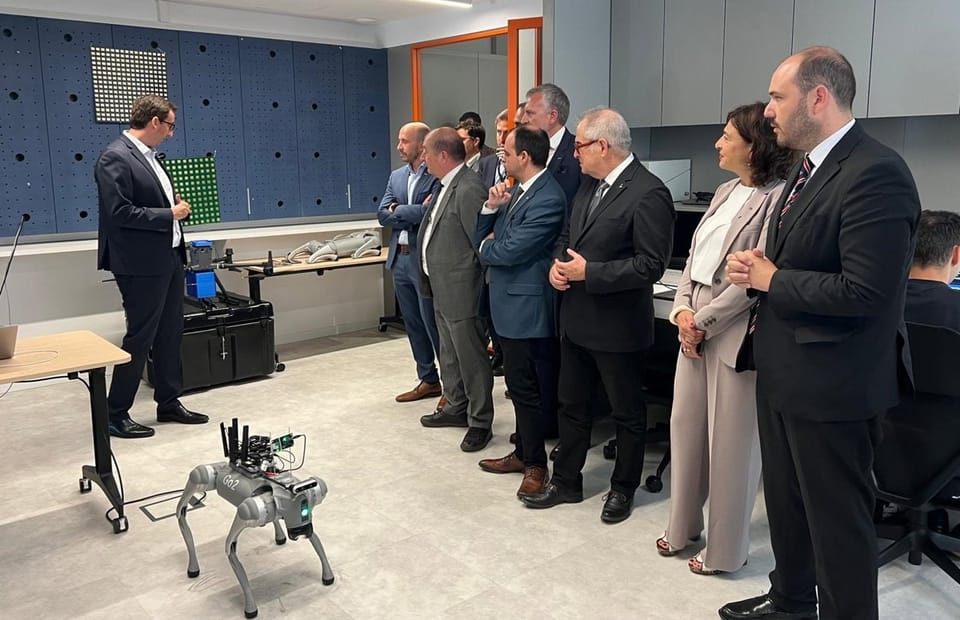
Barcelona’s i2CAT research centre has opened its new €10 million headquarters at Pier01 in Palau de Mar, in the city’s Port of Barcelona area. The move was marked on Wednesday, 27 May, and brings the centre closer to the wider tech and research scene in the city.
The new site covers more than 2,000 square metres and will house 250 workers. It includes 15 high-performance laboratories for work in quantum tools, artificial intelligence, cybersecurity and 6G. Albert Dalmau, the Conseller de la Presidència, said the move was “a step forward as a country” in technology and research.
i2CAT has left its former base at Campus Nord in Zona Universitària. It will keep working from other sites too, including the World Trade Center in Barcelona, Móra la Nova in Tarragona, and the 6GStarLab satellite. The centre also plans to grow its role in European projects by 50%, from more than 30 to nearly 50, and to increase public-private R&D projects from 40 to 80.
The centre has also launched two new research and innovation missions with the Catalan government. One focuses on protecting critical communications infrastructure with the Centre de Telecomunicacions i Tecnologies de la Informació (CTTI). The other is a “digital shield” project for cybersecurity, using artificial intelligence. For readers following Barcelona’s wider tech scene, see our Community coverage and Sport updates for how the city’s public spaces and infrastructure are changing too.
i2CAT has also signed an agreement with the Port of Barcelona to test technologies including drones, digital twins and 5G networks. The aim is to improve port management and support sustainability in the blue economy. José Alberto Carbonell, president of the Port of Barcelona, said the work should make the maritime-port sector “more competitive, resilient and sustainable”.
The centre says its projects already include connected autonomous vehicles, trials at the Port of Barcelona and on the C-32 motorway, and research into how 5G and future 6G networks can cope better during extreme weather. It is also looking at how drones and robots could help emergency teams locate mobile phones and support rescue work.
Jordi Valls, Barcelona City Council’s fourth deputy mayor, said the move helps i2CAT fit more closely into the city’s research ecosystem. Sergi Figuerola, i2CAT’s director, called it “a new era” for the institution, while Miguel Vicente, president of Tech Barcelona, said the new base should help turn knowledge into solutions with real impact.
Originally published by Europa Press Barcelona. Read the original report. For more on the organisations involved, visit i2CAT, Port of Barcelona and Tech Barcelona.