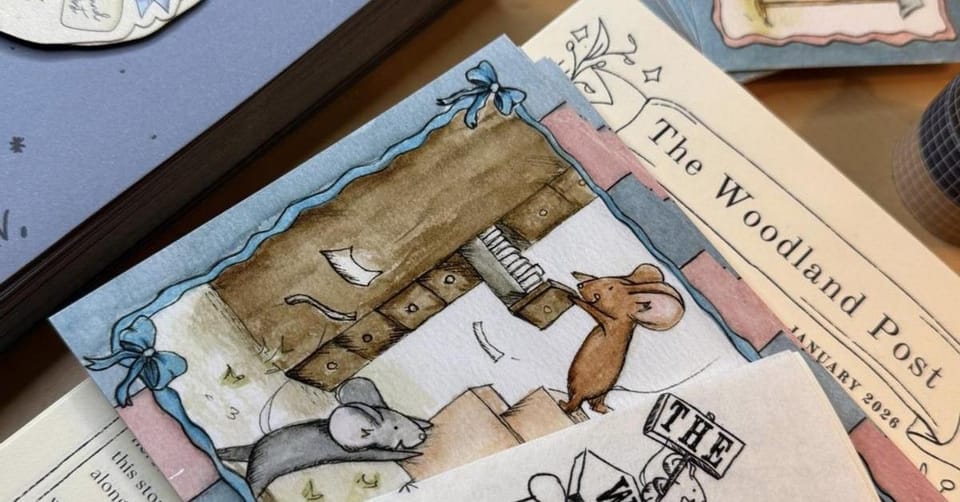
Barcelona residents are increasingly embracing "mail clubs," a growing trend that revives postal correspondence and offers a tangible escape from digital saturation. These subscription services deliver curated letters and artistic items directly to subscribers' homes, fostering community and supporting local artists.
The concept, which originated in the United States, has found a strong following in Catalonia, particularly among Generation Z. Lorena, a young subscriber to two different mail clubs, Bunny Mail Club and La Mamarrracha, expressed her appreciation for the physical delivery. "Receiving a carefully crafted, beautiful letter in your mailbox each month, in a world saturated with information and mediated by screens, feels like a privilege," she stated.
Lorena also highlighted the economic benefit for creators. "I believe it is also a way to support artists, because their work often gets lost in the immensity of content distributed on social media," she reflected. Unlike many digital trends that remain online, mail clubs have successfully transitioned into the offline world, offering a unique physical experience.
Combating Digital Overload and Loneliness
This shift reflects a broader societal need for community and connection. Liliana Arroyo Moliner, director of the Chair for Socially Responsible Digital Innovation (SoReDI) at Esade, explained the psychological appeal of these clubs. "We need community in all areas, and this component is especially important for generations like Gen Z," she noted.
Arroyo Moliner added that Spain faces a significant issue with loneliness. "In Spain, 35% of young people aged 18 to 24 feel lonely; we have a very significant situation of unwanted loneliness," she stated. Initiatives like mail clubs can help create community and encourage a different, more tactile relationship with physical objects. The trend has been active in the US for a couple of years through crowdfunding platforms like Patreon.
Catalan Artists Lead the Way
In Catalonia, communicators like Berta Aroca and illustrators such as Irina Torres Conejero have popularised the movement. Torres Conejero, creator of Bon Profit Club, prepares a surprise package each month for her subscribers. These often relate to seasonal events like Valentine's Day, Christmas, or spring, adding a timely and personal touch.
Irina Torres Conejero detailed her club's contents. "I always include a letter written and signed by me, an A5 cotton paper print, and some detail like a sticker, a postcard, a pattern for journaling, and other surprises," she explained. She started her project recently and already has over forty subscribers, showing quick growth in this niche market.
These letters offer more than just words; they provide an interactive experience. "You not only open and read the letter, but you also decide what to do with the materials I send," Torres Conejero said. Psychologist, illustrator, and creativity lecturer Bea Salas emphasised the tangible aspect of these deliveries. "It can be smelled, framed, and can live in a drawer, on the fridge, on a wall, or on a piece of furniture," Salas stated. "Besides being more subtle and erotic, it is tangible, and we are short of experiences that involve the use of hands, not just eyes and ears."
The Appeal of Slow Communication
Laura García, an artist from León, launched Garlic Yaya Club in June 2024. This monthly mail club combines original recipes, letters, and various artistic objects she designs. "I wanted to create something physical that people could touch, collect, and enjoy beyond the screen," García shared, highlighting the desire for non-digital interaction.
Each edition of Garlic Yaya Club focuses on a theme and an inspiring recipe. "When I discovered the format, I realised it had to be about cooking," García explained. "It was something I hadn't seen before, so I decided Garlic Yaya Club would have its own recipes to convey my passion for home cooking, slow processes, and things made with care." García co-owns Antisouvenir®, a bookstore specialising in independent publications, which complements her artistic venture.
This emphasis on slowness contrasts sharply with the instant gratification offered by digital algorithms. Marta G. Franco's book, Les xarxes són nostres (Our Networks Are Ours), highlights how social media has become a promotional showcase. We scroll without looking and accumulate links we never open, contributing to digital fatigue.
A Human Response to Digital Empires
In this digital chaos, people seek a sense of belonging to something more real. This is especially true amid the rise of AI-generated images and pervasive online content. Bea Salas sees mail clubs as a natural counter-phenomenon to the digital giants. "Against empires like ChatGPT, Spotify, Google, Amazon, and Apple, phenomena naturally appear in the opposite direction," Salas observed. "These are spaces that protect and celebrate our humanity: handmade art, dedicated communication, the use of senses, and one-to-one interaction."
Salas concluded that mail clubs appear to be a response to a real need. This includes expressing ourselves, communicating, and belonging without large intermediaries. For Generation Z, the internet is central to daily life and leisure. The 2023 Youth Survey, included in the 2024 Spain Youth Report, shows 90% of young people spend two or more hours online daily.
Liliana Arroyo confirmed that while the exact model might not last, it addresses a deep, lasting need. "Generations that have grown up with digital find more value in non-virtuality and what is tangible," she stated. Marina, a former subscriber to a US mail club, enjoyed the anticipation of opening the letter and discovering its contents. However, she noted a language barrier prevented full community immersion. Irina and Laura actively communicate with their subscribers, fostering direct connections and showing a human desire for connection and shared experience.
Sign up for our new entrepreneurs community Bizcelona, now accepting our second wave of applicants.
Originally published by Ara Cat. Read original article.