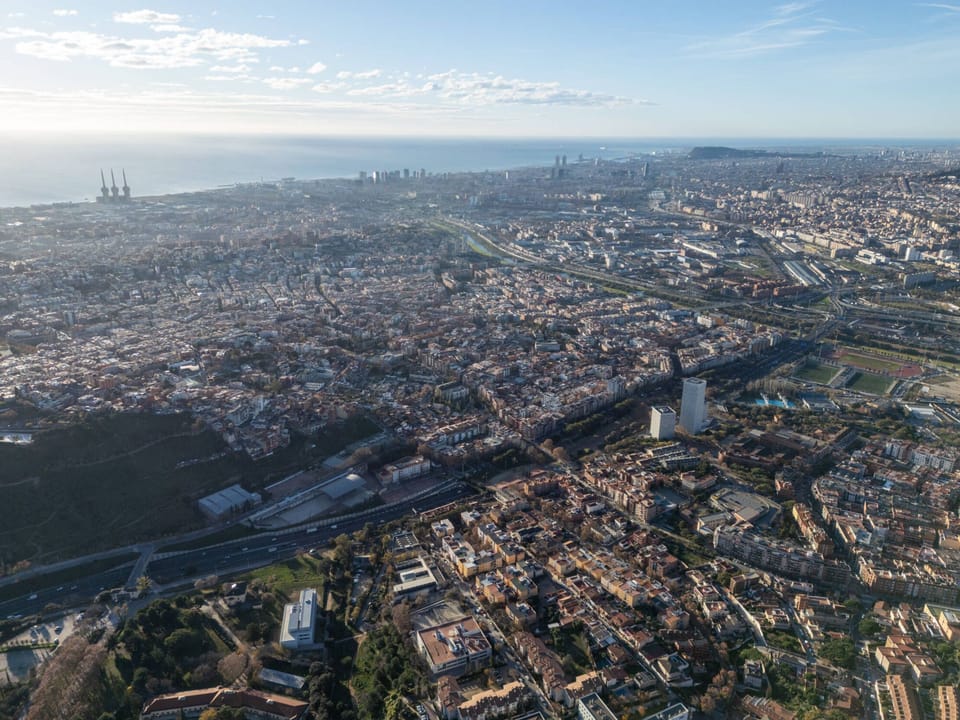
Mayors representing Barcelona's outer metropolitan ring have conditionally accepted plans for increased housing densification. They insist such growth must be accompanied by substantial improvements to public transport and essential services. This collective stance from the Arc Metropolità de Barcelona association directly addresses the Barcelona Metropolitan Area's (AMB) Metropolitan Urban Master Plan (PDUM). The PDUM identifies a significant housing deficit for the coming two decades across the region.
Sabadell Mayor Marta Farrés founded the Arc Metropolità association. She stated, "It is evident that the cities of Vallès Occidental, and Sabadell in particular, have growth potential in the coming years." Farrés added, "This growth must be carried out with criteria and responsibility. I do not like to talk about densifying for densifying." Sabadell, a major city in Vallès Occidental with over 215,000 inhabitants, is one of the cities the PDUM cites for insufficient planned housing.
Mataró Mayor David Bote, who also presides over the Federació de Municipis de Catalunya (FMC), echoed this sentiment. He said, "If there is a social need, I prefer to densify within the municipal area of Mataró than to build in agricultural or forest areas." Mataró, a coastal city of approximately 129,000 residents, is currently developing its Local Housing Plan. Mayor Bote guaranteed that agricultural zones like the Cinc Sènies would remain untouched.
Demands for Improved Connectivity
Terrassa Mayor Jordi Ballart supported densification "in the correct sense of the term." He clarified, "It is not simply about building more housing, but about building a better city." Terrassa, a major city in Vallès Occidental with over 224,000 inhabitants, faces similar housing pressures. Mayors Farrés and Ballart both seek a balance between demographic growth and citizen well-being.
Alba Barnusell, Mayor of Granollers, highlighted that improved connections with Barcelona represent a historical demand for the Vallès region. Granollers is the capital of Vallès Oriental, with a population of around 62,000. Carlos Cordón, Mayor of Cerdanyola del Vallès and AMB Mobility Vice-President, frequently reiterates this point. Cerdanyola del Vallès is a municipality of over 57,000 residents.
The ongoing Rodalies commuter rail crisis serves as a stark example of existing transport deficiencies. Mayors and experts agree that robust transport links to workplaces are crucial before planning new housing. This directly impacts the daily commutes of hundreds of thousands of residents.
Dissenting Voices on Growth
Not all municipalities fully embrace the densification strategy. Josep Maria Vallès, Mayor of Sant Cugat del Vallès, expressed a clear rejection of unchecked expansion. He told El Periódico, "We do not want to grow for growth." Sant Cugat del Vallès, known for its green spaces and quality of life, has a population exceeding 97,000.
Mayor Vallès added, "We do not want for Sant Cugat the densification that the socialist Government of Salvador Illa defends. Not in Sant Cugat." He affirmed Sant Cugat's commitment to remaining "a green, sustainable, friendly city, with schools and universities, with innovative companies that incorporate our young people and commerce that gives life to the city."
Juan Luis Ruiz, Mayor of Vilanova i la Geltrú, also voiced strong opposition to the AMB's PDUM strategy. Vilanova i la Geltrú is a coastal town of over 68,000 residents. He stated, "We disagree with concentrating growth that does not fit in the AMB towards the cities of the Arc Metropolità if this is not accompanied by a clear commitment." Ruiz added, "We do not want a dormitory city and to depend on work from the metropolitan area."
Ruiz insisted that Vilanova could not absorb more metropolitan growth without significant public transport improvements. He specifically called for a clear commitment to Rodalies services.
Conditional Acceptance and Alternative Solutions
El Prat de Llobregat, identified as one of the AMB municipalities with space for growth, also supports conditional densification. El Prat de Llobregat is a city of 65,000 residents adjacent to Barcelona-El Prat Airport. Mayor Alba Bou (Comuns) stated, "Densify, yes, but with conditions." She favours "vertical" growth, acknowledging limitations due to the nearby airport, and suggests smaller homes adapted to modern family structures.
Bou stressed that densification should be "a tool" for housing access, not the sole solution. She argued, "It cannot be the only option the Government has on the table: we cannot forget about price caps, limiting speculative purchases, or eliminating tourist licences." These measures would directly impact the housing market for residents and expats.
José Antonio Gras, Councillor for Territory in Sant Adrià de Besòs, agreed with President Illa's call for densification. Sant Adrià de Besòs is a municipality of over 37,000 residents bordering Barcelona. He clarified, "It is not about increasing general density in the city, but about redensifying specific areas." Gras noted that Sant Adrià could intensify density in certain zones. He cited the ongoing Inditex operation and the reformulation of industrial estates as examples.
The Path Forward for Metropolitan Planning
The collective position of the Arc Metropolità highlights a critical challenge for Barcelona's metropolitan region. It seeks to balance urgent housing needs with sustainable urban development and quality of life. Future planning will require integrated strategies that address both housing supply and the essential infrastructure. This includes public transport, necessary to support growing populations. These discussions will shape the urban landscape and daily lives of hundreds of thousands of residents in the coming decades.
Sign up for our new entrepreneurs community Bizcelona, now accepting our second wave of applicants.
Originally published by El Periódico Barcelona. Read original article.