

Transports Metropolitans de Barcelona (TMB) has announced a significant expansion of its sanitation operations. The Barcelona Metro cleaning budget will reach €188 million over the next five years to maintain stations, trains, and facilities. This plan represents a €45 million increase compared to the previous period. TMB attributes this rise directly to record-breaking passenger numbers across the network.
As the city awaits the final adjudication of the contract, which will cover hygiene tasks until June 2031, TMB confirms the heightened investment is essential. It will manage the wear and tear caused by surging ridership. The network closed 2025 with historic figures, now registering more than 1.6 million daily journeys.
Your browser does not support the video tag.
Home » Barcelona Metro cleaning budget to rise by €45m amid record ridership
Barcelona Metro cleaning budget responds to record demand
According to TMB, the sheer volume of commuters necessitates a more robust approach to hygiene. “Every day, more than 1.6 million trips are made on the metro network, which makes it necessary to increase the number of personnel and hours dedicated to cleaning,” the public company stated.
Laia Bonet, the First Deputy Mayor of Barcelona and President of TMB, emphasised the necessity of the investment. She noted the importance of guaranteeing a service that is adequate for the “growing demand of users.” Data from the National Institute of Statistics supports this, showing 42.4 million validations in November 2025 alone—a 3% increase year-on-year.
Robots and water conservation in new cleaning strategy
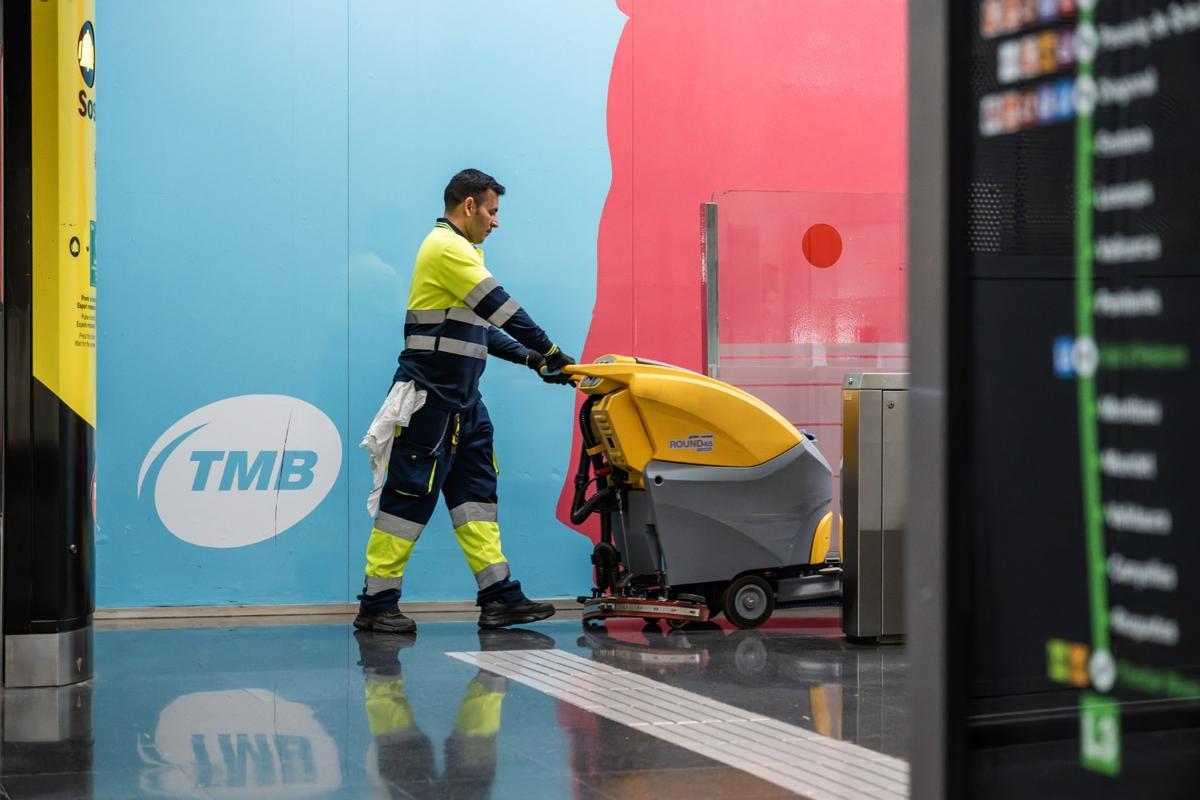
The upcoming tender introduces modern efficiency standards to the Barcelona Metro cleaning strategy. A key objective is sustainability; therefore, the contract aims to reduce chemical products and deploy autonomous robots. These robots can cut water consumption by approximately 80%. This technological shift should save around 2.7 million litres of water, a welcome development given the recent recovery of Barcelona’s water reserves.
The fleet of scrubber machines will also expand. Currently, the team operates 125 machines, but the 2026–2031 agreement requires this to increase to at least 156. Furthermore, the new specifications demand a shift from “superficial cleaning” to “deep cleaning.” This targets hard-to-reach areas such as ceilings and corners, and mandates proper stripping and waxing of floors.
Operational changes and workforce expansion
To support these intensified efforts, the new concession anticipates a workforce of over 800 employees. They will provide more than one million hours of service. This is a notable increase from the 666 employees subrogated in the 2021 award.
Operations will largely take place overnight, with 65% of the work scheduled during early morning hours when trains are stationary. However, the contract also accounts for daily maintenance and “non-stop” service nights. Meanwhile, a significant improvement will be seen in train maintenance. Comprehensive interior and exterior deep cleaning, previously performed once a year per train, will now be conducted twice annually.
Investment context and future infrastructure
The total financial commitment for the period up to mid-2031 is estimated to reach nearly €200 million. This figure combines the €188 million for ordinary cleaning tasks with approximately €20 million allocated specifically to repair vandalism damage, such as graffiti.
The contract, divided into six lots, covers the nine metro lines, the funicular, the Montjuïc cable car, and the Tramvia Blau. While the historic Tibidabo Avenue railway (Tramvia Blau) is not expected to resume service until between 2031 and 2033, the contract provisions include the cleaning of three new L9 stations expected to open in 2028.
Apply to join our community of Entrepreneurs, Senior Executives and Founders at Bizcelona .
