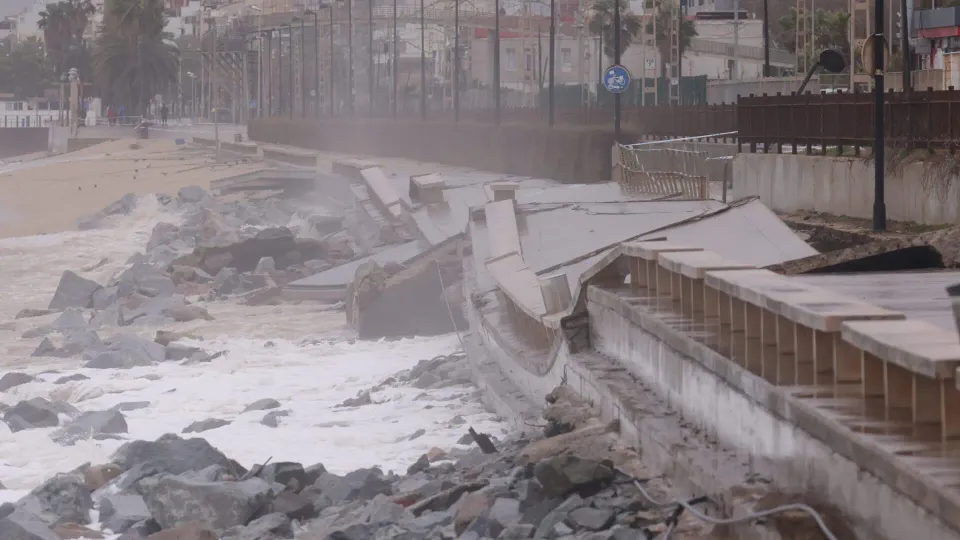
The Área Metropolitana de Barcelona (AMB) has removed 110,000 kilograms of debris, including logs, reeds, and dead rats, from metropolitan beaches following severe storms earlier this year. This extensive clean-up operation focused particularly on beaches in El Prat de Llobregat and Sant Adrià de Besòs, preparing them for the upcoming bathing season.
Winter Storms Cause Extensive Damage
Storms like Harry, alongside a series of intense weather fronts in late 2025 and early 2026, caused widespread damage. These events led to wall collapses, significant sand loss, and left behind sediment dragged in by heavy rains. The AMB confirmed the removal of 110,000 kilograms of hazardous materials from the affected beaches, according to data obtained by 20minutos.
Coastal areas experienced substantial erosion. The Baixador i Luminetes beach in Castelldefels, a popular spot for residents and tourists, receded by up to 20 metres between January and February. Similarly, l'Estany beach in Gavà lost up to 28 metres of sand. Beaches in Viladecans also saw retreats of up to 31 metres in February. The AMB's technical team estimates a loss of approximately 27.17% of the Murtra, Pineda, and Pineda Ca'l Francès beaches, equating to about 40,000 square metres.
Flooding also presented a major challenge. Beaches and dunes in Castelldefels became completely submerged. "The streams could not drain more water into the sea," explained a representative from the supramunicipal entity, referring to the AMB.
Critical State of Coastal Vulnerability
The increasing intensity of storms, driven by climate change, threatens the survival of Catalonia's coastline. Administrators work against the clock during winter months to prepare beaches for warmer weather. However, severe storms like Harry further diminish kilometres of coastline and damage beach infrastructure.
The impact extended beyond beaches. The Rodalies railway network, which serves many commuters across Catalonia, continues to recover from storm damage. The R1 line, running close to the coast, faces a high risk from future weather events. During Storm Harry, waves reached up to six metres in Badalona, according to data from Puertos del Estado, causing significant damage to the promenade near the railway line.
Beaches in Badalona, including Pont del Petroli and Pont d'en Botifarreta, lost up to 18 metres of sand. Damage in the Barca Maria area was so severe that measurements could not be taken. Montgat beaches experienced a 59.15% loss of their surface area after the storms. The AMB describes the beaches of Badalona and Montgat as being in a "critical state and of extreme vulnerability."
Calls for Strategic Coastal Protection
The AMB continues to demand a Strategic Plan from the Spanish government to address the growing sand deficit. The entity urges the Ministry for Ecological Transition and Demographic Challenge to develop a long-term plan. This plan should include structural interventions to reverse beach regression, stabilise, and recover these vital coastal areas. In 2025, Mediterranean beaches opened with 20% less surface area than the previous year.
The new bathing season starts on 30 May, and projections indicate another year with reduced beach space. This situation, worsened by climate change, prompted the Generalitat de Catalunya to launch its own plan. This initiative aims to improve coordination with local councils and the Spanish government. Its goal is to design master lines for renaturalising and managing Catalonia's 346 kilometres of coastline by 2100.
Generalitat's Long-Term Vision for the Coast
Sources from the department led by Sílvia Paneque stated that the Generalitat's plan affects 70 coastal municipalities and 21 inland ones. The Territory Commission is expected to approve this project definitively in 2028. While the plan does not yet detail specific measures, it intends to promote actions similar to those at Les Madrigueres in El Vendrell, Tarragona. There, new lagoons were created to prevent future flooding from major storms.
In a parallel emergency effort, the Service de Costas of the Spanish government recently moved and distributed 20,000 square metres of sand. This sand came from Tarragona port and went to the Delta del Ebro. The operation aimed to reconstruct the coastal cordon of Buda Island's cajones, which Storm Harry had broken. This episode created a 70-metre discontinuity in the coastal strip, over 1.5 metres deep, directly connecting the sea and the cajones. This marks the first time Costas has undertaken such an emergency sand movement from other locations to restore coastal protection.
Looking ahead, the Generalitat's plan and ongoing efforts by the AMB and Spanish government highlight a concerted push to protect the region's vulnerable coastline. The definitive approval of the Generalitat's plan in 2028 will mark a significant step in safeguarding Catalonia's beaches against the escalating impacts of climate change and human activity.
Sign up for our new entrepreneurs community Bizcelona, now accepting our second wave of applicants.
Originally published by 20 Minutos Barcelona. Read original article.