

Barcelona municipal markets supermarkets have become a consolidated trend as of early 2026. Consequently, the symbiotic relationship between traditional fresh food stalls and modern self-service chains has redrawn the city’s retail map. Private operators show sustained interest in concession opportunities. This debate has been building for months — we covered it in Montserrat Market opening in Nou Barris.
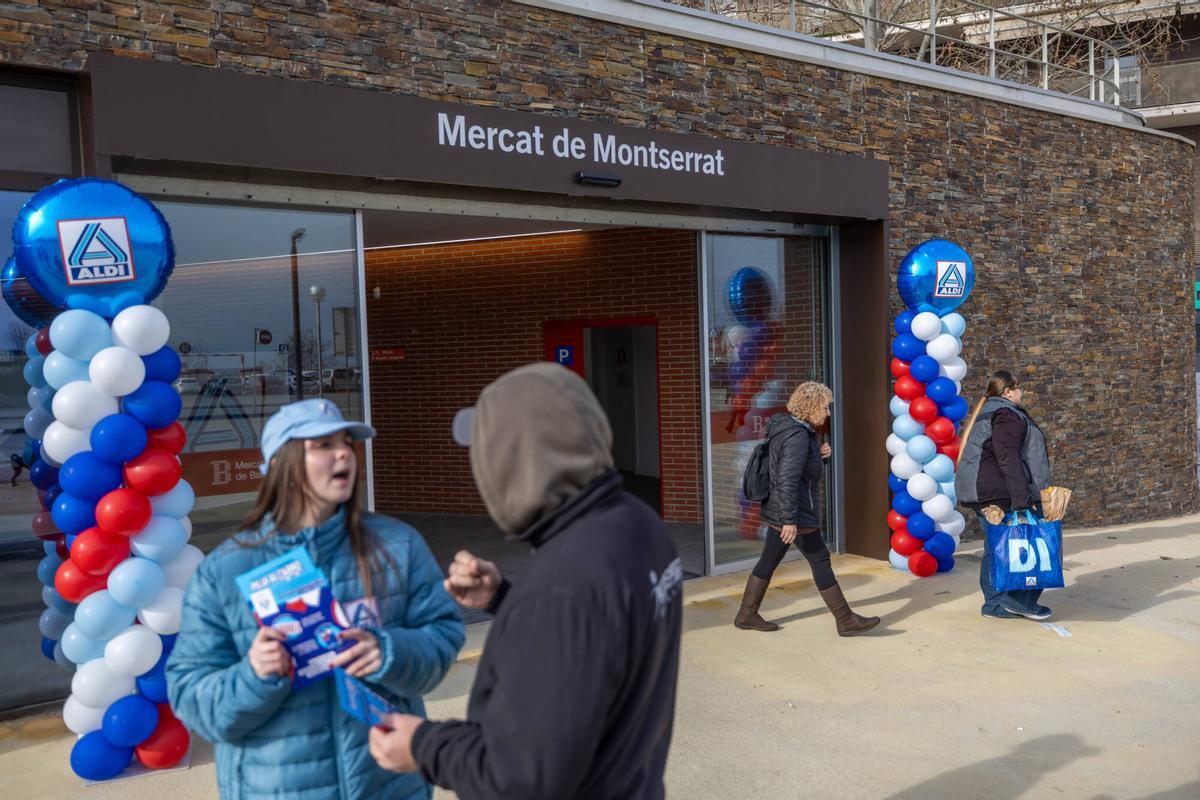
Following the opening of a new Aldi in the Montserrat market in Nou Barris this week, the figures are clear. Therefore, 29 of Barcelona’s 39 municipal food markets now host a supermarket. The integration is set to deepen further this year, with at least two more major openings scheduled for the summer. Meanwhile, this trend reflects broader urban changes, as discussed in Barcelona’s urban transformation and ‘Superblocks’ model.
Your browser does not support the video tag.
Home » Barcelona Municipal Markets Supermarkets: Expansion in 2026
A Changing Landscape for Barcelona Municipal Markets Supermarkets
The dual model—where a commercial supermarket operates alongside traditional market stalls—is designed to offer shoppers a complete basket in a single visit. However, the distribution is not uniform across the city. While the majority of markets have adopted this hybrid model, six venues remain exclusively traditional. These include the iconic Boqueria, as well as El Carmel, Sant Andreu, Tres Torres, Besòs, and Mercè. In addition, this shift interacts with other city pressures, as seen in housing and demographic pressures in Barcelona.
Conversely, the Núria market in Ciutat Meridiana represents a unique outlier. Following the closure of its traditional stalls, the entire space was converted into a self-service facility in 2019. This change ensured residents retained access to food supplies.
The Battle for Concessions
Competition for these municipal spaces is fierce. Ten different brands currently operate within the network. The Valencian cooperative Consum leads the sector, operating in five locations. The company has stated it does not have a specific strategy for markets. Instead, it pursues locations that fit its model.
The current standing of supermarket brands in Barcelona markets is as follows:
- Consum: 5 locations (soon to open in Abaceria).
- Caprabo: 4 locations, including the historic Santa Caterina.
- Lidl: 3 locations (soon to open in La Concepció).
- Aldi, Spar, Carrefour, Mercadona: 3 locations each.
Caprabo, a historic Catalan brand now owned by Eroski and EP Corporate, holds the second spot. Josep Barceló, the company’s Head of Development, described the coexistence with market stallholders as “optimal.” He noted that the formats offer “complementary offerings” that benefit the consumer.
Upcoming Openings and Opportunities
The ongoing renovations of Barcelona’s historic markets are creating new entry points for these multinational giants. Two significant historic markets, La Concepció and l’Abaceria, have already awarded their concessions. They plan to open new supermarkets this summer—a Lidl and a Consum, respectively.
However, not all spaces are filled. The Institut Municipal de Mercats de Barcelona (IMMB) is currently seeking an operator for the Felip II market. The premises, vacant since late 2023, are being offered for €375,000. Additionally, a new tender is expected for the Horta market as part of its renovation due for completion in 2028.
Other future developments include potential integrations during the centenary rehabilitation of the Galvany market in 2027. Furthermore, the delayed reform of the Estrella market in Baix Guinardó awaits a judicial ruling.
Get all of the news delivered to your phone via our WhatsApp Broadcast Channel .
