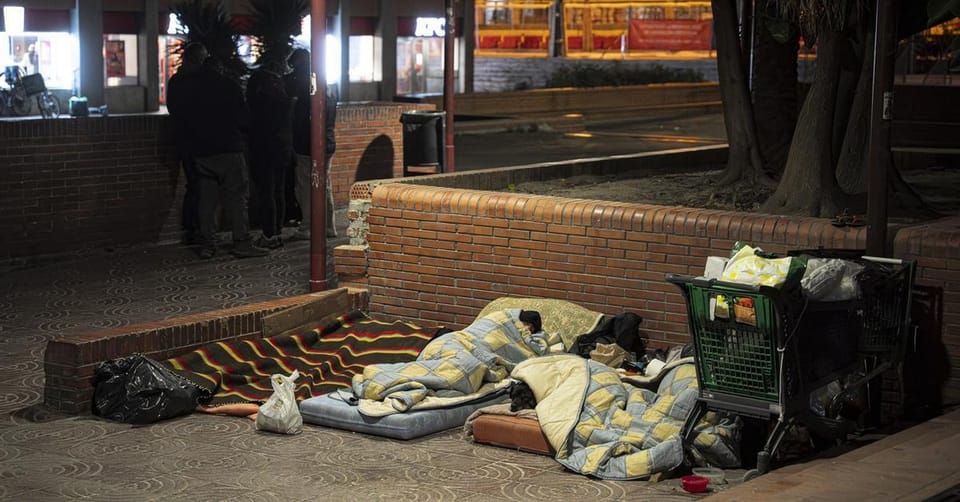
Barcelona's Ombudsman, David Bondia, has proposed an ambitious pilot plan, the "Zero Street Plan", aiming to halve the number of people sleeping rough in two neighbourhoods within just over a year. This initiative, recently shared with institutions and municipal groups, seeks to unify efforts from public, private, and third sectors to address homelessness.
The plan, which would start in one Barcelona district and potentially L'Hospitalet de Llobregat, focuses on coordinated support. It calls for a single census of homeless individuals and a unified "front office" of support workers. Each person would receive a personal manager within 48 hours to guide them through administrative processes and access aid.
"It is key to involve three sectors, the municipal, the entities, and the private, and make them work not in parallel, but jointly, with the common objective of eradicating homelessness in our home," Bondia told Ara Cat. The administration must guarantee rights like registration and benefits. The private and civil sectors would provide housing and job opportunities.
Coordinated Approach and Housing Solutions
The "Zero Street Plan" outlines a roadmap for coordinated support. It aims to create and share a list of available protected housing across Catalonia. This includes properties from private owners, entities, and various institutions. The plan suggests that individuals with access to benefits could use these funds for social rent, enabling them to start new lives off the streets.
Entity Support and Concerns
Several social entities have participated in meetings with the Ombudsman, including Càritas, Assís, and the Red Cross. The Barcelona Bar Association (ICAB) also attended, potentially offering bureaucratic advice for aid applications. These organisations view the proposal as an opportunity. However, they warn that success depends on sufficient resources, strong coordination, and clear leadership.
Entities also highlight the need for more technical detail on the plan, according to Ara Cat. They stress the importance of increased funding to combat homelessness. Additionally, they advocate for a new law to guarantee rights for homeless individuals. This law would specify administrative obligations and ensure necessary resources, but it remains stalled in the Catalan Parliament.
Ajuntament's Reservations and Priorities
Before Easter, Bondia presented his proposal to Barcelona's municipal groups and Mayor Jaume Collboni. Sonia Fuertes, the city's Commissioner for Social Action, acknowledged the plan's importance. "As a proposal on such a critical issue, it must be analysed and, if necessary, implemented," Fuertes stated to Ara Cat. She also emphasised the expertise of the Ajuntament's social services.
Fuertes raised several initial concerns. She called for a clearer governance model, noting that a project involving multiple municipalities requires the Generalitat's input. She also questioned the plan's prioritisation of long-term homeless individuals. Fuertes argued that rapid intervention for those recently experiencing homelessness often yields better results.
Addressing Housing Barriers
The Commissioner pointed out that the Ajuntament's social services already implement some aspects of the Ombudsman's plan. Fuertes stressed the need for new ways to help people in emergency accommodation access permanent housing. "We have many people ready to leave, with income, with employment, with savings of up to 7,000 euros, who cannot find someone to rent them a flat," she explained.
Fuertes identified "property racism" as a major barrier. Resolving this issue would allow for a quicker turnover in emergency shelters. This would free up spaces for other homeless individuals, helping them enter and then exit the support system.
Next Steps for the Zero Street Plan
The "Zero Street Plan" represents a significant effort to tackle homelessness in Barcelona and its metropolitan area. Its implementation will require close collaboration between city authorities, regional government, social organisations, and the private sector. Further discussions will likely focus on securing funding, refining technical details, and establishing a clear governance structure to move the initiative forward.
Sign up for our new entrepreneurs community Bizcelona, now accepting our second wave of applicants.
Originally published by Ara Cat. Read original article.