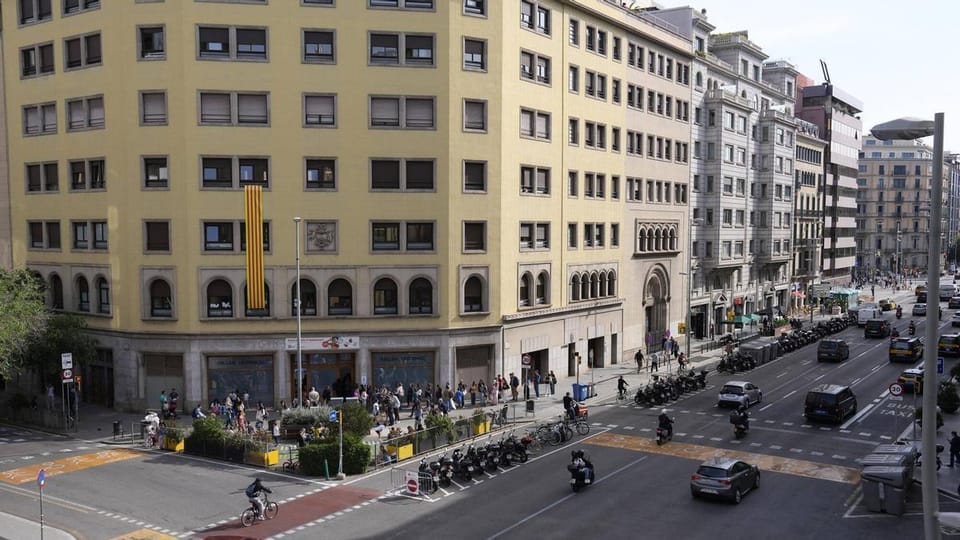
Barcelona City Council is moving forward with plans to permanently transform 11 temporary street interventions across six districts, enhancing pedestrian safety and public spaces, particularly near schools. These projects, initially implemented as "tactical urbanism" measures during the pandemic, will replace temporary painted surfaces with fixed paving and wider pavements.
The transformation involves widening pavements or corners with permanent materials and creating single-level platforms in some roadways. Most of these locations are near schools, aiming to improve safety for children and residents. Municipal sources point out that these projects are part of the participatory budgets, and a specific timeline is not yet available.
The municipal company BIMSA is managing the tender for the technical projects, which has an estimated value of nearly 344,000 euros. This contract covers preliminary designs, executive projects, and technical assistance during construction. The design phase is expected to last nine months. BIMSA estimates the 11 construction works will cost approximately 5.5 million euros, including VAT. The reurbanised areas are relatively small, ranging from 250 to 1,900 square metres per location.
Enhancing Neighbourhood Spaces
The interventions are spread across six of Barcelona's ten districts: Sants-Montjuïc, Sarrià-Sant Gervasi, Sant Andreu, Eixample, Horta-Guinardó, and Nou Barris. Three of the projects are located at the foot of Montjuïc. The section of Leiva street between Águila and Hostafrancs streets, currently closed to traffic, will become a single-level platform with an elevated crossing. A second phase will widen the pavement on Hostafrancs street, extending to Bordeta road.
Focus on School Environments
In Poble-sec, the school area on Puig i Xoriguer street will gain a wider pavement on the mountain side, between Vila i Vilà and Albareda streets. A similar solution will apply to the sea side of three blocks on Exposició promenade, between Nou de la Rambla and Poeta Cabanyes streets, which also has an educational centre. In Sarrià-Sant Gervasi, contractors will study how to maintain the current mix of pedestrian and traffic use with a single-level platform on much of Lincoln street, between Laforja and Via Augusta. This will also be reurbanised in two phases. Additionally, Vendrell street in Bonanova, between Císter and Dominicos, will combine a single-level platform with a redistribution of services.
Key Interventions Across Districts
In the Congrés neighbourhood of Sant Andreu, the council has commissioned the widening of the south pavement of Can Ros street, between Vèlia and Prado, close to the Canòdrom. Another part of the project includes making permanent the widening of two nearby corners on Aragó street, at the intersections with Roger de Llúria and Pau Claris. Both locations have school entrances and high traffic volumes. This preservation contrasts with the "ecochaflanes" announced during Ada Colau's second term, four of which Mayor Jaume Collboni discarded. The ecochaflán at Aragó with Bruc, one block from the two mentioned school corners, was maintained.
Addressing Maintenance and Future Design
Another key location is the junction of Can Pujolet, Peris Mencheta, and Baixada de Can Mateu streets in Horta. Can Pujolet and Baixada de Can Mateu will become single-level platforms, while Peris Mencheta will gain pavement space on its west side. This area currently has a controversial reurbanisation underway, as widening Baixada involves removing three small houses and allotments from the historic laundry workers' complex on Aiguafreda street. The contract also includes two more school environments in Nou Barris: Orduña street in Turó de la Peira, between Nil and Doctor Pi i Molist, and Torres de Roquetes street, between Alcàntara and Artesania. Both will have their pavements widened to consolidate existing space and improve accessibility.
The council states in the tender documents that tactical urbanism from 2021 to 2023 allowed for "very rapid transformation in different areas at an adjusted cost." However, over time, "inconveniences such as high maintenance costs" have emerged. Therefore, the city began studying the consolidation of these actions in 2025, focusing on streets where city urbanisation criteria are feasible. The council will ensure these permanent pacifications prioritise people, durability, energy efficiency, and adaptability to future changes. Adjudicators must study pedestrian routes and flows, ensuring safety, especially at crossings, and create "staying spaces where appropriate." This will happen without hindering city services like cleaning or loading and unloading.
Sign up for our new entrepreneurs community Bizcelona, now accepting our second wave of applicants.
Originally published by El Periódico Barcelona. Read original article.