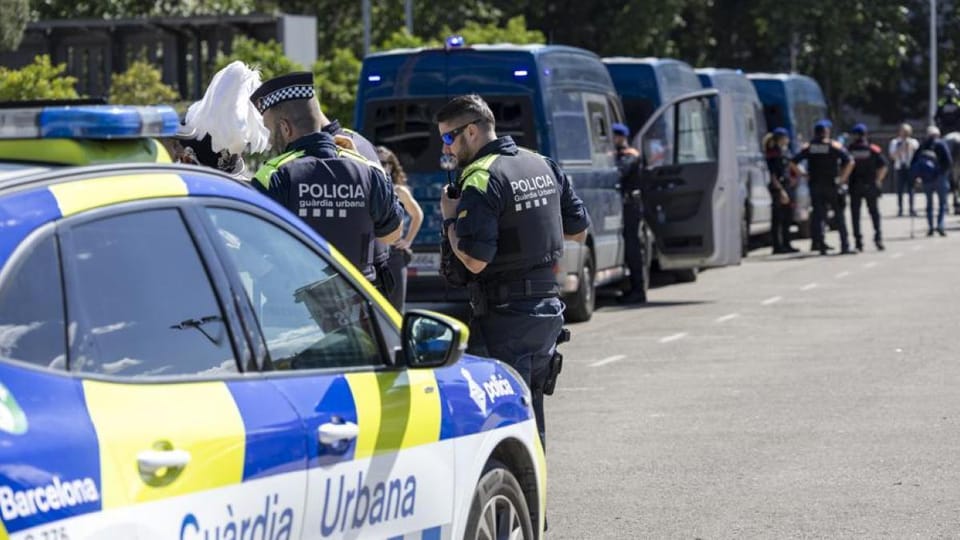
The Generalitat de Catalunya and the Ajuntament de Barcelona finalised a new agreement. It updates coordination between the Mossos d'Esquadra and the Guardia Urbana de Barcelona. This significant revision comes two decades after the original accord. That agreement established the operational relationship between the two police forces in the Catalan capital. The updated framework aims to improve public safety and streamline police responses across the city.
The Mossos d'Esquadra began their deployment in Barcelona on 1 November 2005. At that time, Pasqual Maragall served as President of the Generalitat. Joan Clos was the Mayor of Barcelona. The regional police assumed full powers for security, public order, and criminal investigation in the city. However, the initial agreement remained unchanged despite profound social transformations and evolving police operations.
Enhancing Police Powers and Information Sharing
The new agreement modernises the foundational principles for coordination between both bodies. It specifically improves access to information systems, databases, and videovigilance networks. This enhanced sharing allows for more integrated operations.
The revised framework grants the Guardia Urbana greater involvement and capacity in several key areas. Local police will now handle more complaint receptions at citizen service offices. Additionally, the Guardia Urbana receives expanded powers for investigating crimes. It will also provide assistance and protection to victims of gender violence. Officials expect these new responsibilities to speed up police responses. Incidents were previously handled exclusively by the Mossos d'Esquadra. This allows the Mossos to focus more on their judicial police and citizen security functions.
Streamlining Incident Response
The new text outlines immediate notification protocols for serious incidents. Both police forces must promptly alert the Operational Coordination Board. This board is located on Carrer Lleida. Notifications are required for demonstrations, public order disturbances, vehicle thefts, explosive warnings, or terrorist threats. They also apply to accidents, fires, serious public transport accidents, or occupations. This ensures rapid, unified responses to critical events across Barcelona.
However, the agreement does not address incivility. This topic has been debated since the Mossos' deployment over 20 years ago. Both the Ajuntament and Generalitat acknowledge that incivility often impacts public perception of safety. Despite this, no changes are expected regarding the Mossos' involvement in tackling such behaviour.
Combating Repeat Offending
The agreement's renewal coincides with a strong focus on repeat offending. Security and justice administrations are addressing this problem. Recent decisions in police and court spheres aim to tackle this phenomenon. Officials highlighted a reduction in criminal acts in Barcelona. This came according to a balance released in February at the Local Security Board meeting.
The Guardia Urbana has already taken on new judicial police responsibilities as part of efforts to combat repeat offending. For the past three months, the local police force has been attached to the Barcelona Prosecutor's Office. This attachment helps to speed up procedures and refer repeat offenders through the appropriate criminal channels. Previously, courts often discovered an accused person's extensive criminal history during minor theft trials. This caused delays. Cases then needed referral to a different criminal court.
Broader Access and Future Steps
The Guardia Urbana also became the first local police force in Spain to join SIRAJ. SIRAJ is the System of Administrative Records to Support the Administration of Justice. This system allows officers to access an arrested person's criminal background information beforehand.
A significant new feature allows individuals to file a complaint at any police station. This applies regardless of which force holds jurisdiction. This applies unless the case requires specialised attention. For example, individuals can report a violent robbery at a Guardia Urbana station. This is true even if the Mossos d'Esquadra ultimately lead the investigation. In such cases, the Guardia Urbana will forward the complaint to the Catalan police, removing the burden from the victim.
Certain serious crimes remain excluded from this universal reception, requiring specialised Mossos teams. These include crimes against life. They also cover those severely affecting physical or moral integrity. Sexual freedom offences need specialised attention for complaint collection. Any other crimes with severe penalties are also excluded. Cases involving disturbing disappearances also require specific Mossos action.
The agreement received provisional approval at a bilateral Generalitat-Ajuntament commission meeting last week. It was then communicated to municipal groups. Junts per Catalunya, led by Jordi Martí Galbis, had previously requested a new agreement in July 2024. The party's proposals have been accepted. This forms a majority with the PSC for approval in commission next week. The full Ajuntament plenary session will then vote. This updated framework represents a critical step towards a more coordinated and effective police presence for Barcelona residents.
Come and join our Barcelona English Speakers community on WhatsApp.
Originally published by La Vanguardia Barcelona. Read original article.