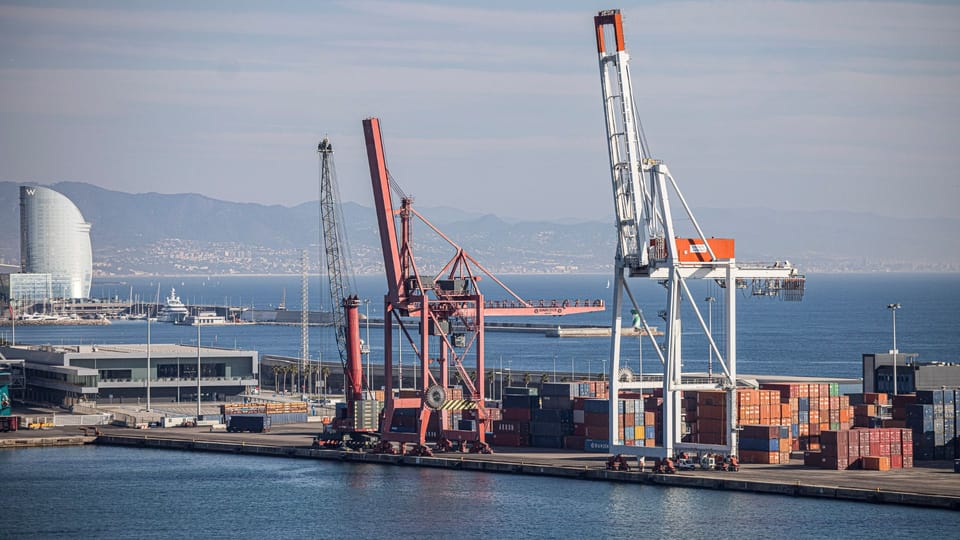
The Port of Barcelona handled 23.8 million tonnes of cargo during the first four months of 2024, marking a 5.8% increase compared to the previous year. This significant rise reflects strong activity in bulk liquids and vehicle movements at one of Europe's busiest ports.
Bulk liquids were a primary driver of this growth, exceeding 6 million tonnes, a 23.7% year-on-year increase. Chemicals saw particularly strong results, with 1.7 million tonnes, up 52.1%. Natural gas traffic also rose by 44.2% in the same period.
Car traffic also increased, reaching 244,853 units by April, a 7% rise. This growth included both imports and exports, as well as transit vehicles, according to Official Port of Barcelona Website. Notably, electric or hybrid vehicles accounted for 17.8% of the total car movements.
Container and Solid Bulk Movements
Container traffic rebounded by 2.7%, totalling 1.267 million TEU (twenty-foot equivalent units). TEU refers to standard containers measuring 6.1 metres long, 2.4 metres wide, and 2.6 metres high, according to Eurostat Maritime Transport Statistics. Full containers, which the Port considers a better indicator of economic health, showed mixed results.
Imports of full containers increased by 3%, while exports decreased by 13.6%. Transit movements for full containers grew by 5.5%. Solid bulk traffic, however, saw a 4% decline, moderating its previous downward trend.
Key Trade Partners and Passenger Growth
The Port of Barcelona saw notable growth in trade with several countries. Exchanges with Vietnam increased by 22.3%, Turkey by 8.9%, Egypt by 4.7%, and Brazil by 7%. These figures highlight the port's diverse international connections.
Passenger numbers also climbed, reaching 1,169,616 by April, a 5% increase from the previous year. This includes both ferry and cruise passengers, reflecting Barcelona's appeal as a travel hub. The Port of Barcelona remains a critical economic engine for the city and Catalonia.
Come and join our Barcelona English Speakers community on WhatsApp.
Originally published by betevé. Read original article.