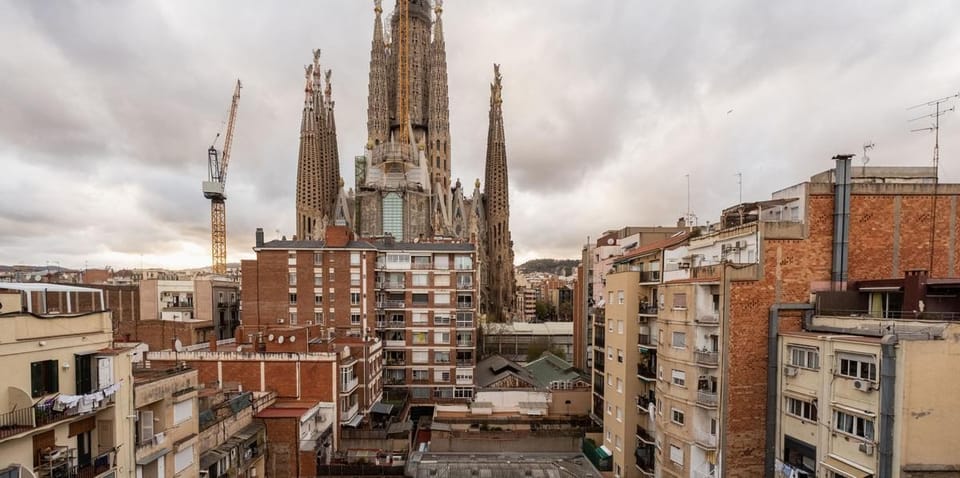
Barcelona City Council has started formal talks with residents over the Sagrada Família Glory Façade staircase, a long-running planning issue in the Eixample. The first official meeting took place last Thursday, with the council and local residents sitting down to discuss the next steps.
Jordi Valls, the Eixample councillor, led the municipal delegation. Representatives from the Sagrada Família residents' association and a platform for people affected by the temple's construction also attended. The Sagrada Família itself did not send representatives to this first meeting. The construction board has said it wants direct talks with the council, and its delegate president, Esteve Camps, said last March that a deal with the council was close.
Three main points are now on the table: how many residents will be affected, whether they will be rehoused or compensated, and who will pay for the work. Some estimates put the cost at between 150 million and 200 million euros. For background on the wider planning debate, see our coverage of the Glory Façade staircase deal and the call from affected residents to be included in talks.
The staircase has been part of Barcelona planning documents for years. The 1976 Metropolitan General Plan set aside two blocks in front of the temple, between Mallorca, Aragó, Sardenya and Marina streets, for a 60-metre-wide avenue leading to the Glory Façade. That plan also included an escalinata over Mallorca Street, which would mean demolishing homes in those blocks.
The Sagrada Família, designed by Antoni Gaudí, has been under construction since 1882 and is currently expected to be completed in 2026, the centenary of Gaudí's death. The Glory Façade, facing south, will be the basilica's main entrance and is meant to symbolise humanity's ascent to God. Its staircase has been a source of debate for decades because of the impact on homes and streets around the site.
The first challenge is to define the exact area affected. Earlier proposals under Xavier Trias and Ada Colau reduced the planned avenue from 60 metres to 40 metres, which would limit the number of homes affected. It is not yet clear whether Jaume Collboni's current government will keep that narrower option. Once the area is fixed, the council will need to work out how many residents want compensation and how many need a flat in the same neighbourhood.
Rehousing is one of the key issues for residents. The Sagrada Família bought the Aigües plot in 2019, in the block between Marina, Lepant, Mallorca and València streets, but it is not clear whether that site can hold enough homes for everyone who needs rehousing. If not, the council may need to find more plots nearby. Any final deal will still need legal checks and approval from the full city council plenum.
For more Barcelona planning and neighbourhood coverage, see our Community and Sport tag pages.
Originally published by Ara Cat. Read original article.