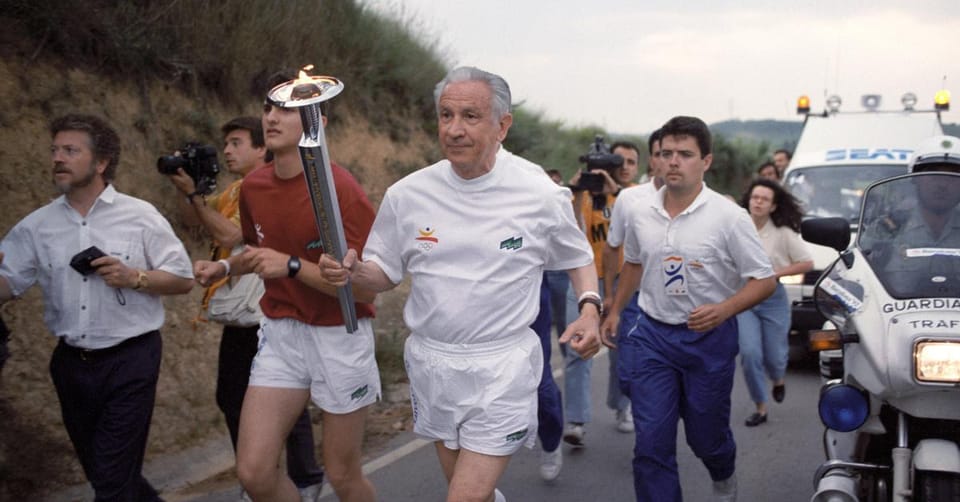
Barcelona has held an official homage to Juan Antonio Samaranch, bringing the debate over a possible street dedication back into focus in the city. The ceremony took place on Tuesday, 28 May, at the Jardins Joan Maragall of Palauet Albéniz, with the King of Spain, Barcelona mayor Jaume Collboni, and the president of the Generalitat de Catalunya, Salvador Illa, among those present.
Samaranch, who was born in Barcelona, was one of the most powerful figures in world sport. He played a major role in bringing the 1992 Olympic Games to the city, but his legacy remains contested because of his past Francoist militancy. He was IOC president from 1980 to 2001.
The idea of naming a Barcelona street after him is not new. In 2014, the city council rejected the proposal after public disagreement. Before that, the PP municipal group had suggested renaming Avinguda de l'Estadi in 2012, the avenue that leads to the Olympic Stadium on Montjuïc. Samaranch's name is already on the Olympic and Sports Museum of Barcelona, as well as a study centre linked to the museum.
There has also been previous controversy over how the city marks his name. In 2016, during Ada Colau's time as mayor, the city removed a plaque with Samaranch's name from a sculpture by artist Joan Mora. The artwork, which shows a sports bag and a torch with Olympic rings, had been a gift from Samaranch to the city. The inscription naming him as the donor was later reinstated by Jaume Collboni two years ago.
Samaranch was born in 1920 on Carrer Bailén in Barcelona's Eixample district. He came from a wealthy family that owned a textile company. During the Spanish Civil War, he hid to avoid conscription, then switched from the Republican side to the Nationalist side towards the end of the war. He was also a keen sportsman, playing boxing and roller hockey, and later worked as a sports journalist before moving into politics and joining the International Olympic Committee in 1960.
His IOC presidency brought major changes, including more Olympic sports, higher female participation, stronger anti-doping efforts, and greater revenue from television rights and merchandise. He also gave more prominence to the Paralympic Games and promoted the Special Olympics. Even so, his time in office was not free from corruption cases, and the article notes that one such case reportedly marked his fall in 2011, a decade after he left the role.
For more Barcelona coverage, see our Community and Sport pages. You can also read the original report from Ara.