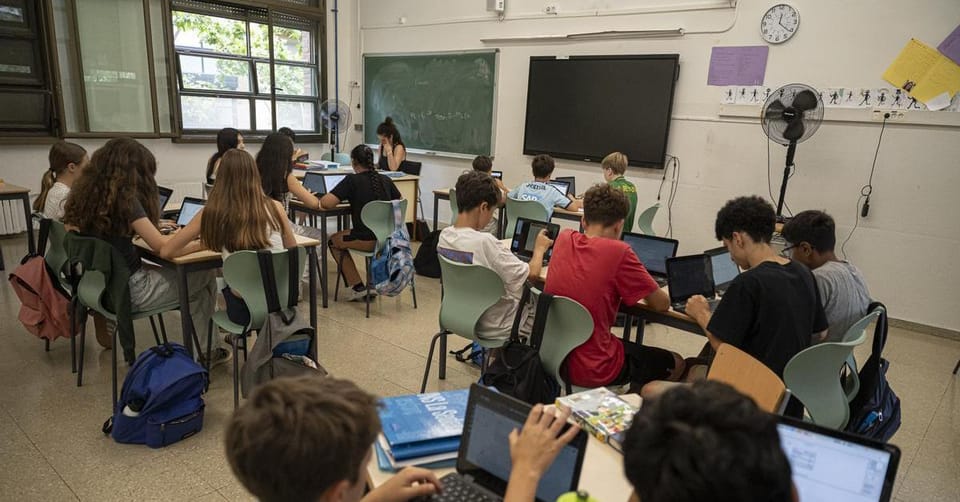
Schools in Barcelona are struggling with extreme classroom heat, with Institut La Sedeta in the Gràcia district regularly recording temperatures above 30C since mid-May. Teachers and pupils say the heat is affecting health, concentration and day-to-day learning.
At peak times, temperatures at the school have reached 35C and 36C. High humidity in Barcelona makes the conditions feel even worse. The problem is not limited to the city, with similar reports coming from schools across Catalonia.
One of the main tools tracking the issue is Aulesquecremen.cat, a platform set up by teachers and families to collect real-time temperature data from classrooms. It now covers more than 220 schools and uses sensors and thermometers to send live readings. Pau Sánchez, a secondary school technology teacher from Baix Llobregat, said the project has grown from 30 schools to more than 220, with more than 500 devices sending data.
At Institut La Sedeta, director Pedro Mariscal said students have suffered dizziness, vomiting and nosebleeds linked to heatstroke. He also said some teachers have been left dizzy and unable to teach. Last week, some staff held classes outdoors as a symbolic protest against what they called an unsustainable situation.
Children are especially vulnerable to heat, according to Elena Codina Sampere, a paediatrician and head of the Paediatric Environmental Health Unit at Hospital Sant Joan de Déu. She said children’s thermoregulation is still immature, they sweat less than adults and can struggle to notice when they are too hot or thirsty. She added that repeated exposure can cause dizziness, irritability, fatigue, headaches and nosebleeds, and in severe cases heatstroke and loss of consciousness.
Codina also said academic performance drops on days of extreme heat. Mònica Ubalde, an epidemiologist at the Barcelona Institute for Global Health, said the impact can build up if children cannot recover at home in cooler conditions. The article also cites research from Harvard University, Nature Human Behaviour and Equitat.org, which links heat exposure to lower memory, more distraction and weaker test scores.
School buildings are part of the problem. The article says one in four schools in Spain was built before the 1960s, and many were designed for a different climate. Even newer schools can struggle, with one primary teacher in the Vallès Oriental describing his 2008-built school as a greenhouse. The Catalan Government has announced 20 million euros for ceiling fans, while an Equitat.org report calls for a ten-year adaptation plan.