

Barcelona surveillance cameras are extending their reach to Barceloneta beachfront. Consequently, the city council will install 11 fixed cameras along the promenade. This significant expansion brings remote monitoring to one of Barcelona’s busiest public spaces. Moreover, the deployment represents a key part of a larger municipal strategy. Specifically, the city aims to install 500 new recording devices across the Catalan capital before 2027.
This technological push aligns with the city’s broader security and urban management policies. However, it marks a shift from traditional policing methods. Previously, patrol cars and foot officers managed the seaside district. Now, the administration believes analog policing is insufficient for the area’s “dynamic and complex” reality.
Your browser does not support the video tag.
Home » Barcelona Surveillance Cameras Expand to Barceloneta Beachfront
Barcelona Surveillance Cameras: The Digital Beachhead
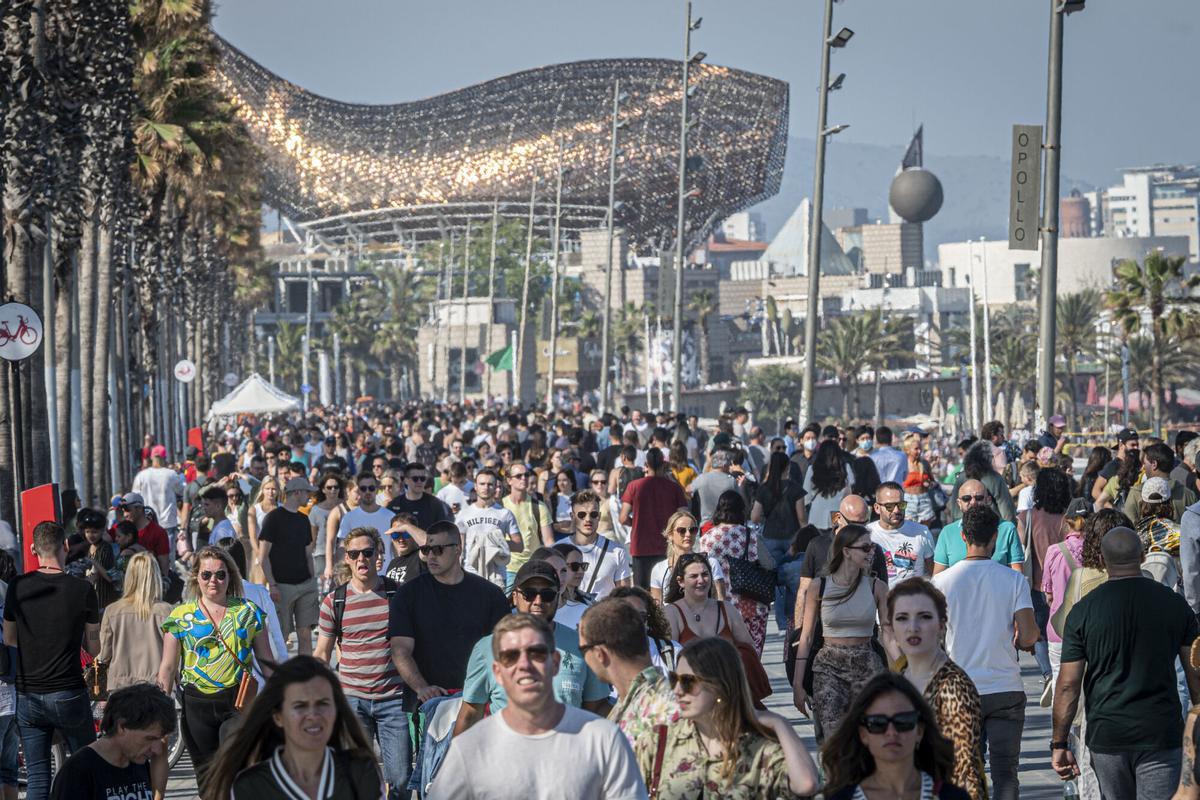
The project targets a specific 2,450-square-metre stretch between Plaça del Mar and Trelawny Street. With a budget of €549,497, workers will mount the new hardware on existing lampposts. These Barcelona surveillance cameras will capture high-resolution imagery day and night. According to details reported by El Periódico, the feed will route directly to the Guardia Urbana’s command centre. Therefore, authorities can monitor in real-time and conduct forensic searches of stored footage.
The municipality’s logic focuses on logistics rather than mere observation. The area creates frequent gridlock where pedestrian flows, bicycle lanes, and nightclub queues converge. This density specifically complicates emergency service access to nearby Hospital del Mar. By adopting remote monitoring, the council aims to manage these “coexistence” issues more efficiently than ground units alone.
Barcelona Surveillance Cameras: A City-Wide Network
The 11 cameras in Barceloneta represent just the beginning of a broader technological rollout. Currently, the city operates roughly 160 cameras focused on citizen security, primarily in Ciutat Vella and Eixample districts. However, Mayor Jaume Collboni’s roadmap envisions drastic network scaling. This security expansion occurs amidst recent political pressure on his administration over social crises. The plan divides into four phases, aiming for 660 operational cameras within two years and potentially 1,000 long-term.
Work is already underway in the city centre, where 14 new Barcelona surveillance cameras are installing in Plaça Catalunya. Surprisingly, this major hub lacked direct video oversight until now. Meanwhile, the effectiveness of such systems is already evident. For instance, CCTV footage proved crucial in a recent chain-snatcher arrest in Eixample. These new units should go live in the first quarter of 2026.
Barcelona Surveillance Cameras as Urban Infrastructure
The strategic placement of these devices reveals a shift in how the city views public space. One camera specifically targets the nightlife zone at Trelawny Street. This acknowledges that human-centric policing struggles to contain friction from late-night venues. By embedding surveillance into streetlight infrastructure, the city bets algorithmic observation can solve traffic snarls and public disorder more effectively than the Guardia Urbana’s physical presence.
As summer approaches, the promenade will look largely unchanged—sand, sea, and crowds remain. However, the invisible architecture of the space is undergoing profound hardening. Therefore, Barcelona steadily moves toward a model where the city itself becomes the primary witness to its own disorder.
Join Barcelona English Speakers WhatsApp Community .
