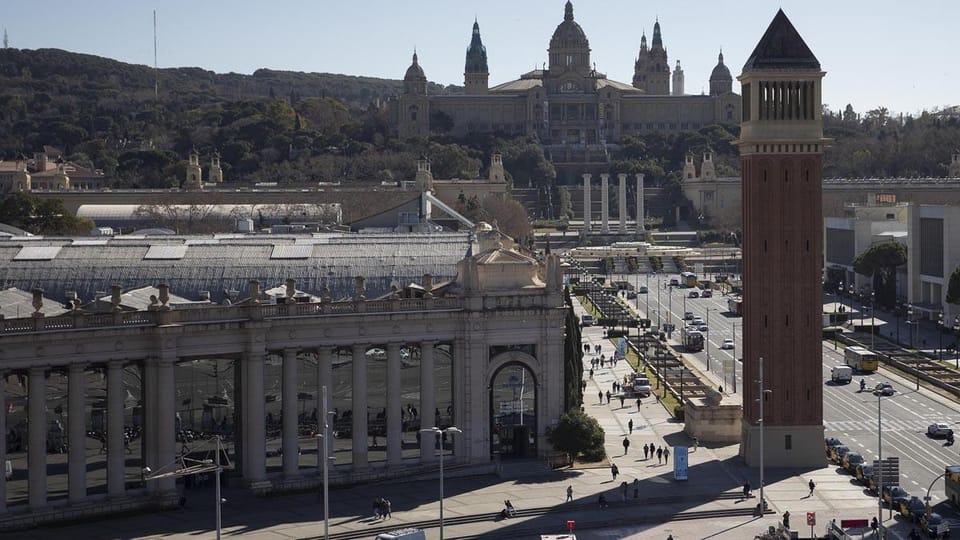
Barcelona City Council's Urban Planning management has rejected appeals for a Transport Museum at Fira de Montjuïc. This decision came despite a unanimous council vote in favour of the project on 30 January. The Associació Coordinadora Pro Museu del Transport has championed the museum for years. This group feels angered by the council's move. They now consider legal action against the council's stance.
Council Rejects Public Initiative
The council's full plenary session had previously approved the initiative. All six municipal groups supported it, including the ruling Socialist Party of Catalonia (PSC). This approval followed a popular initiative. The association gathered 4,000 signatures from residents for it. Additionally, Barcelona's Ombudsman, David Bondia, publicly supported locating the museum in the Palacio de Comunicaciones y Transportes. However, the council stated that neither the popular vote nor the Ombudsman's opinion is legally binding. This rejection came in May, after the association submitted its appeals in February.
Ferran Armengol, president of the Associació Coordinadora Pro Museu del Transport, expressed his indignation at the outcome. "We greatly fear they will not even reply," Armengol stated, referring to further appeals to the Generalitat. He criticised the dismissal of citizen participation mechanisms. Armengol, a professor of International Law and International Relations at the University of Barcelona (UB), believes this situation undermines democratic processes.
A Long-Standing Vision for Montjuïc
The idea for a permanent Transport Museum in Pavilion 1, the Palacio de Comunicaciones, has a long history. Proponents argue the site is attractive for visitors. It is also large enough to house vehicles representing Barcelona's mobility history. They also note the space has been underused for decades. Historically, the 1929 International Exposition featured a significant transport exhibition there. This makes the location symbolically fitting. The Montjuïc area, a major cultural and exhibition hub, would benefit from such an attraction.
Until recently, the association faced consistent rejection from both Fira de Barcelona and the City Council regarding the Montjuïc site. Fira de Barcelona maintained that the museum had no place in its future plans. These plans involve a major renovation for the International Exposition's centenary, scheduled for 2029. The association eventually secured meetings with First Deputy Mayor Laia Bonet and Mayor Jaume Collboni. The City Council then started looking for alternative locations.
Fira Concession and Legal Gaps
The municipal government proposed the Vall d’Hebron slab as a potential site. However, the association rejected this option. The 30 January plenary resolution notably included the Montjuïc location. The council had previously dismissed this site. Armengol focuses his criticism on two areas. He questions the effectiveness of citizen participation. He also believes there are legal gaps in the Fira's new concession. This concession was approved last year for 50 years, extending until 2075.
The Fira received this 50-year concession for the palaces after a provisional approval in March 2025 by the municipal Economy Commission. This approval became definitive automatically. No appeals were filed. Armengol claims the association could not appeal. Nobody informed them of this approval. He also believes a second plenary approval was necessary for such a significant long-term concession. This lack of transparency, he argues, is a serious concern for public accountability.
Impending Legal Challenges
The association learned about the concession extension months later during a meeting. They then found the document confirming the 50-year transfer for Fira. The entity has requested an official review of this transfer. The council has until October to respond. Additionally, they have submitted new appeals to the Urban Planning and Improvement Special Plan (PEMU) for the Fira pavilions. These appeals aim to force the inclusion of the museum in the Fira's future.
Armengol acknowledges that legal action, specifically an administrative contentious appeal, might not secure the museum itself. "The contentious appeal will not give us the museum; it could only annul the plan," Armengol explained. Such action would delay municipal operations. It would create significant inconvenience for the City Council. It could also disrupt the Fira's renovation schedule. The City Council maintains its administrative process was correct. "The project underwent public information in 2025 without any appeals," the council stated, defending its actions.
Armengol insists the situation highlights a deeper issue regarding citizen engagement and democratic principles. "There is a brutal contradiction; we are playing for more than just a museum," he said. "The council has a wonderful participation regulation and an Ombudsman, but it continues to conduct politics as usual." The association's desired outcome remains an agreement for the museum at the Palacio de Comunicaciones. Another possibility is to legally force the council to re-approve the Fira concession and pavilion plan. This could potentially disrupt the International Exposition's centenary celebrations in 2029, putting pressure on the municipal government.
Come and join our Barcelona English Speakers community on WhatsApp.
Originally published by El Periódico Barcelona. Read original article.