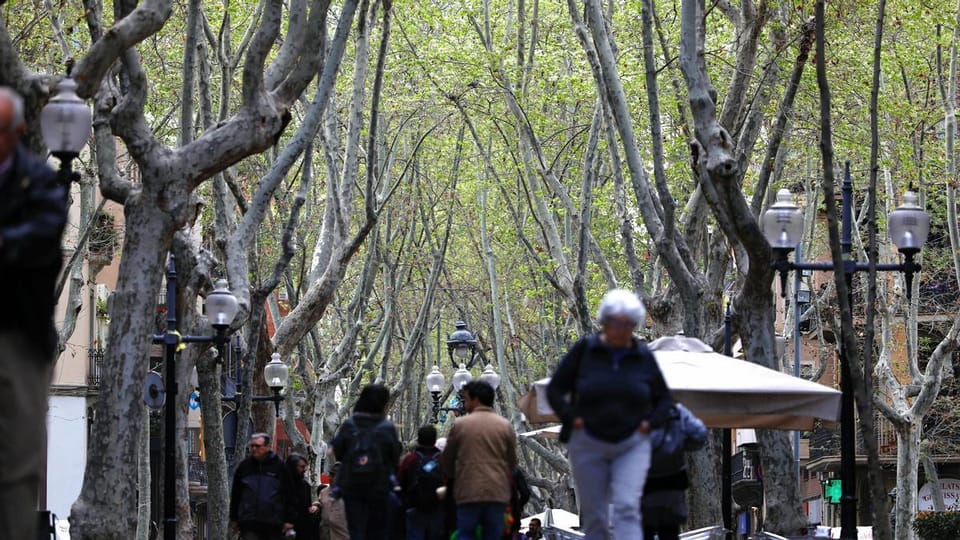
Barcelona City Council plans to replace over half of its plane trees in the next decade, a significant move to adapt the city's urban canopy to rising temperatures. This initiative targets the removal of more than 24,000 plane trees, which currently make up nearly 30% of the city's 152,000 street trees. It forms part of a broader strategy to increase green spaces and climate resilience by 2037.
Adapting to Rising Temperatures
The city has already experienced a 1.5°C temperature increase since the pre-industrial era, according to Ajuntament data. Projections from a 2025 study by the Institut de Ciència i Tecnologia Ambientals de la Universitat Autònoma de Barcelona (ICTA-UAB) indicate average maximum temperatures could rise by 4°C by the end of the century. Some inland areas might exceed 42°C. Urban green spaces play a critical role in mitigating heat. A systematic review of 308 scientific studies shows treed areas are, on average, 1.6°C cooler than those without trees.
Pere de Mas, executive coordinator of trees for Barcelona City Council, explained the replacement strategy. "We will not use mass felling," de Mas told Verificat. "This would cause logistical problems, with numerous street closures, and significant economic investment." Instead, the council will primarily wait for trees to die naturally. They will also integrate replacements into large urban remodelling projects. He noted that the percentage of plane trees has only reduced by about 3% in the last 15 years.
Barcelona's Tree Master Plan
The plan to reduce plane tree dominance is not new. The council first proposed it nine years ago with the Plan Director del Arbolado de Barcelona (Barcelona Tree Master Plan). This plan remains valid until 2037. It also aims to expand green areas and make them more resistant to pests and climate change. However, progress on plane tree replacement has been slow since its approval. Economic costs and the city's current climate transition point have hindered it.
The master plan sets a goal to increase tree cover by 5%. It aims to cover almost one-third of the urban surface. It also seeks to ensure 40% of tree species are adapted to climate change, up from the current 30%. This requires a substantial replacement of currently dominant species over the next decade. The Ajuntament's data shows 13 main species comprise the city's 152,000 trees. Plane trees account for nearly 30%. Hackberry trees are the second most common, representing half that number. The council wants no single species to exceed 15% of the total. This means replacing over 24,000 plane trees with other species.
Diversifying the Urban Canopy
The Ajuntament intends to increase the proportion of heat-resistant species. Examples include jacaranda and grevillea. Meanwhile, it will reduce cold-resistant species like robinia and red plum. This strategy aims to create a city better adapted to the new climate scenario. Jordina Belmonte, a biology doctor and botany expert at the UAB, emphasised the importance of diversification. "There is no single correct solution, because the 'ideal plant' does not exist," Belmonte stated. She stressed the need to diversify both species and their locations.
Belmonte also highlighted the importance of a multidisciplinary approach to designing these strategies. This includes incorporating expert opinions and considering public health, such as allergy risks. "We need to give people the opportunity not only to cool down," Belmonte added, "but also to avoid certain areas during flowering and pollen dispersal seasons."
District-Specific Strategies
Urban and climatic conditions vary significantly across Barcelona's districts. Ciutat Vella, for example, is projected to have the highest percentage of warm-climate species at 36%. The Índice de vulnerabilidad al cambio climático (IVAC), developed by the Área Metropolitana de Barcelona, identifies Ciutat Vella as having a high vulnerability to high temperatures. This applies to both its territory and population. Conversely, Sarrià-Sant Gervasi will have the highest percentage of cold-climate species at 50.2%. The IVAC identifies this district as one of the least vulnerable.
Green cover improves public health by purifying air and removing atmospheric pollutants. It also significantly reduces temperatures. Additionally, it enhances urban well-being by creating healthy recreational spaces. International research details these benefits.
Future Challenges for Barcelona's Trees
Reaching all the Plan Director del Arbolado's objectives by 2037 presents challenges. De Mas acknowledged the difficulties, citing economic and logistical obstacles. He also explained that planting many very warm-climate species is not yet feasible. "We still have cold winters from time to time," de Mas noted. Furthermore, a scarcity of warm-climate trees exists. European nurseries specialise in cold-climate trees, and "there are few warm-climate producers," he added.
Come and join our Barcelona English Speakers community on WhatsApp.
Originally published by El Periódico Barcelona. Read original article.