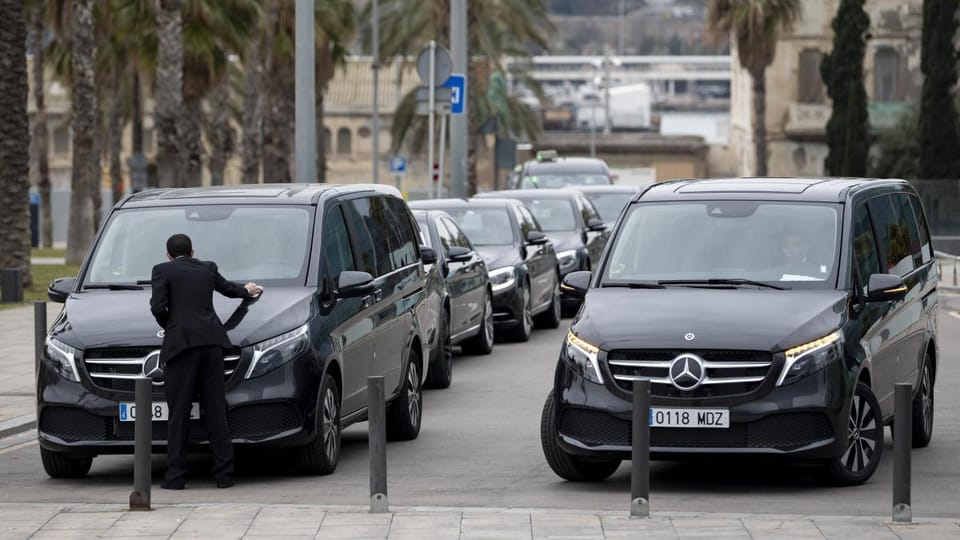
High-end VTC (Vehicles for Hire with Driver) operators in Barcelona are reporting a sharp rise in fines and what they describe as "unjustifiable" police actions. One incident on Sunday, 14th April, saw a Mercedes Benz E200 VTC stopped on Marina street, leading to a cancelled service for American tourists and a threat of a €4,001 fine.
The VTC driver was transporting an American couple celebrating their anniversary, providing a city tour and later football, Montserrat, Figueres, and a transfer to Nice for a cruise. During an alcohol checkpoint, a Guardia Urbana officer claimed the vehicle lacked the necessary permit to operate in the metropolitan area. The officer threatened to immobilise the vehicle and fine the driver €4,001, forcing the passengers to exit. The VTC company manager stated, "The clients did not like what happened at all and cancelled the service. The specialised agency they hired is asking us for explanations. All this causes us great harm. We are going to ask for compensation."
Romà Llort, representing VTC Gran Turisme de Catalunya, an organisation with 630 high-end vehicles, condemned the situation. He stated, "We publicly denounce the serious situation of persecution, harassment, and abuse that our associates are suffering as a consequence of absolutely disproportionate, arbitrary, and unjustifiable police actions." Llort added that vehicles operating legally face "humiliating inspections."
Regulatory Confusion and Disputes
Barcelona has an estimated 3,000 VTC vehicles in circulation. However, fewer than one-third possess the mandatory urban permit required to provide services within the metropolitan area. The taxi sector actively pressures authorities to curb these practices, leading to more frequent controls against irregular operations. The VTC sector claims the current regulations, a result of various decrees and court rulings, are so complex that even police officers struggle to interpret them correctly. They report fines for not observing holiday regimes from which they are exempt, and for not displaying mandatory badges that the Generalitat, the Catalan government, takes months to issue.
Another incident occurred near Park Güell, a major tourist attraction in the Gràcia district. A Mercedes van driver, providing a five-hour tour for clients from the airport, was stopped by an agent. The officer claimed the driver's documentation was incorrect and threatened a €4,001 fine and vehicle towing. The driver recounted, "They left me with the clients' luggage on the street, and it was raining!" The fine was later withdrawn, but the driver paid €200 for the towing service and lost two days of work. He explained, "Imagine the damage to our image this causes us. Clients who stay in five-star hotels and want no trouble hire us through specialised agencies."
Impact on High-End Tourism Services
The VTC sector argues these administrative errors lead to cancelled services, significant economic losses, and damage to their professional image. They highlight the irony of authorities allowing such issues after years of collecting "abusive fees" for licence renewals and system setup. These incidents directly affect Barcelona's tourism sector, particularly high-end visitors who expect reliable and smooth transport services. The uncertainty surrounding VTC operations can deter tourists who seek premium, pre-booked travel arrangements.
In contrast, sources from the Institut Metropolità del Taxi de Barcelona (IMET) suggest that incorrectly imposed sanctions for lacking the urban licence are not widespread. They stated, "We are aware of some specific cases, but it is not at all common." This difference in perspective shows the ongoing tension between the two transport sectors.
Calls for Clearer Transport Legislation
The VTC sector believes it is a collateral victim of the ongoing "taxi war." A new transport law, currently being processed in the Catalan Parliament, aims to differentiate high-end VTCs from those operating via ride-hailing apps. VTC Gran Turisme de Catalunya demands immediate solutions to the current regulatory confusion and police actions. They warn that they will pursue legal action if the situation does not improve. This ongoing dispute underscores the need for clear, enforceable regulations that protect both operators and consumers in Barcelona's competitive transport market.
Moving forward, the sector hopes the new legislation will bring much-needed clarity and stability. This will help ensure that high-quality transport services can operate without fear of arbitrary penalties, maintaining Barcelona's reputation as a welcoming destination for international visitors.
Come and join our Barcelona English Speakers community on WhatsApp.
Originally published by La Vanguardia Barcelona. Read original article.