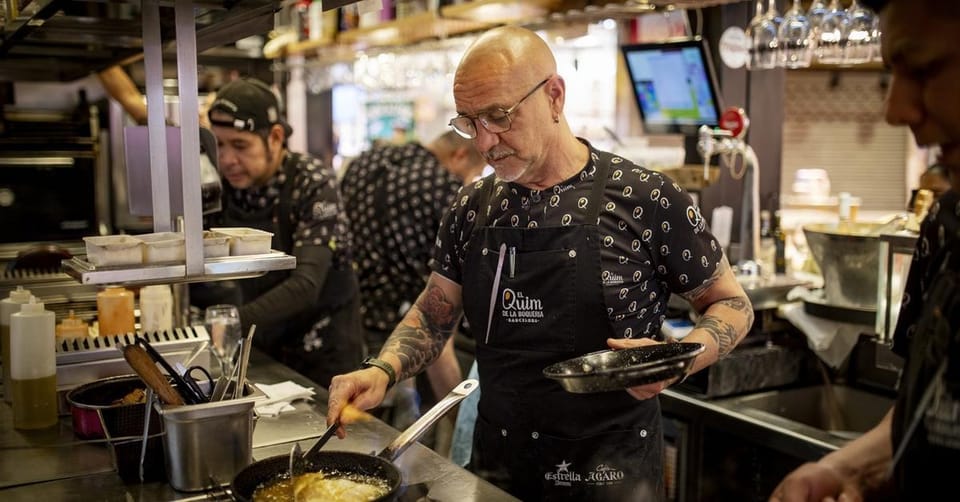
Chef Quim de la Boqueria's special fricandó dish garnered widespread acclaim from top culinary figures at Damm's 150th-anniversary celebration held at La Boqueria market on Sunday, 26 April. Renowned chefs including Carme Ruscalleda, Oriol Castro, Albert Adrià, and Rafa Zafra praised the traditional Catalan stew.
The event, which took place between the Liceu opera house and the market, saw Quim prepare 400 portions of the dish. Oriol Castro, from the acclaimed Disfrutar restaurant, reportedly ate two plates of the fricandó.
Quim described the evening as "a dream that night for all that it implied, for the peace and the feeling that was felt there, because people wanted to have a good time and because not every day you see so many personalities together at La Boqueria." He selected fricandó from a list of options provided by the event organiser, GSR.
Carme Ruscalleda specifically sought out Joan Font, President of the Catalan Academy of Gastronomy and Nutrition, and Rosa Mayordomo, its Vice President, to try Quim's fricandó. Quim stated, "It made me very happy to hear what they told me, they recognised the way I had cooked it."
Crafting the Acclaimed Fricandó
Quim, who will mark 40 years working at the Rambla market next year, prepared the dish using 40 kilogrammes of Angus beef flank. He ordered the beef a month in advance from Soler Capella stall and sourced moixernons, or wild mushrooms, from Petràs, along with local pine nuts.
The cooking process began at 06:00 on the Saturday before the event. Quim first floured and lightly fried all the beef flank. He then prepared a sofrito with onion, green pepper, leek, and natural hanging tomatoes, which he later blended and strained for a smooth sauce.
After combining the beef with the sofrito, Quim added the moixernons, a splash of beer, and aged wine. He continuously shook the pots to prevent the floured meat from sticking, a critical step to avoid a burnt flavour. The final additions were sautéed pine nuts, salt, and black pepper.
The inclusion of beer, a suggestion from fishmonger Engràcia over 25 years ago, adds a touch of bitterness that contrasts with the aged wine's sweetness. This balance contributes significantly to the dish's popularity. Quim slow-cooked the fricandó for two hours, then let it cool and rest for 24 hours. "The fricandó, like all stews, improves up to 40% more when left to rest," he explained.
La Boqueria's Future as a Gastronomic Hub
The success of the fricandó event led Quim to reflect on La Boqueria's potential. He believes the market could become "the best gastronomic centre in the world" if it allowed recognised chefs to establish themselves, drawing parallels to Madrid's San Miguel market.
However, Quim notes the market currently faces challenges. A recent vote on Sunday openings, not the first of its kind, again resulted in a "no," but with a narrowing margin. He attributes this shift to a significant number of stalls now belonging to a single owner who favours Sunday trading.
This consolidation of ownership, Quim suggests, contributes to the proliferation of lower-quality, uniform food offerings aimed at tourists, such as fried crests labelled as potato omelette or chicken paella. These items detract from the market's traditional gastronomic identity.
Despite these concerns, the Damm anniversary celebration momentarily transformed La Boqueria into a "gala" setting, showcasing its enduring capacity for high-quality culinary experiences. The event reignited discussions about the market's direction and its role in Barcelona's gastronomic landscape.
Come and join our Barcelona English Speakers community on WhatsApp.
Originally published by Ara Cat. Read original article.