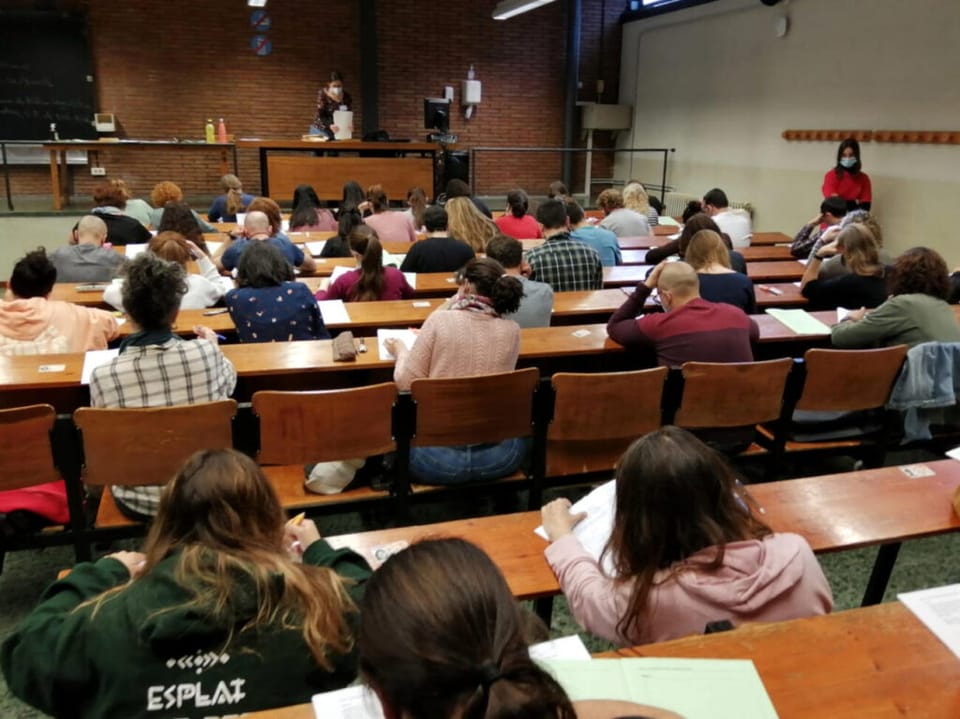
An alleged procedural irregularity during the recent C2 Catalan language exam has sparked controversy across Catalonia. Candidates reportedly revised their written answers after a scheduled break, potentially compromising the test's integrity.
The incident occurred during the first section of the C2 Catalan exam, which covers reading comprehension and written expression. This part concluded before a 30-minute intermission. Upon returning to the examination room, candidates received the exact same answer sheets they had previously used for their written texts. This allowed them to consult information, clarify doubts, or reflect on potential improvements to their work during the break, according to several candidates who spoke to VilaWeb.
Unprecedented Revision Opportunity
This unprecedented opportunity enabled students to review and correct their essays, a significant advantage over the usual conditions for such a high-stakes examination. Standard exam protocols strictly prohibit any form of external assistance or revision after a section concludes. The writing component, which candidates could amend, comprised three distinct tasks. The first required candidates to produce a text based on multiple sources. The second involved creating an original text for a public, professional, or academic purpose. Finally, the third task demanded an argumentative text suitable for a general publication, written in a formal register.
One candidate, who took the C2 Catalan exam at the Faculty of Law at the University of Barcelona, shared their experience with VilaWeb. They explained, "When we entered the classroom, examiners told us that, as a new feature this year, they would give us two booklets: one for questions and one for answers, which we would keep for the entire exam." The candidate continued, "After finishing the first part, we handed in both booklets, and the examiners checked for anything unusual."
Concerns Over Exam Legitimacy
The candidate expressed surprise at the subsequent events. "Upon our return, they gave us the same answer booklet, and then the examiner began explaining the second part," they recounted. "I looked around and immediately saw a girl taking out correction fluid, applying it to a word in her first essay, and writing over it." The candidate added, "During the break, you could search the internet, ask ChatGPT, or consult a dictionary to check what was wrong or right with what you had written. For me, this is a scandal, because it delegitimises the C2 exam, the highest level one can achieve in the Catalan language."
After the exam concluded, the candidate alerted examiners to the potential for widespread copying if they issued only one booklet. The examiners reportedly responded, "Personally, that also surprised me." The candidate concluded, "Basically, this was an exam where everyone could have copied."
Plataforma per la Llengua Demands Explanations
Plataforma per la Llengua, a prominent organisation advocating for the Catalan language, has received numerous complaints regarding this situation. The organisation considers these events serious, stating that such practices diminish the importance of the language. Òscar Escuder, President of Plataforma per la Llengua, criticised the procedure. He stated, "It is incomprehensible that halfway through a minimally serious exam, you have a break, can consult whatever you want, return, and modify it." Escuder further added, "This is a methodological scandal for any exam. It detracts from the importance of the subject matter, whatever it may be."
Plataforma per la Llengua believes this potential protocol error could compromise the validity and credibility of the C2 Catalan exam. Escuder warned, "Now they are taking a risk: anyone who has failed, I believe, can challenge it." The platform also argues that the exam conditions were inadequate and demands explanations from the responsible body, the Department of Linguistic Policy. The organisation is currently considering filing a formal complaint.
Sign up for our new entrepreneurs community Bizcelona, now accepting our second wave of applicants.
Originally published by VilaWeb Feed. Read original article.