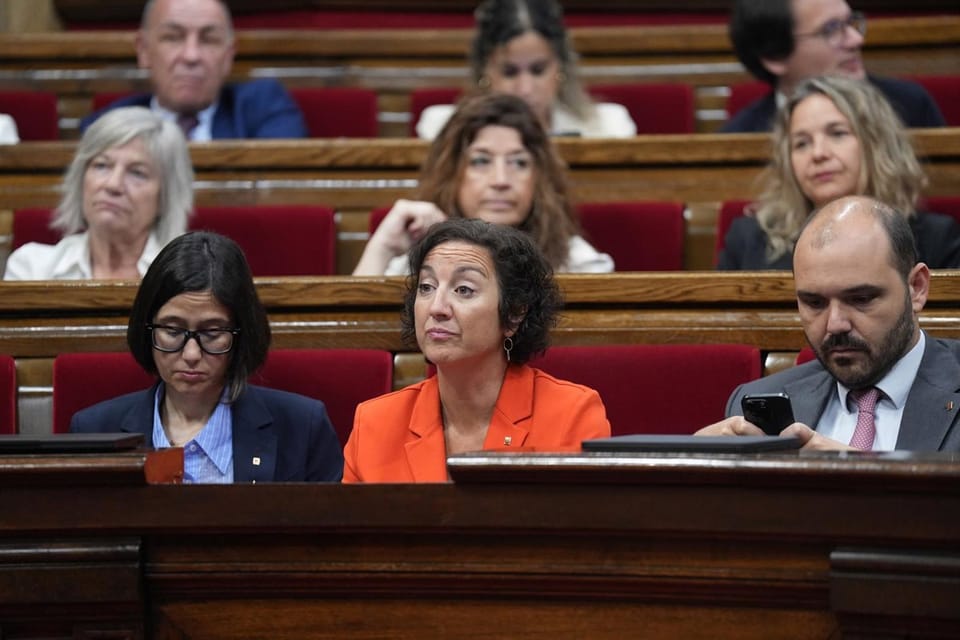
Barcelona is watching the Catalan Parliament as the 2026 Budget moves one step closer to approval. On Thursday, 4 June, MPs rejected the totality amendments tabled by opposition parties, allowing the draft to continue through the chamber.
The proposed accounts for the Generalitat set total spending at 49.162 billion euros. That is a 10.3% rise, or 4.604 billion euros more than in 2025. The plan also includes 4.146 billion euros in investment, up 45% and 1.289 billion euros more than in 2023. Economy and Finance minister Alícia Romero said the pressure from ERC and Comuns improved the 2026 accounts during negotiations.
The budget now goes to committee debates for each department, scheduled from 8 to 11 June. The final debate and vote are due on 2 July. If it passes, these will be the first budgets of Salvador Illa's government since he took office. PSC-Units deputy spokesperson Jordi Riba said a new budget gives stability and helps Catalonia respond to current international uncertainty.
ERC spokesperson Ester Capella said her party's agreements with the government mean Catalonia gains more sovereignty in political, fiscal, economic and governance terms. She also said ERC still wants the Generalitat to collect income tax, known as IRPF. Comuns leader Jéssica Albiach welcomed the extra money for housing, public transport and tackling inequality, but said the government must keep negotiating case by case.
Opposition parties were sharply critical. Junts group president Mònica Sales called the draft a bad budget, while PP leader in Catalonia Alejandro Fernández said it points to decline. Vox deputy Javier Ramírez described it as a deferred payment for pardons and amnesty, and urged ERC to back Vox's totality amendment. CUP deputy Laure Vega said the accounts do not deliver the shared prosperity promised by Illa, and criticised the lack of answers on housing, Rodalies, public schools and the Catalan language. Aliança Catalana leader Sílvia Orriols also attacked the draft, including the Comuns' position on the Barcelona Airport expansion.
The current draft follows an earlier attempt in February, which the government later withdrew in March after ERC did not confirm progress on IRPF collection. The Executive and ERC then agreed to keep negotiating without that issue as a red line, and in May they reached a deal for ERC's support. That agreement included the orbital railway line, changes in majorities at the Consorci de la Zona Franca de Barcelona, and a mixed state investment company in Catalonia. The Comuns also widened their deal in May, adding more housing funding and changes to the R-Aeroport project. The 2 July vote will decide Catalonia's financial framework for 2026.
For more Barcelona politics coverage, see our Community and Sport pages.
Originally published by Europa Press Barcelona. Read original article.