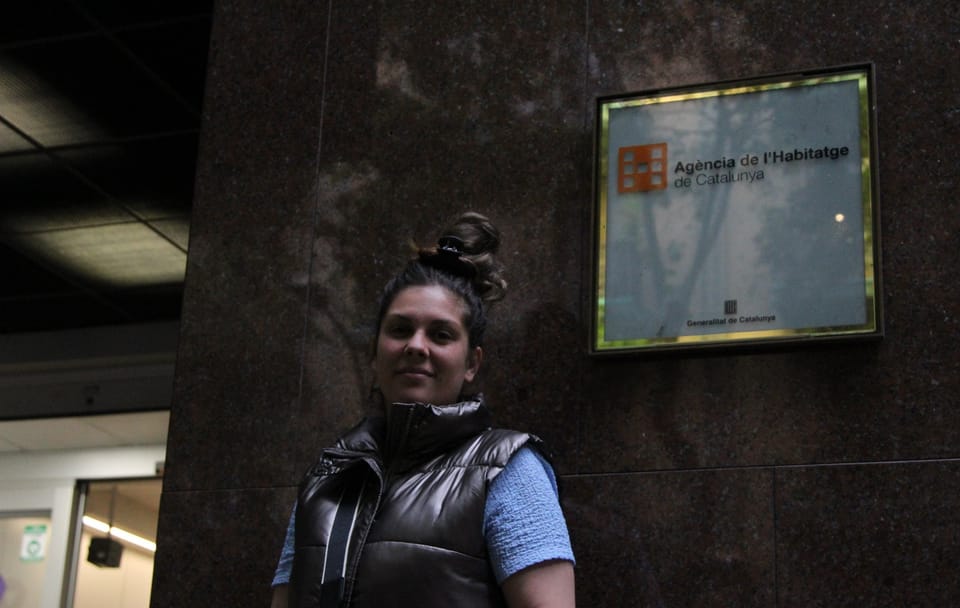
Barcelona families facing eviction from public housing will have their cases reviewed by the Catalan Housing Agency (AHC), after protests by housing activists last Friday. The agency will provisionally suspend removals in Barcelona and Sant Adrià de Besòs while it checks whether each household meets vulnerability criteria.
One of the cases is Saray Langarita, a 28-year-old mother who faces eviction from her home in the Polvorí neighbourhood, at the foot of Montjuïc, on 29 May. She moved into the public housing flat four years ago after a relative with a lifetime lease died. Langarita says she contacted the AHC straight away, but the agency has refused to offer her a social rent and municipal mediation services have not assessed her case.
She told Tot Barcelona that she previously struggled to pay 700 euros a month in rent in Badalona. She is now unemployed and says she has no realistic alternative in the private market.
At least ten similar cases have been identified in Barcelona, with half concentrated in Via Trajana, on the border with Sant Adrià de Besòs. The area once housed many former shanty town residents and still has several public flats with lifetime leases. Another resident, Nerea, lives there with her three children. Activists stopped a first eviction attempt in late September, but a new date is set for early June.
Carles Aparicio, 53, also lives in Polvorí with his eleven-year-old daughter. He returned to his childhood home six years ago after his mother, who holds a lifetime lease, entered a care home. Aparicio says the AHC does not want to evict him, but will not let him stay or put the flat in his name. He says he has tried the private market and social services without success.
The Community and Sport tag pages can help readers follow more local coverage, while housing groups continue to push for longer-term fixes. The AHC has said social rent agreements have not been available since 2022, and activists say that has helped drive more evictions. Current rules allow public housing residents to be regularised if they have lived in the home for at least two years.
Originally published by Tot Barcelona. Read the original report.