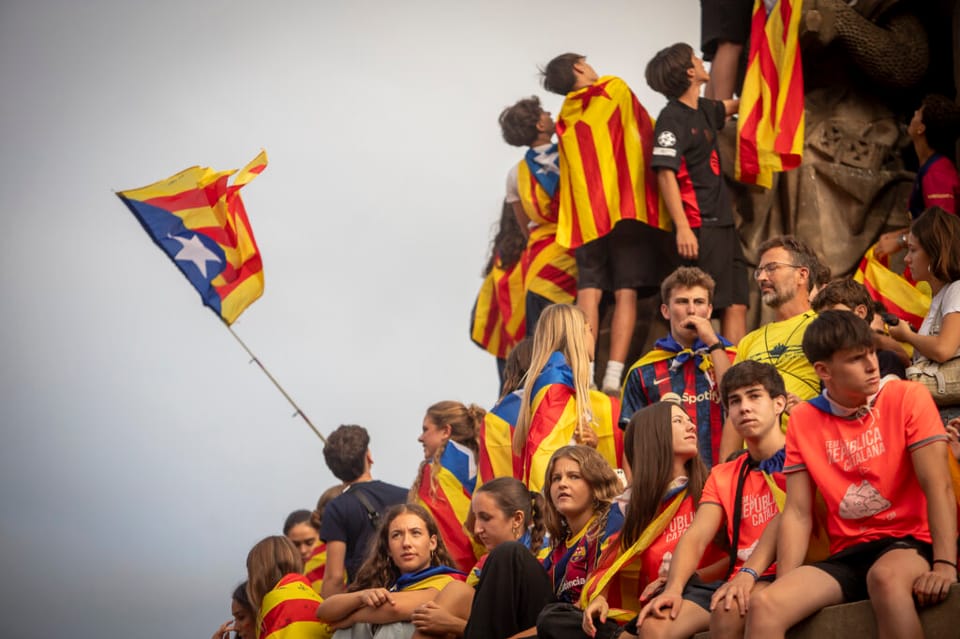
A recent commentary published by VilaWeb has highlighted a significant internal debate within the Catalan independence movement. This discussion focuses on a perceived narrative of defeatism amidst ongoing efforts and cultural vitality.
The commentary, reflecting on a recent trip to Mallorca, suggests a "stubborn feeling" that small battles are being won. This occurs even as a "worn-out refrain" of losing the larger war persists among some. This perspective directly contrasts with a "weight of pessimism" observed in certain sectors. The author of the commentary warns that this moral fatigue could ultimately be detrimental to the movement.
The author points to specific initiatives as evidence of continued mobilisation. For instance, the "Correllengua Agermanat", a language event, originated from young Mallorcans. This initiative, described as not stemming from major political structures, reportedly mobilises entities across the region. It also involves the entire independence movement, according to the commentary.
Challenging the Defeatist Narrative
The commentary further argues that this perceived energy does not align with a narrative portraying a defeated, demobilised, or inoperable country. It cites the vitality of the Catalan language on social media platforms as a counter-example. Additionally, a growing number of performances in Catalan are noted. These observations challenge the pessimistic outlook.
Furthermore, the author highlights FC Barcelona's display of the senyera, the Catalan flag, as a symbol of resilience. Catalan cinema's entry into international circuits also features in the commentary's arguments. The piece mentions Hollywood films being dubbed into Catalan. This occurs alongside the "intermittent but persistent" international resonance of the Catalan procés, even reaching Japan.
The commentary suggests that some individuals deliberately insist on portraying the movement as "residual" or "disintegrating". It characterises this narrative as "not innocent". The author claims it actively fuels discourses that thrive on frustration. These narratives, the commentary states, require a sense of defeat for their own justification.
Internal Critique and Institutional Debates
This "romanticism of defeat" is described as a "comfortable, sterile, and addictive place" by the author. The commentary posits that this "war of moral attrition" might represent one of the most subtle victories for "Spanish nationalism". This war, it argues, is fought both externally and internally, with the movement itself acting as a key driver.
The commentary warns that such defeatism not only impedes the construction of new structures. It also actively questions the legitimacy of existing ones. The author references suggestions, made "without much embarrassment", to dissolve TV3, the public broadcaster. These suggestions propose dissolving TV3 "for the good of the country" due to perceived contamination.
However, the author strongly questions the wisdom of abandoning TV3. The commentary describes the broadcaster as "one of the main instruments of cohesion and identity". Similarly, the piece discusses the Mossos d'Esquadra, the Catalan police force. It acknowledges that "dynamics and attitudes" not representing the country's values have infiltrated the force.
Despite these acknowledged issues, the author rhetorically asks if the movement is "willing to do without our own police". The commentary questions if they are prepared to "surrender this space without resistance". Such a renunciation would be "difficult to justify", particularly out of respect for agents who "risked everything for freedom" during pivotal moments.
Reframing the Future Narrative
The commentary concludes that debates about the future have become "impoverished". They are too often reduced to simple slogans that primarily serve to alleviate frustration rather than promote genuine progress. The author asserts that building from defeatism is impossible. Similarly, construction from frustration or falsehood is equally unfeasible.
Ultimately, the author proposes that the movement might not be "as bad as we tell ourselves". The core issue, it suggests, could be the narrative itself rather than the underlying reality. Changing this narrative is presented as the next crucial battle. This also involves isolating those who "intoxicate" the discourse, according to the commentary.
Sign up for our new entrepreneurs community Bizcelona, now accepting our second wave of applicants.
Originally published by VilaWeb Feed. Read original article.