

The Catalonia flood map update has entered its crucial final stage. Consequently, the Catalan government is now targeting smaller municipalities to improve preparedness for extreme weather. Following severe storms that submerged streets across the region, officials are prioritising preventative measures for towns with fewer than 5,000 inhabitants.
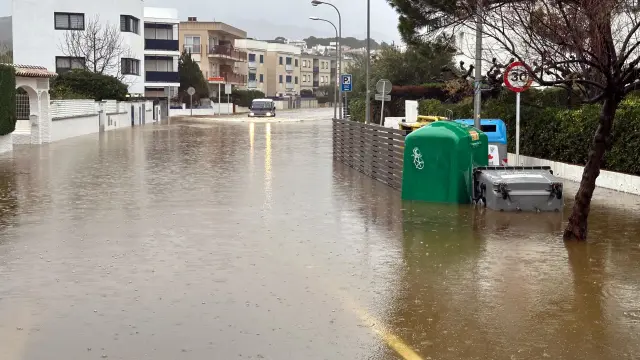
Recent weather phenomena, including Storm Harry, caused significant water accumulation in Girona. The impact of Storm Harry in Catalonia highlighted an urgent need for better planning. These events, alongside memories of past disasters in Alcanar, prompted the Generalitat to accelerate its risk assessment protocols.
Your browser does not support the video tag.
Home » Catalonia flood map update: Final phase targets small municipalities
Catalonia flood map update for smaller communities
Government spokesperson Sílvia Paneque confirmed the review process is nearing completion. The Catalan Water Agency (ACA) has finished assessing highly populated areas. Now, it is analysing risks for smaller villages.
“After finishing the sections of municipalities with more population, the ACA has begun working on those with fewer than 5,000 inhabitants,” Paneque explained. She noted the project is in its final phase. However, technical work will continue for months to ensure accuracy.
These updated maps are a crucial preliminary step for urban planning. For instance, emergency services recently managed over 457 storm-related incidents. This underscores the necessity of these preventative tools. Therefore, the maps will determine safe construction zones. They will also identify areas needing structural intervention to mitigate flood risks.
Infrastructure projects continue despite rainfall
Heavy rainfall in recent months pushed reservoir levels above 80% capacity. Despite this relief, the government maintains the drought crisis of three years ago requires a permanent structural solution.
The government is proceeding with its water security plan regardless of current reservoir levels. The strategy aims to decouple the region from traditional rain reliance. Specifically, Catalonia targets producing 70% of its water from non-conventional sources by 2030.
Paneque stated that investment remains steady. Key projects include expanding the Tordera desalination plant and constructing a new facility in Cunit-Foix. Meanwhile, engineers are drafting the construction phase for a proposed plant on the Costa Brava.
Officials indicated maintaining this investment pace is essential. It will prevent future shortages and ensure the region avoids critical water insecurity during dry spells. This focus on water security is part of a wider effort to address critical strain on national infrastructure across multiple sectors.
Get all of the news delivered to your phone via our WhatsApp Broadcast Channel .
