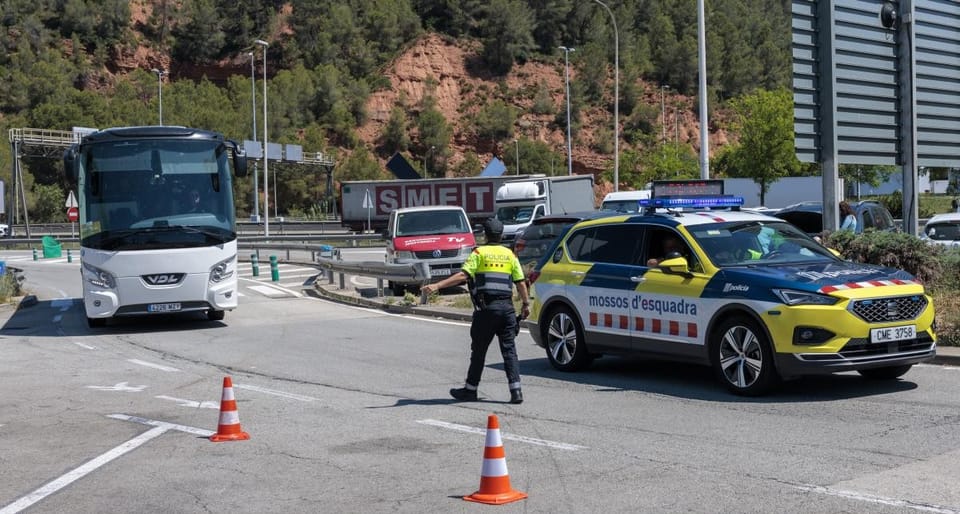
Barcelona-area drivers are likely to see more roadside checks on the AP-7, as the Mossos d’Esquadra step up controls on lorries and coaches across Catalonia’s main roads. The move is aimed at improving road safety and reducing congestion, especially on routes that carry heavy traffic through the region.
Between January and April this year, police carried out 2,864 controls on transport vehicles across Catalonia, leading to 9,479 inspections. The AP-7, which has seen more traffic since tolls were removed in 2021, remains a key focus for the Servei Català de Trànsit and the Mossos.
Marc Patxot, head of the Southern Metropolitan Traffic Area of the Mossos d’Esquadra, spoke at the Porta Barcelona service area in Castellbisbal. He said the force is not trying to single out the AP-7, but is increasing checks because so much traffic uses the motorway. The operation also covered other major routes, including the A-2 and the C-25.
The figures show a mixed picture. Monthly average controls on all transport vehicles rose from 657 to 716, while inspections increased from 2,314 to 2,370. Average monthly fines fell slightly, from 2,054 last year to 1,965 this year. For lorries, police carried out 2,374 controls, inspected 8,264 vehicles and issued 7,219 fines between January and April.
Passenger transport was also checked, with 490 controls, 1,214 vehicles inspected and 640 fines issued in the same period. Police say the most common problem is drivers not respecting working hours and rest periods. Officers now check up to the previous 56 days, rather than 28, and also carry out alcohol and drug tests, plus checks on vehicle documents and technical condition.
In the Barcelona area, these checks are part of a wider effort to manage heavy traffic on the roads people use every day. For more local transport coverage, see our Sport and Community pages.
Join our Barcelona English Speakers community on WhatsApp.
Originally published by La Vanguardia Barcelona. Read original article.