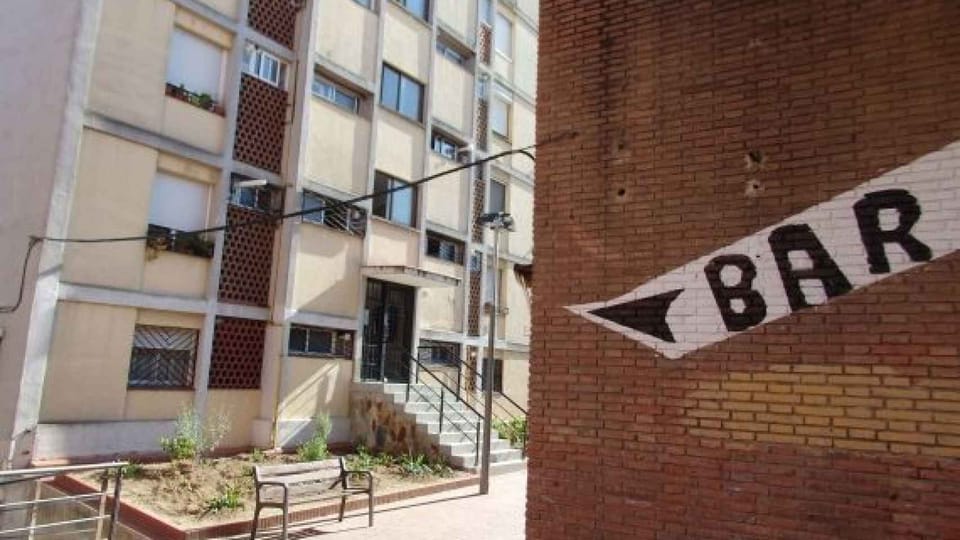
Ciutat Meridiana, in Barcelona's Nou Barris district, is the city's lowest-income neighbourhood. Recent data from the Institut d'Estadística de Catalunya (IEC) confirms this. This area, originally constructed in the 1960s as social housing, starkly illustrates Barcelona's significant economic disparities. The IEC report highlights how some zones thrive economically, while others battle decades of social and urban inequality. This inequality profoundly impacts the daily lives of residents.
The neighbourhood emerged during a period of rapid demographic growth in Barcelona. Immigration from other Spanish regions largely drove this growth. To address the urgent need for housing, officials developed Ciutat Meridiana with public housing buildings. These structures aimed to provide affordable homes for the city's expanding population. Before its urbanisation, the land formed part of the ancient Vallbona area. This territory originally belonged to the municipality of Sant Andreu de Palomar. Sant Andreu later became part of Barcelona, integrating these lands into the city's expanding urban fabric. This historical context shaped the area's development.
Enduring Socio-Economic Challenges
Today, Ciutat Meridiana faces numerous social and economic challenges. Residents commonly refer to it as "Eviction Village" (Villa Desahucio). This nickname stems from the high number of evictions during the 2008 economic crisis. The neighbourhood has suffered significantly from a lack of job opportunities. Economic precarity among its inhabitants remains a persistent issue. Additionally, its elevated location and limited transport infrastructure further complicate access. This situation hinders economic development. It also reduces connections to other parts of the city. These factors directly impact the quality of life for its residents, making daily commutes and access to services more difficult.
Nou Barris: Barcelona's Poorest District
Ciutat Meridiana forms part of the Nou Barris district. The IEC identifies Nou Barris as having Barcelona's lowest socio-economic level overall. Sant Andreu and Sant Martí districts follow in this ranking. This situation contrasts sharply with other city areas where the average income is considerably higher. The economic realities within Barcelona vary dramatically from one neighbourhood to another. This reflects decades of uneven urban and social development. Other low-income areas include Besòs i el Maresme and Trinitat Vella, also cited in the IEC data. These neighbourhoods share similar struggles with economic vulnerability.
Wealthiest Neighbourhoods Highlight Disparity
Conversely, the Sarrià-Sant Gervasi district represents the opposite end of Barcelona's socio-economic spectrum. Within this affluent district, Les Tres Torres stands out as the neighbourhood with the highest average annual income per person. It reaches 32,958 euros annually. This figure positions Les Tres Torres as Barcelona's wealthiest neighbourhood. It is also the seventh highest-income area in all of Spain. Pedralbes and Sant Gervasi-Galvany secure the second and third positions among Barcelona's highest-earning neighbourhoods. Residents in Pedralbes earn an average of 32,462 euros annually. Those in Sant Gervasi-Galvany report 30,407 euros per year. These figures underscore the profound economic divides within the Catalan capital. They highlight the city's dual reality.
The persistent socio-economic challenges in Ciutat Meridiana and the broader Nou Barris district highlight ongoing urban inequality in Barcelona. Addressing these disparities remains crucial for ensuring equitable development and improving the quality of life for all city residents. Future urban planning and social policies must focus on integrating these areas more effectively into the city's economic and social fabric. This will help foster a more inclusive and prosperous Barcelona for everyone.
Come and join our Barcelona English Speakers community on WhatsApp.
Originally published by Metrópoli Abierta - Urban Life. Read original article.