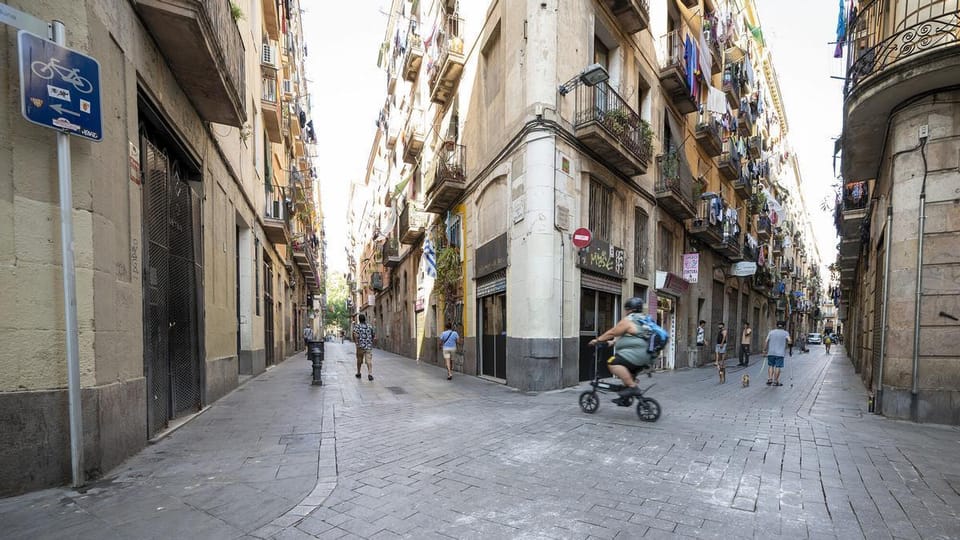
Barcelona City Council has launched a new urban strategy for the Ciutat Vella district, aiming to revitalise seven vertical and 15 horizontal axes by 2035. This detailed plan seeks to improve daily life for residents and strengthen community connections in the city's central district.
The strategy follows nearly two years after the presentation of the ambitious Pact for Ciutat Vella. The council identified these axes as key to boosting the district's dynamism and social life. Ciutat Vella is Barcelona's densest district, with 858 residents per hectare. It also has the highest percentage of foreign population at 54% and significant tourism, with 14,000 visitors per square kilometre and 28,470 accommodation places.
Despite its vibrancy, Ciutat Vella faces significant challenges. It has the city's lowest average per capita income, at €16,838 annually, and a lower life expectancy than other districts. Additionally, 36.6% of its population lives at risk of relative poverty. Ivan Pera, the Ciutat Vella Commissioner, stated that shaping the district's future involves modifying the Metropolitan General Plan (PGM) to gain residential land. He added that other areas of work do not affect urban planning.
Reinventing Urban Connections
The council believes previous urban intervention approaches, used extensively in the 1980s and 1990s, are now "exhausted." The new strategy adopts a holistic vision, connecting with inhabitants and community life. It aims to "make neighbourhood" and reactivate the district. The council will carefully consider each intervention, from housing policies to commercial activity and mobility, in an integrated way. This avoids merely patching specific areas. Instead, it focuses on entire zones or "nodes."
To guide these actions, the plan identifies main pedestrian routes that connect the district with the rest of Barcelona. Seven of these are vertical axes. The Raval-Universitat-Mar axis, linking Plaça Universitat, Joaquim Costa, La Rambla del Raval, and Drassanes, is a key example. Officials recognise it as critical for strengthening the centrality of El Raval. Plans involve restructuring daily routes and improving internal and external connectivity. For instance, work on Avinguda de Drassanes will improve sea connectivity. This prevents it from remaining the neighbourhood's "backyard."
Key Vertical Axes for Development
Improvements to facilities along these axes will go beyond isolated actions. They will interrelate different projects. For example, if a sports facility improves, like the planned conversion of a sports centre into a pavilion, it will link to schools. It will also aim to increase urban green spaces and renew the surrounding public areas. Currently, 47% of Ciutat Vella's streets lack trees.
Other vertical axes will gradually integrate the district more closely with the city. The Paseo de Gràcia-Mar axis, encompassing Portal del Àngel, Bisbe, Ciutat, and Regomir, follows the historic Roman decumanus. This axis aims to integrate shops, public spaces, and a cohesive network of buildings. It also includes what officials call "interstices of opportunity." The Girona-Mar axis, running through Méndez Núñez, Plaça Sant Pere, Plaça Sant Agustí Vell, Tantarantana, Reguera, and Pau Vila, offers potential. It connects the Eixample district to the coast via the old Baluard and a section of Estació de França.
The Joan de Borbó axis is a coastal corridor uniting the northern, central, and southern parts of the neighbourhood. The Ciutadella axis, including Lluís Companys, Paseo Picasso, and Circumval·lació, acts as an "urban hinge," according to municipal documents. It features one of Barcelona's main parks. The strategy advocates improving accessibility, contact points with the urban fabric, and relationships with surrounding neighbourhoods. This will boost Ciutadella as a social and civic epicentre for the district.
Revitalised Rambla and Via Laietana
Two other strategic vertical axes, La Rambla and Via Laietana, have already seen reurbanisation. La Rambla, a central and symbolic artery for the district and city, uses its cultural offerings as a guide for its gradual transformation. This aims for better coexistence between residents and tourists, alongside its commercial offerings. Via Laietana has also undergone a metamorphosis. It now improves connections between neighbourhoods and with the rest of the city. This supports the council's commitment to more sustainable mobility. Along this axis, the council wants to foster alignment between institutions and businesses.
The City Council also highlights 15 horizontal axes. These interlink neighbourhoods and act as bridges to other districts. Their centrality will strengthen as a driving force for their respective environments. These include Tallers-Canuda-Sant Pere més Baix-Rec Comtal; Ferlandina-Santa Anna-Comtal-Sant Pere Més Alt-Rec Comtal; Riera Alta-Carme-Portaferrissa-Avinguda de la Catedral-Jardins Pou de la Figuera; Sant Antoni Abat-Hospital-Llibreteria-Boria-Carders-Portal Nou; Sant Pau-Plaça del Pi-Avinguda de la Catedral-Jardins Pou de la Figuera; Nou de la Rambla-Plaça Reial; Marquès de Barberà-Unió-Ferran-Princesa; Arc del Teatre-Escudellers; Ample-Paseo del Born-Ciutadella; Paseo de Circumval·lació; Moll de la Fusta-Doctor Aiguader; Eix Ginebra; Andrea Dòria; Pepe Rubianes; and Moll de Pescadors-Escar-Drassana.
Future Projects and Goals
This extensive work serves as a starting point for "motor projects." These projects focus on enhancing the economic, cultural, and employment centrality of the area. The two-year analysis also identified around 30 "strategic points" across the district. These points can act as social and economic drivers for their surroundings. The strategy suggests applying a consistent urbanisation code and improving urban elements in these areas.
The district, in collaboration with Foment de Ciutat Vella, will develop this detailed analysis through three missions: generating networks and structuring; improving, updating, and protecting; and activating, dynamising, and balancing. These missions branch into 12 general lines of action. These further divide into 50 proposed transversal actions. These actions cover a wide spectrum. They range from rehabilitating and creating new housing, as the council recently announced, to promoting new commercial and social uses on ground floors. They also include increasing climate-adapted spaces in a district with fragmented public spaces and green areas. Additionally, they will study the coastal corridor and improve day and night lighting.
Upcoming projects include reforms of Carrer de Pepe Rubianes and improvements to Plaça Poeta Boscà and its surroundings. Other plans involve the reform of Plaça de la Gardunya, the remodelling of Plaça dels Àngels, and the reorganisation of La Rambla del Raval and adjacent squares. The Can 60 project, the remodelling of Fotògrafs Català, and the connection of Carrer de Wellington with Ciutadella, linking to the Sant Pere, Santa Caterina i la Ribera neighbourhood, are also planned. These projects, along with others across the district, aim to reshape Ciutat Vella for its residents.
Come and join our Barcelona English Speakers community on WhatsApp.
Originally published by El Periódico Barcelona. Read original article.