

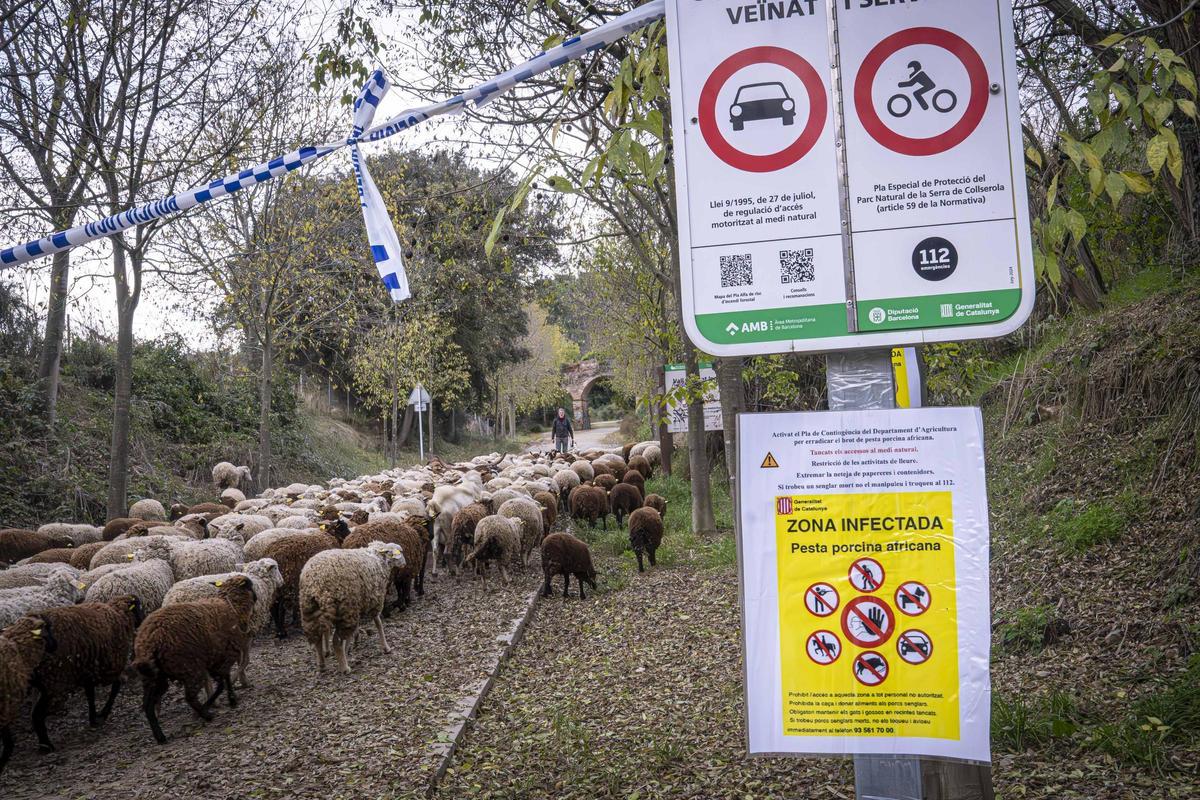
The Generalitat has announced a partial relaxation of Collserola Natural Park restrictions, effective immediately. Consequently, the popular natural space near Barcelona is now open for daytime leisure. This follows a strict lockdown since late November after African swine fever (ASF) was detected in Cerdanyola del Vallès. The city previously addressed similar concerns when recent easing of livestock restrictions in Catalonia occurred.
Daytime Access and Night Closures
According to a new resolution from the Department of Agriculture, published in the Diari Oficial de la Generalitat, the park is now open between 06:00 and 22:00. However, authorities emphasise that strict limitations remain to prevent virus spread.
Your browser does not support the video tag.
Home » Collserola Natural Park Restrictions: Day Access Returns After Easing
Under the new rules, visitors may enter in groups of up to 10 people. Furthermore, all activities must stay on delimited paths. Venturing into wooded areas remains prohibited to minimise wildlife contact.
While daytime access has been restored, the park closes nightly from 22:00 to 06:00. This curfew allows technical teams to continue wildlife control operations undisturbed. Agriculture Minister Òscar Ordeig clarified that this restriction applies to nine municipalities within the park’s boundaries.
During these night hours, access is forbidden for both people and domestic animals. Exceptions apply only to residents accessing their homes, or those travelling to schools, restaurants, and sports or equestrian facilities. “Although no positive case has been detected in Collserola so far, the game control plan for the area recommends the night closure,” Minister Ordeig stated.
Ground Zero and Low-Risk Zones
The government’s approach differentiates between the immediate outbreak area and surrounding buffer zones.
- Ground Zero (High Risk): In the 12 municipalities within a six-kilometre radius of the initial focus in Cerdanyola, restrictions remain largely unchanged. This includes towns such as Terrassa, Sabadell, Sant Cugat del Vallès, and Rubí.
- Low-Risk Zone: In the 73 municipalities located between six and 20 kilometres from the focus, general restrictions have been lifted. However, hunting remains prohibited unless necessary for disease containment, and livestock herds are forbidden from leaving the zone. Strict bans on feeding wild boars remain in force.
Rising Cases and a Long Timeline
Despite the reopening of paths, the veterinary situation remains serious. On Thursday, services confirmed 18 new positive ASF cases in wild boars found dead within the high-risk zone. Therefore, the total number of affected wild animals now stands at 103.
Minister Ordeig warned that eradicating the virus would be a slow process. He noted that an estimated 200 wild boars inhabit the high-risk perimeter alone. Drawing comparisons to successful eradication campaigns elsewhere in Europe, he suggested the effort could take years.
“In countries where work has been done with greater diligence, such as Belgium and the Czech Republic… it took a year and a half to eradicate the disease,” Ordeig observed. He added that a further year of precautionary quarantine would likely be required to ensure no new cases emerge.
Join Barcelona English Speakers WhatsApp Community .
