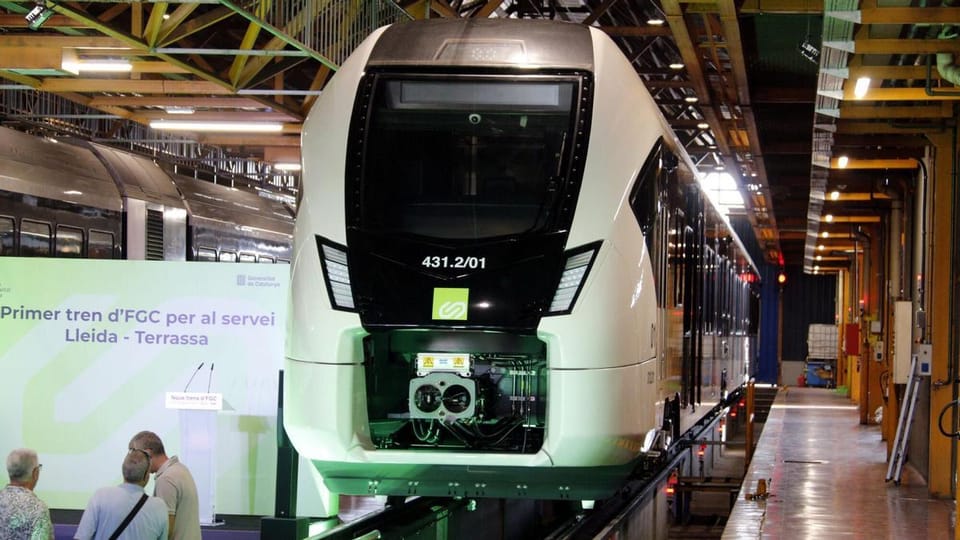
Catalan Government Railways (FGC) will assume management of the Lleida commuter rail lines RL3 and RL4. This change will occur by the end of this year. This move promises progressive service improvements for passengers travelling between Lleida, Cervera, and Terrassa. The initiative aims to significantly enhance public transport options across the region.
FGC expects the first improvements to become noticeable once the transfer is complete. These include the introduction of four new Stadler trains. Each train offers 439 seats, providing greater capacity than the current rolling stock. Additionally, FGC will install its real-time passenger information systems. These will be at the 14 stations it will manage. These stations include Bell-lloc d'Urgell, Mollerussa, Golmés, Castellnou de Seana, Bellpuig, Anglesola, Tàrrega, Cervera, Sant Guim de Freixenet, Sant Martí Sesgueioles, Calaf, Seguers-Sant Pere Sallavinera, Aguilar de Segarra, and Rajadell.
Carles Ruiz, President of FGC, explained the progress to El Periódico. He stated, "We are working in coordination with Renfe and Adif to give a solution to all the challenges that arise." Ruiz is meeting with local councils this month to outline the service transformation. The operator plans station reforms, installing new access and ticket sales systems. A general change to the stations' image will also occur.
New Trains and Real-Time Information
The new service will offer 14 daily services in each direction between Lleida and Cervera. Five of these services will continue onwards to Terrassa. This marks a substantial increase from the current RL3 line. Renfe operates this line with only two daily services. One of the four new trains is currently undergoing tests. This is happening at FGC's Pla de Vilanoveta workshop in Lleida. Stadler's factory in Valencia is constructing the remaining three trains. FGC confirms these will be ready before the year ends.
FGC will operate on tracks owned by Adif, Spain's railway infrastructure manager. This arrangement could affect service operation. Furthermore, between Manresa and Terrassa, FGC trains will share tracks and stations with Renfe services. This requires careful compatibility for passenger information systems. Ruiz acknowledged these operational complexities. He also conveyed caution to local municipalities, despite high expectations for the new operator. The current service does not meet regional needs.
Station Upgrades and Service Expansion
Local councils recall the significant transformation of the Lleida-La Pobla line. FGC took over this line when it was close to closure. Since then, user numbers have increased sixfold due to infrastructure updates. Ruiz stated, "In meetings with the mayors, we convey that we need time to properly understand the line's operation. We need to get used to working in a different environment, as in this case we operate on Adif's infrastructure. However, we believe this service can evolve significantly in the future."
The train journey time between Lleida and Mollerussa or Lleida and Tàrrega will be similar to car travel. This factor, combined with operating in an economically developing area, suggests significant growth. Ruiz anticipates this "if we are capable of offering a competitive mobility service." The first year's trend will indicate if users choose the train over private vehicles. This will shape the service's future growth.
Boosting Regional Connectivity
FGC believes that good acceptance could generate high-intensity transport between Lleida and Cervera. This would create a public railway transport system meeting the needs of Lleida's metropolitan area. Meanwhile, FGC is expanding the Pla de Vilanoveta railway workshop in Lleida. This facility will become the Lleida Commuter Rail Operations Centre. It will feature equipment for train maintenance. It will also include a management centre and driving simulators for new train drivers. This expansion supports the long-term vision for improved regional connectivity.
Sign up for our new entrepreneurs community Bizcelona, now accepting our second wave of applicants.
Originally published by El Periódico Barcelona. Read original article.