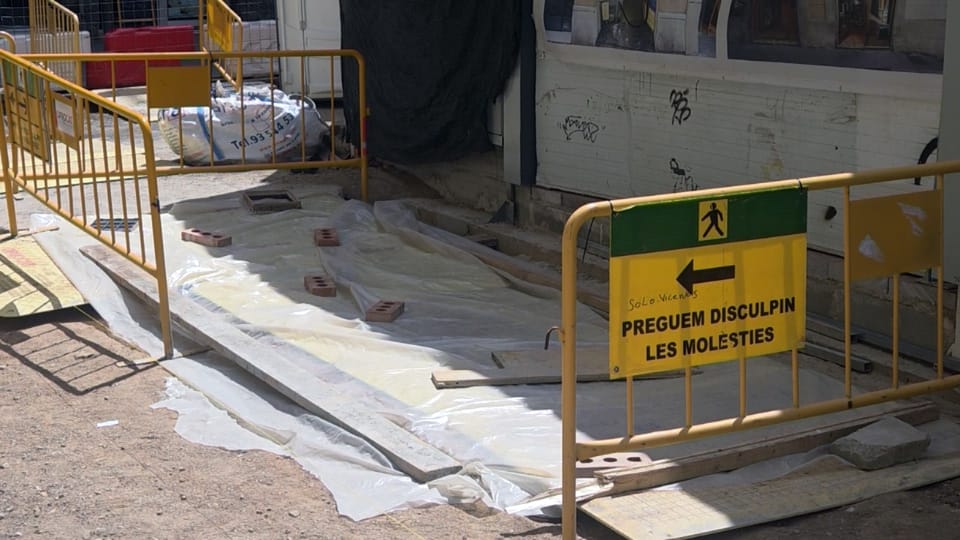
Construction work at Gràcia's Abaceria Market has uncovered a previously hidden entrance to Air-Raid Shelter 230 in Plaça del Raspall, a significant Civil War memory space.
The discovery occurred at the junction of Torrijos Street and Puigmartí Street during preliminary works for the market's final renovation. This structure is one of the original access points for the shelter, built during the Francoist bombings to protect local residents.
The Barcelona Archaeology Service confirmed to Infobarris that technicians had been tracking this specific shelter for some time. Heritage services will now document and study the site to determine its conservation status and historical value.
The shelter forms part of Barcelona's extensive network of underground spaces. Authorities created these to protect the civilian population from air attacks during the Civil War. Municipal protocol dictates that any future intervention must ensure the preservation of this heritage element.
City Council technical staff now await the Catalan police, Mossos d'Esquadra, to enter the shelter. They will check the underground structure's condition and safety. This finding again highlights the rich historical memory hidden beneath many of the city's districts.
Gràcia's Underground Heritage
Gràcia district saw the construction of approximately 90 air-raid shelters during the Civil War. Most of these disappeared or were sealed off over time. However, some remain underground, including the notable shelters in Plaça del Diamant and Plaça de la Revolució.
Neighbourhood groups and memory recovery organisations advocate for these spaces. They want them preserved, signposted, and explained to make them accessible to all citizens. This ensures public understanding of Barcelona's wartime past.
Similar Discoveries Across Barcelona
The Plaça del Raspall shelter joins other similar discoveries made in recent years. Public works projects have uncovered these sites, particularly in districts like Gràcia, Sants-Montjuïc, Eixample, and Ciutat Vella. These areas had an especially high density of air-raid shelters during the conflict.
These findings continually enrich Barcelona's historical record. They offer tangible links to a critical period in the city's past. Residents and visitors can gain a deeper appreciation for the resilience of Barcelona's people.
As the City Council proceeds with its assessment, the future of Air-Raid Shelter 230 will become clearer. Its documentation and potential public access will add another layer to Barcelona's preserved historical memory. This ongoing work helps connect current generations with the city's wartime experiences.
Come and join our Barcelona English Speakers community on WhatsApp.
Originally published by betevé. Read original article.