

The La Mina community centre renovation has officially started in Sant Adrià de Besòs, on Barcelona’s metropolitan edge. This historic building, known as the Casal Cívico, has now closed for a comprehensive €2.9 million upgrade. Consequently, it signals the first phase of a major €100 million investment package pledged by Generalitat President Salvador Illa.
However, local residents view the project with a mixture of expectation and deep-rooted skepticism. For many, the success of this latest regeneration attempt will depend not just on construction, but on genuine community engagement. Therefore, the administration faces a significant challenge.
Your browser does not support the video tag.
Home » La Mina community centre renovation begins €100m regeneration plan
A Symbolic La Mina Community Centre Renovation
The community centre holds a special place in local history. It originated from fierce neighbourhood struggles in the 1980s. Residents originally demanded dignified services for children and young people. Jacob Muñoz, a member of the La Mina Children’s Casal association, explained the building’s significance.
“One of the first neighbourhood movements in the area was a camp to demand quality services… that’s why people feel it is very much theirs, as something very hard-earned.”Jacob Muñoz, La Mina Children’s Casal association
The refurbishment uses Next Generation EU funds. It should last approximately one year. The project involves raising the roof to make the second floor habitable. Currently, low ceilings and poor ventilation render it unusable. This change will add around 650 square metres of usable space. Planned improvements include a new auditorium, an accessibility elevator, photovoltaic panels, and upgraded heating and electrical systems.
Community Skepticism Surrounds the Project
Despite the promise of better facilities, the mood among users is bittersweet. The Casal Infantil association serves 50 minors simultaneously. It has had to relocate its educational and leisure activities. Organisers claim they received no assistance from the Generalitat for the move. They also had to fund equipment storage themselves.
“They told us that after Christmas we could no longer enter, without giving us time to notify the families,” Muñoz said. He noted that an understanding was eventually reached due to the “emotional importance” of the move.
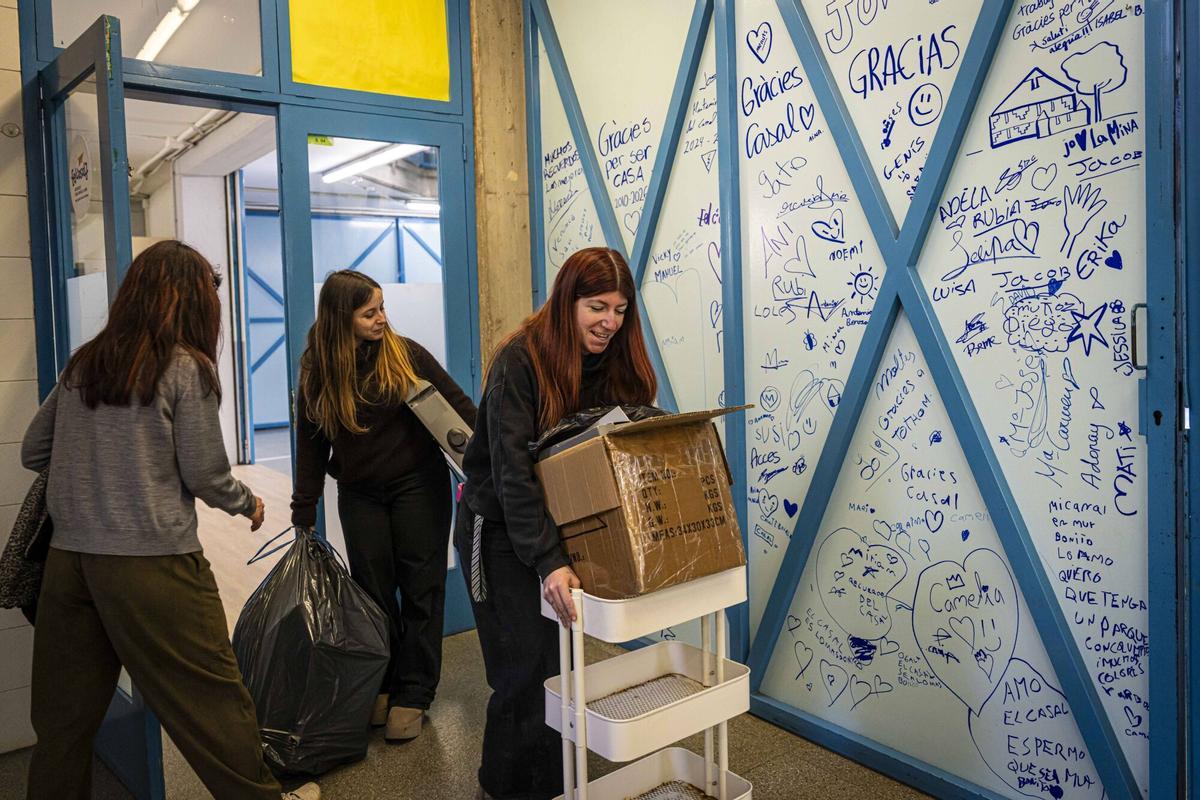
Before the closure, residents left handwritten messages on the walls and doors. Muñoz describes this as a form of “revenge” for the lack of a participatory design process. The association argues the new layout does not fully address community needs. This reflects a broader feeling that the administration is not listening to a weary population.
The Wider 2030 Plan and the ‘Venus’ Block
The La Mina community centre renovation is just the opening move in a roadmap extending to 2030. A critical component is the demolition of the dilapidated Venus housing block, now scheduled for 2028. Meanwhile, the La Mina Consortium has shifted its rehousing strategy. It now prioritises purchasing second-hand apartments over constructing new social housing. The administration announced this policy change without prior consultation.
Local organisations are calling for a reset in relations with the administration. They demand a review of previous failures and a new, transparent process. This process must give residents a real voice in their neighbourhood’s future. “The first two steps of the new plan have not gone well, but we are in time to correct them,” Muñoz concluded.
Apply to join our community of Entrepreneurs, Senior Executives and Founders at Bizcelona.
