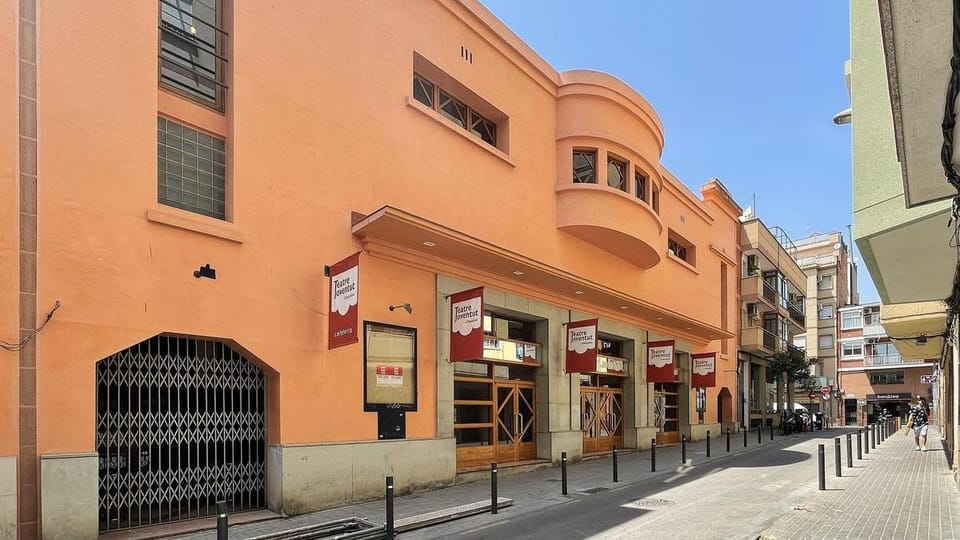
The Metropolitan Area of Barcelona (AMB) has launched the tender process for a €4.5 million renovation of the historic Teatre Joventut in L'Hospitalet de Llobregat, Barcelona's second-largest city. This significant investment will modernise the venue, which has been closed since December 2025, with works expected to last approximately 18 months once they begin.
Urgent Upgrades for Safety and Sound
The L'Hospitalet City Council and the AMB aim for a "functional and energy rehabilitation" to bring the theatre up to current standards. This project addresses several critical issues. For instance, the theatre has received repeated complaints from a neighbouring building about "vibrations and acoustic problems." The project memory states that previous "ad hoc work" did not solve these persistent issues. The renovation will implement permanent solutions to mitigate noise and vibrations, improving conditions for both the theatre and its neighbours.
Furthermore, the theatre's metallic structure currently lacks fireproofing treatment, a major regulatory concern. The renovation will include full fire protection to comply with current safety regulations. The contract highlights that "some of the necessary work to update the theatre to these regulations involves a considerable economic amount, such as fire protection." This ensures the safety of future audiences and performers. The comprehensive upgrade also covers compliance with current accessibility and health regulations, making the venue more inclusive for all visitors.
Community Concerns Over Venue Closure
The extensive nature of these upgrades necessitates the theatre's prolonged closure, impacting cultural life in L'Hospitalet. Opposition leader Jaume Graells, spokesperson for ERC-EUiA, criticised the timing of this decision. He said, "Nobody disputes the need for works, but the problem is how and when they decided to close it and leave the neighbourhood and the city without any alternative." This sentiment reflects broader community frustration over the temporary loss of a key cultural hub.
Residents also voice concerns about the lack of alternative cultural spaces during the renovation period. Carme Rimbau, a member of the Associació Castell de Bellvís a la Torrassa (ACBALAT), understands the need for the works. However, she regrets the closure coincides with the Auditori de la Torrassa also being unavailable. Rimbau noted, "It could be a solution to divert some activities to the Joventut, but since it will close for almost two years, we are left with almost no spaces in the neighbourhood." This situation impacts local cultural programming and community events, leaving a void for nearly two years.
A Century of Cultural Heritage
Teatre Joventut, located between the Torrassa and Collblanc neighbourhoods, holds nearly a century of history. Architect Antoni Puig i Gairalt, a prominent local figure, designed the building, which first opened its doors in 1931. Puig i Gairalt is one of two architect brothers credited with much of L'Hospitalet's recognised architectural heritage. The building initially operated as a neighbourhood cinema, serving local residents for decades with film screenings and community gatherings.
The cinema closed in 1972, reflecting changing entertainment trends and a decline in audience numbers. After a period of disuse, the L'Hospitalet City Council acquired the building in the 1980s. This acquisition was a critical step in preserving the site. They then planned its conversion into a municipal theatre-cinema in collaboration with the Barcelona Provincial Council. This decision prevented the site from becoming a car park, as several attempts had tried to rezone it. The 1976 Metropolitan General Urban Planning Plan ultimately classified it as a community facility, ensuring its public use and cultural future.
From Cinema to Community Theatre
On 8 May 1991, the venue triumphantly reopened as the Teatre Joventut. It quickly became a significant cultural space in L'Hospitalet, hosting thousands of actors, musicians, and companies over the years. The theatre offers a main hall with 583 seats, providing a large capacity for major productions, concerts, and public events. Additionally, a second, smaller hall below seats 185 spectators. This intimate space features a fixed screen, a professional 35-millimetre projector, and a small stage for intimate theatrical productions, film screenings, and community workshops.
The renovation project represents a vital investment in L'Hospitalet's cultural infrastructure. Once the tender process concludes and works begin, L'Hospitalet residents can anticipate a fully modernised cultural venue. The renovation aims to ensure the Teatre Joventut continues its legacy as a vital community asset, meeting contemporary standards for safety, accessibility, and environmental performance. This investment secures its future as a cornerstone of local culture for generations to come, providing a state-of-the-art space for arts and community engagement.
Come and join our Barcelona English Speakers community on WhatsApp.
Originally published by El Periódico Barcelona. Read original article.