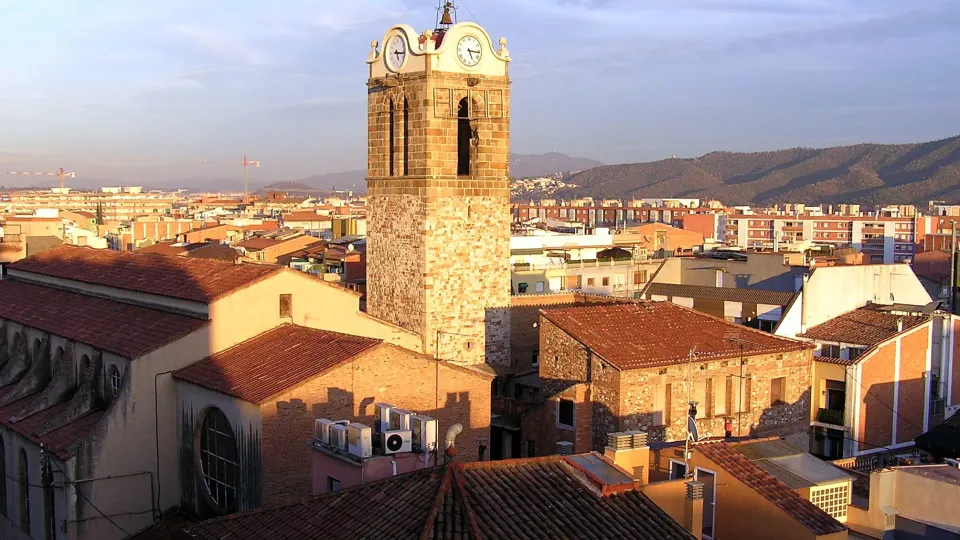
Mollet del Vallès, just over ten minutes by car from Barcelona, is the birthplace of footballer Alexia Putellas. The town combines an agricultural past, industrial growth, and nearby natural spaces, which makes it a notable stop for readers looking beyond the city.
Set on the Vallesana plain, Mollet del Vallès is crossed by the Caganell stream and borders the right bank of the Besòs river. Its earliest known human trace is a five-metre menhir with reliefs and engravings, one of the most important archaeological finds in Catalonia. Today, visitors can see it at the Can Mulà Library.
The town began as several farming settlements surrounded by fields and woodland, with close ties to the Bishopric of Barcelona. Over time, its position near the city helped it grow as a transit point and a place for trade, before the textile sector became a major part of local life.
Mollet also has a strong heritage trail. Highlights include the 12th-century Romanesque church of Santa María de Gallecs, the parish church of Sant Vicenç with its preserved 15th-century bell tower base, the old Casa de la Vila, the Can Gomà Theatre, and the Mercat Vell. For more on local culture, see our Community coverage and Sport stories.
Other key sites include the La Marineta Cultural Centre, set in a 16th-century Renaissance farmhouse, the Can Borrell Civic Centre in a medieval farmhouse, and the Abelló Museum, which holds works by local painter Joan Abelló. These places give the town a clear cultural identity alongside its older buildings.
For open space, Gallecs offers a quieter side of the municipality. The rural area focuses on nature protection and traditional farming, with walking and cycling routes, native wildlife, and organic agriculture. That mix of heritage and countryside helps explain why Mollet del Vallès remains relevant for both residents and visitors from Barcelona.
Originally published by 20 Minutos Barcelona. Read the original report.