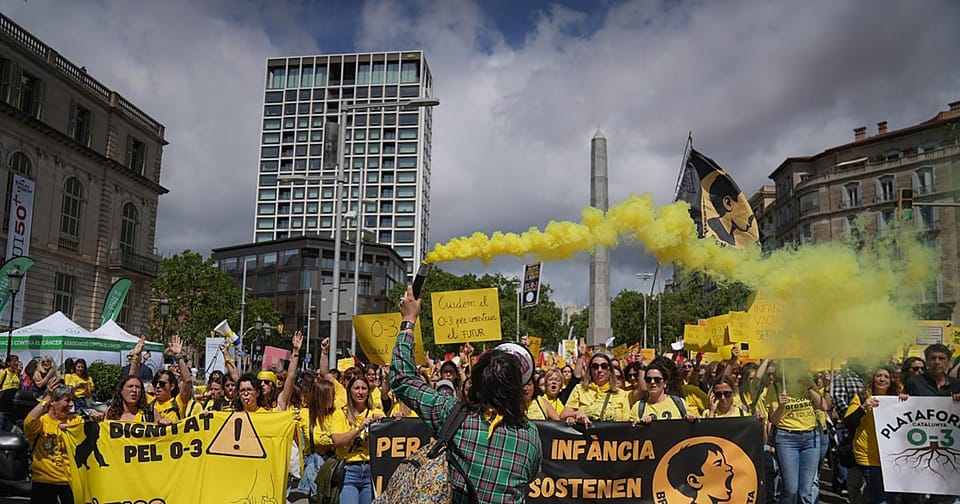
Undercover Mossos d'Esquadra agents infiltrated a teachers' assembly in Barcelona, sparking immediate outrage from education unions and political parties. The plainclothes officers attended a meeting of the Consorci d'Educació i del Barcelonès, where teachers discussed ongoing labour disputes and planned mobilisations. This action has significantly escalated tensions between educators and the Catalan government.
Unions Condemn Police Action
Teachers recognised the agents from previous uniformed demonstrations. This led to their expulsion from the assembly. Education unions, already in a dispute with the Catalan government, swiftly demanded explanations. They called the infiltration "a direct attack on the freedom of assembly and association." Four unions behind the current mobilisations requested full details of the operation. They believe the government "must give explanations" regarding the scope of this action. This incident raises serious questions about surveillance of legitimate union activities.
Political Parties Demand Accountability
Political parties quickly joined the condemnation. Junts, Esquerra Republicana de Catalunya (ERC), Comuns, and Candidatura d'Unitat Popular (CUP) jointly requested an urgent, extraordinary session. They want the Minister of Education, Esther Niubó, the Minister of Interior, Núria Parlon, and the Director General of the Mossos, Josep Lluís Trapero, to appear before the Catalan Parliament. ERC, a parliamentary partner of the Socialist Party of Catalonia (PSC), and CUP went further, calling for Trapero's dismissal. This incident escalates tensions already high during a "hot" final quarter for Catalan schools, as teachers consider indefinite strike action.
Mossos Cite Legal Obligation
The Directorate General of the Mossos d'Esquadra defended the agents' presence. They stated the infiltration was not a discretionary police decision. Instead, it fulfilled a "normative obligation," according to a statement released on Friday. Specifically, the Comissaria General d'Informació (CGINF) has legal duties. Article 109 of the Decree on the structure of the Directorate General of the Police assigns it "specific functions for collecting and processing operational information related to labour and social conflict." This legal framework provides the basis for their intelligence gathering.
This regulation aims to "assess threats and risks," as stated in the current decree approved in 2023. The previous 2011 decree also contained these provisions. The police force maintains that such intelligence gathering is essential. It helps ensure public order and safety during periods of social unrest or large-scale protests. They aim to prevent potential disruptions or incidents.
Balancing Rights and Security
The police force affirmed its respect for the right to assembly, the right to strike, and trade union freedom. They also uphold all other individual and collective rights. "We have the legal obligation to guarantee all these rights, as well as public safety," the statement read. The Mossos concluded their statement by reiterating their duty. They must ensure "these rights can be exercised safely for everyone." They also offered to provide further explanations to parliamentary groups regarding their actions. This commitment to transparency will be tested in upcoming parliamentary sessions.
The controversy highlights ongoing scrutiny of police powers and civil liberties in Catalonia. Further parliamentary debates and potential government responses are expected. This incident will likely influence the already strained relationship between the Generalitat and the education sector. It also raises questions about the balance between security and fundamental rights for Barcelona residents.
Come and join our Barcelona English Speakers community on WhatsApp.
Originally published by ABC Cataluña. Read original article.