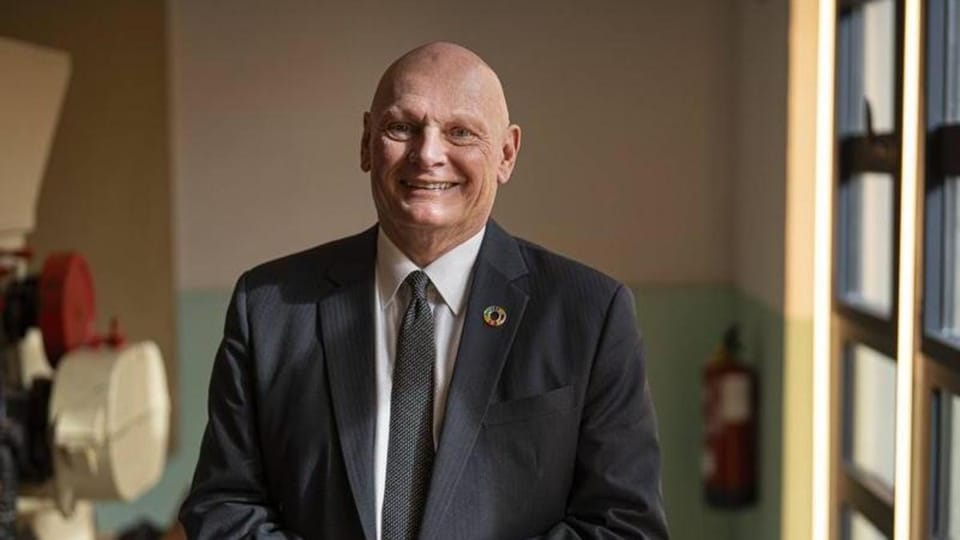
Barcelona is back in focus as the debate over Mobile World Congress returns. GSMA chief John Hoffman has defended the event’s impact on the city, saying the last edition generated €588 million and that one week of disruption is a fair trade for the wider return.
For Barcelona residents, commuters and nearby businesses, the issue is familiar, crowding, transport pressure and a busier city centre during congress week. The event affects daily movement around Fira de Barcelona Gran Via and nearby neighbourhoods, so the impact is felt well beyond the venue itself.
Hoffman, CEO of GSMA, said the congress has helped turn Barcelona into a global technology hub. He pointed to the long-running public-private partnership behind the event, involving Mobile World Capital, the Ajuntament de Barcelona, the Generalitat de Catalunya and the Spanish Government.
He also said the arrangement is unusual on a global scale, because it has moved beyond a standard organiser-venue deal into year-round collaboration with public institutions. In his view, Barcelona was chosen after the GSMA weighed price, logistics, airports, hotels, transport and security.
Hoffman acknowledged that some people, including residents in Poble-sec, may see the congress as an inconvenience rather than a benefit. He said the move from Montjuïc to Fira de Barcelona Gran Via was a major positive step, even if transport strikes and other disruption remain part of the package.
For readers planning around the event, the key point is to expect heavier demand on roads and public transport during MWC week, and to allow extra time for journeys near the venue. Updates on the congress are published by Mobile World Congress and the organisers’ partners, including Mobile World Capital. For more local coverage, see our Community page and Sport page.
Looking ahead, Hoffman said demand for future editions remains strong, with space sales for 2027 already more advanced than at any point in the event’s history. He also said the interview touched on 5G, 6G and consolidation in telecoms, and that the GSMA supports around three operators per market.