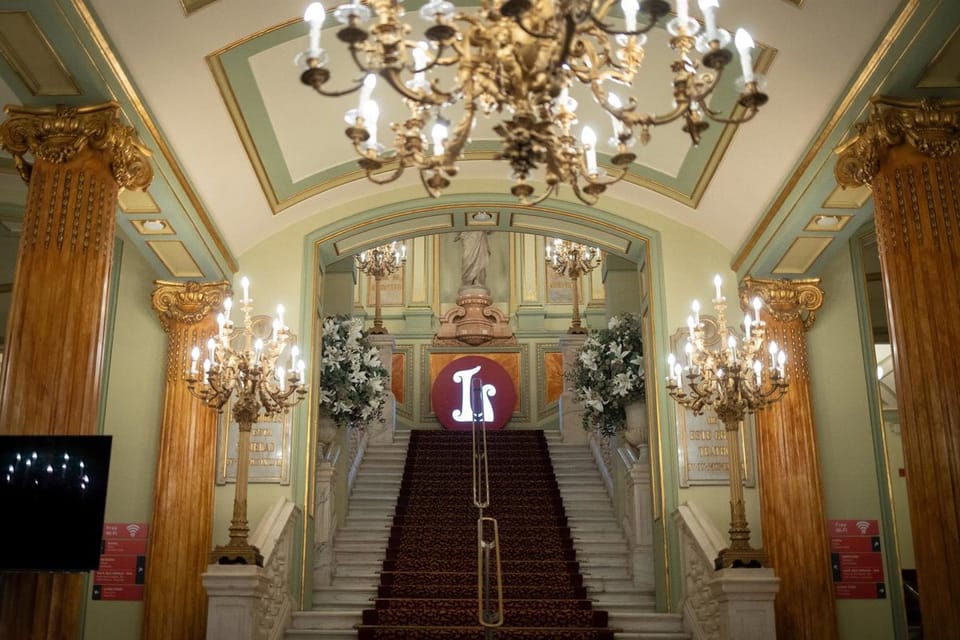
A new book by writer Sergi Doria reveals the critical role of 19th-century entrepreneur Joaquín de Gispert in establishing Barcelona's iconic Gran Teatre del Liceu. The biography, 'Joaquín de Gispert and the Liceu: A Barcelona Story,' highlights De Gispert's remarkable efforts to found the theatre amid significant societal upheaval.
Sergi Doria, a cultural journalist and university professor, presented his book this Tuesday, emphasising De Gispert's exceptional achievement in driving the Liceu project forward. De Gispert (1799-1889) laid the theatre's first stone in 1844 on the former site of the Discalced Trinitarian convent.
A decade earlier, in 1835, Barcelona experienced a period of civil unrest known as the 'bullanga,' which included the burning of convents. This attack affected the Trinitarian site, which De Gispert had tried to protect.
Founding the Iconic Liceu Theatre
In 1844, the Liceo Filarmónico commissioned De Gispert to purchase the convent's land and adjacent buildings. The initial plan was to build a music teaching centre and a theatre. The conservatory was completed before the main performance hall.
Doria notes that the first stone was laid in an "unfavourable atmosphere." The nearby Teatro de la Santa Cruz viewed the new venue as unwelcome competition. This theatre later changed its name to Teatro Principal after the Liceu opened.
The Gran Teatre del Liceu, a major cultural landmark in Barcelona's Ciutat Vella district, officially opened its doors in 1847. De Gispert met all deadlines for the construction. The Cercle del Liceu, initially called the Casino, also opened that same year.
De Gispert's Enduring Legacy
Francisco Gaudier, President of the Cercle del Liceu, explained that the Cercle supported the book. He said it reflects Barcelona as "the city of wonders," echoing Eduardo Mendoza's famous description.
However, De Gispert lost significant money on the project. He ended his direct involvement with the Liceu by the 1860s. He passed away at the age of 90, leaving a lasting legacy on Barcelona's cultural scene.
Sergi Doria, born in Barcelona in 1960, works as a cultural journalist for 'ABC' and teaches at university. His essays and novels often feature Barcelona prominently.
Notable attendees at the book presentation included Francisco Gaudier and descendants of the De Gispert family. Former Catalan Parliament President Núria de Gispert, a great-great-granddaughter, also attended. Salvador Alemany, President of the Liceu's board of trustees, was present.
This new biography offers residents and historians a deeper understanding of the Liceu's origins. It also highlights the dedicated individuals who shaped Barcelona's rich cultural heritage.
Come and join our Barcelona English Speakers community on WhatsApp.
Originally published by Europa Press Barcelona. Read original article.