Poblenou, in Barcelona’s Sant Martí district, is going through a fast change, and a new report says that change is linked to a sharp fall in the habitual use of Catalan. The report, by Plataforma per la Llengua, says gentrification is having clear social and linguistic effects in the area.
Only 31.8% of Sant Martí residents now speak Catalan regularly, the lowest figure recorded since data collection began in 1989. That is down from 45% over the last two decades. Across Barcelona, the share of Catalan speakers has also fallen, from 46.3% in 1989 to 34.8% today.
Plataforma per la Llengua says the drop is tied to demographic change across the city over the past 20 years. In Sant Martí, the share of residents who regularly speak languages other than Catalan or Spanish has risen from 1.7% to 10.2%. For readers following wider city trends, see our Community coverage and our Sport tag for more Barcelona neighbourhood reporting.
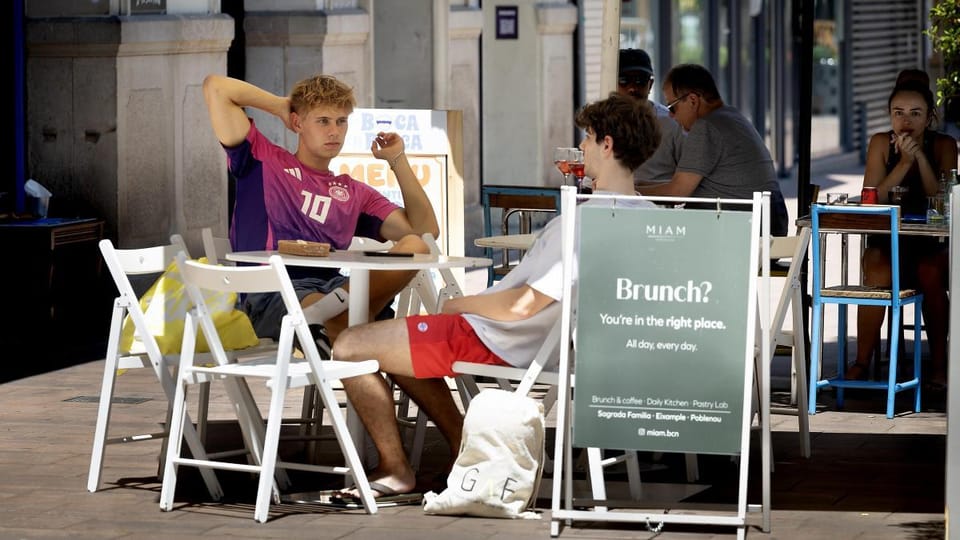
The commercial face of Poblenou is changing too. A comparison of Rambla de Poblenou between 2008 and 2025 shows a traditional churrería replaced by a speciality coffee shop. The report says many local businesses, including stationers, fashion shops, corsetry stores, bakeries and bars, have given way to brunch spots, tea houses, ramen restaurants and souvenir shops.
Many of the newer venues use signs in English. The report says Spanish and English are becoming more visible in streets and shops, while Catalan is heard less often. It says this pattern appears in other Barcelona neighbourhoods too, but is especially marked in Poblenou.
The neighbourhood’s income profile has also shifted. Poblenou’s average per capita income has risen sharply since 2019, and by 2022 it was €1,000 above the Barcelona average. It now ranks 25th among the city’s wealthiest areas, ahead of Sant Antoni and Sagrada Família. Between 2015 and 2024, per capita income in Poblenou rose by 30%.
The Barcelona City Council’s 2025 Municipal Services Survey also shows a rise in residents born in countries with a higher per capita GDP than Catalonia. Between 2015 and 2024, the number of residents from Australia and New Zealand rose by 165%, North America by 144%, Northern Europe by 89%, and Western Europe by 38%. In Poblenou, 6.58% of inhabitants were born in countries with a higher per capita GDP than Catalonia, compared with 3.36% in Sant Martí and 3.77% in Barcelona as a whole.
Among comparable neighbourhoods, Sants stands at 2.4%, Sagrada Família at 3.83%, and L'Antiga Esquerra de l'Eixample at 6.55%. Gràcia is highest on the list, at 7.32%. The report says Poblenou’s changes show how urban development, income shifts and language use are now closely linked in Barcelona.
Originally published by La Vanguardia Barcelona. Read the original report. For official city data, see the Barcelona City Council and Generalitat de Catalunya language services.