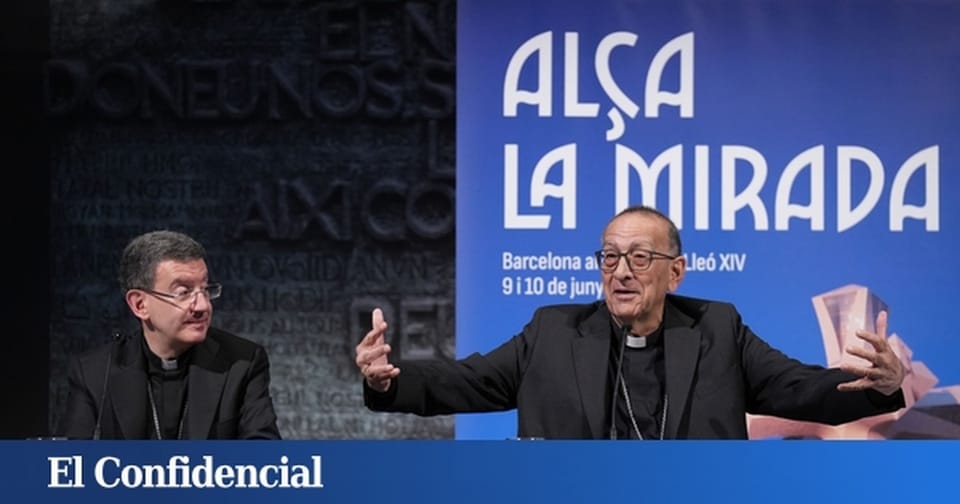
Radical pro-independence groups in Catalonia are preparing significant protests against Pope Leo XIV's upcoming visit to Barcelona, according to El Confidencial. These groups view the visit as a "manoeuvre by the State to Hispanify Catalan symbols". The Pontiff plans to visit the Sagrada Família basilica and the Montserrat abbey during his trip. Protesters intend to display pro-independence flags, known as Esteladas, to convey a message that "the Catalan people demand freedom".
Protests Target Catalan Symbols
The most extreme pro-independence forums are circulating messages urging action. One message states, "Given the paralysis of the parties, civil society must say enough. Let us not allow the Pope to override Catalonia's rights as if it were conquered land. Let us defend our national dignity." Another slogan labels Pope Leo XIV's visit an "operation by the State". These groups claim that "Madrid and the Episcopal Conference are hijacking the Pope's visit to Hispanify Montserrat and the Sagrada Família." They believe the goal is to transform these important sites into a "showcase for the Crown and the 'Spain Brand'".
This sentiment also extends to the legacy of Antoni Gaudí. Pro-independence figures accuse the State of trying to "dispossess Gaudí of his Catalan identity". They argue he is being "reduced to an export product for the delirium of the most stale Spanish nationalism". This refers to a recent campaign asserting Gaudí's Catalan heritage while denying his Spanish nationality. Joan Puig, a former Esquerra Republicana de Catalunya (ERC) Member of Parliament and owner of the digital newspaper La República, supports these actions. He stated, "If we do not rise up now to defend our symbols, we will forever accept the role of extras in the great theatre of the Spanish State."
Montjuïc Stadium Controversy
The decision to use the Lluís Companys Olympic Stadium on Montjuïc for a large papal event also faces strong criticism. Pro-independence groups call this "a full-blown operation to further Hispanify the symbols of Catalonia." They highlight the stadium's current name, honouring Lluís Companys, a former President of Catalonia executed by the Franco regime. The groups also claim that allowing the Church to use the stadium saved it 300,000 euros.
The Comuns, a left-wing political party, have joined the criticism. They demand "answers and transparency" from Barcelona Mayor Jaume Collboni. The Comuns question the criteria used to declare the Pontiff's visit "of public and general interest." During a meeting of the public company BSM's board, which manages the stadium, ERC and the Comuns were the only groups to vote against the stadium's use. This occurred despite ERC President Oriol Junqueras having spent six months at the Vatican for academic study. He is widely considered a devout Catholic.
Diverse Opposition to Papal Event
Interestingly, the ultra-conservative Christian Lawyers platform also rejects the mass at the stadium. They label the event a "sacrilege." The organisation advocates for the mass to take place at the Valley of the Fallen, a controversial monument near Madrid. According to the Christian Lawyers, the Lluís Companys Olympic Stadium honours a President "under whose mandate more than 8,000 people were murdered." This figure includes three bishops and over 2,500 priests and religious individuals. The group finds it "indignant that the Pope himself, who elevates the altar, celebrates an event in a stadium that honours his assassin."
A representative from the Comuns party compared the Vatican to luxury brand Louis Vuitton. Louis Vuitton rented Park Güell for an event. The representative also drew parallels with Formula 1, which closed central Barcelona for a weekend to present its teams. The Formula 1 race at the Circuit de Barcelona-Catalunya in Montmeló generates hundreds of millions of euros for the local economy. These comparisons highlight concerns about the commercialisation of public spaces and symbols.
Political Tensions Ahead
The planned protests and political disagreements underscore ongoing tensions in Catalonia regarding national identity and the use of public spaces. The Pope's visit, intended as a religious occasion, has become a focal point for political debate. Pro-independence groups aim to use the event to reassert their demands for self-determination. Meanwhile, various political factions scrutinise the City Council's decisions regarding public resources. The coming days will likely see these planned demonstrations unfold, reflecting the complex political landscape of Barcelona and Catalonia.
Come and join our Barcelona English Speakers community on WhatsApp.
Originally published by El Confidencial. Read original article.