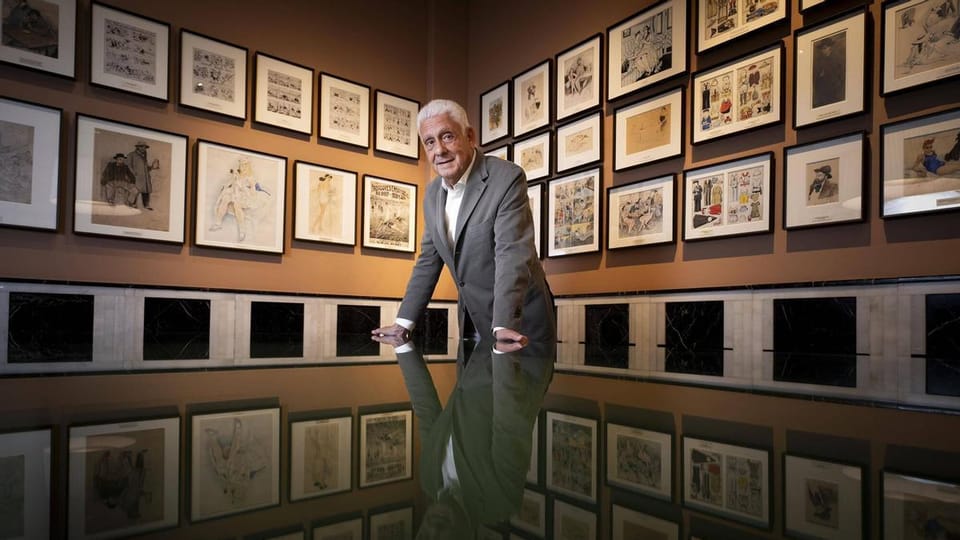
An extensive exhibition of artist Ricard Opisso's work at Barcelona's Hotel Astoria offers a unique visual record of the city a century ago. This collection gains particular significance as Barcelona prepares to mark the centenary of architect Antoni Gaudí's death next month. The display provides an unparalleled window into the city's early 20th-century life, capturing its spirit more vividly than many contemporary photographs.
Hotelier and patron Jordi Clos has assembled approximately 500 original works by Opisso (1880-1966). These pieces are displayed throughout the hotel's lobby, café, tea room, and corridors. Opisso's art is especially relevant now because he uniquely captured Barcelona's atmosphere before 1926. Journalist Màrius Aguilar, reviewing an Opisso retrospective in 1928, predicted the artist's drawings would be essential for future understanding of the city. Aguilar wrote, "When in times to come people want to know the Barcelona of today, they will have to consult Opisso's very Barcelonan drawings."
Clos began collecting Opisso's pieces in the mid-1960s, purchasing his first work from the artist's son. His collection now spans hundreds of originals. Opisso, born in Tarragona, moved to Barcelona at age two and showed early artistic talent. At 12, his father secured him a position as an assistant to Antoni Gaudí at the Sagrada Família. This relationship lasted 11 years.
Opisso's Years with Gaudí
During his time at the Sagrada Família, Opisso performed various tasks. He prepared lizards and birds for use as sculptural moulds. He even posed for one of the angels on the Nativity Façade, a process that nearly endangered his life. Outside of his work for Gaudí, Opisso explored Barcelona's bohemian side. He frequented the city's less reputable establishments. He also started building relationships with artists who gathered at Els Quatre Gats, a famous modernist café.
A Break from Modernism
Opisso's artistic talent was clear, and he received encouragement from other prominent figures. Pablo Picasso, whom Opisso met and drew several times in Paris, advised him to "send Gaudí and the Sagrada Família to hell" if he wanted to save his artistic soul. Opisso eventually followed this advice. The final break occurred when Gaudí asked Opisso to accompany him to Palma de Mallorca to finalise details for the cathedral's stained-glass windows. Opisso asked if he should book hotel rooms. Gaudí replied they would stay at the bishop's house. Opisso then returned the travel money, ending his 11-year association with the architect.
Capturing Barcelona's Soul
Opisso's prolific output included caricatures for satirical magazines, portraits of acquaintances like Toulouse-Lautrec, and detailed genre scenes. He was known for his crowd scenes, where editors like those at L'Esquella de la Torratxa paid him per character drawn. His work provides a high-definition X-ray of Barcelona during his era, depicting a more "rascally" than pious city. Jordi Clos notes that Opisso sometimes paid for meals in city restaurants with a quick drawing.
Adult Themes and Public Reaction
The Hotel Astoria exhibition also features a unique section for adult visitors. About half a dozen paintings are covered with warnings, similar to digital content advisories. These works represent Opisso's venture into more explicit art, an offer he received to "raise the tone" of his already suggestive pieces. Clos has installed a physical "door" over these paintings, inviting viewers to enter "freely, of their own will," echoing a line from Bram Stoker's Dracula.
This voluptuous element was often present in Opisso's other works. Perhaps his childhood visits to the Edén Concert cabaret with his uncle left an indelible mark. Art critic Josep Maria Cadena recounted a remarkable anecdote in one of his books on Opisso. A man at the Sant Antoni Sunday book market repeatedly bought old issues of 'Papitu', a publication Opisso contributed to. He would then tear the magazine into a thousand pieces. He explained it was his penance because Opisso's drawings of women caused him to have "sinful thoughts." This story highlights the profound impact Opisso's art had on his contemporaries.
Come and join our Barcelona English Speakers community on WhatsApp.
Originally published by El Periódico Barcelona. Read original article.