

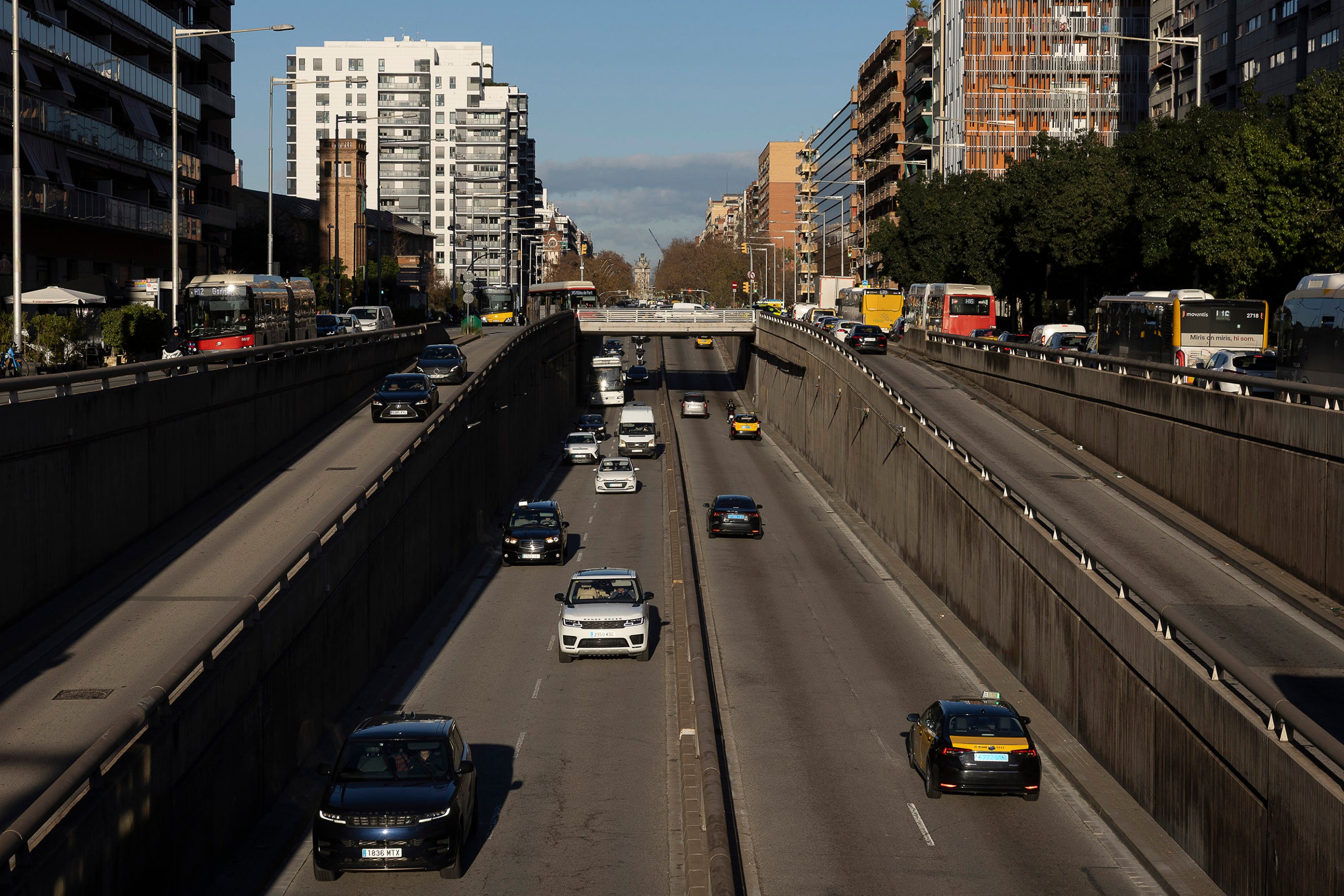
For decades, the eight lanes of traffic thundering down the Gran Via have acted as more than just a thoroughfare. They serve as a physical wall slicing through Barcelona’s Sants-Montjuïc district. On one side lies the historic neighbourhood of Sants. On the other, the Zona Franca and La Marina. Despite belonging to the same administrative district, these communities exist in almost opposing realities. They are separated by concrete and cars.
Now, neighbourhood associations are joining forces to dismantle these Sants-Montjuïc urban barriers. Led by the Federation of Neighbourhood Associations of Barcelona (FAVB), local groups have spent the last two years drafting a shared political agenda. Their goal is to overcome the infrastructure that complicates local mobility. They also aim to prepare for the massive urban changes expected alongside the centenary of the 1929 International Exposition.
Your browser does not support the video tag.
Home » Sants-Montjuïc Urban Barriers: Residents Unite to Bridge the Divide
The Great Wall of Gran Via
The primary antagonist in this urban narrative is the Gran Via. While the avenue integrates relatively well into the Eixample district further east, in Sants-Montjuïc it acts as a rupture. Residents describe it as “very inaccessible” and hostile to pedestrians.
“To cross it, you have to risk your life. The traffic lights last very little time, and you are waiting for cars that look like they are starting a Formula 1 race,” says Jordi Falcó, a resident of Sants and member of the Centre Social de Sants.
From the other side of the highway, Torni Prada of the Sant Cristóbal neighbourhood association in Zona Franca agrees. “It is difficult to cross, but I would say more: sometimes approaching it is scary.”
The proposed solutions from the community are pragmatic. They are calling for the conversion of the Gran Via into a “friendlier” space. Their demands include:
- Improved zebra crossings and wider pavements.
- More pedestrian crossing points.
- Safety improvements to the bicycle lanes.
- A new “neighbourhood bus” route specifically designed to cross the Gran Via, linking the severed communities.
So Near, Yet So Far From Montjuïc
Beyond the highway, the district faces a cruel irony regarding its green space. While the neighbourhoods of Poble-sec and La Marina sit directly adjacent to Montjuïc, residents struggle to access the city’s “green lung”.
“We are close to everything, but we are trapped. We have the mountain, the Gran Via, the Port, and the Fira de l’Hospitalet, which is a monster. The feeling is of being isolated.”Torni Prada, Sant Cristóbal Neighbourhood Association
Lisa Marrani, a technician from the FAVB who has captained the recent meetings, highlights the paradox. “La Marina has the city’s main green lung next to it yet records pollution figures well above the levels recommended by the World Health Organisation.”
Therefore, the associations are demanding better accessibility to the “natural micro-connections” leading to the mountain and the sea. They argue that the current paths are deficient compared to the grand access points at Plaça d’Espanya.
Bridging the Social Divide
The physical barriers have inevitably led to social ones. Residents in Sants often know little about the daily lives of those in Zona Franca, and vice versa.
“Sometimes not only do we not know what happens on the other side, but we directly don’t know what the neighbours on the other side are like,” admits Falcó. He notes that the recent meetings have been crucial for “opening the focus”. For the first time, residents from Sants have travelled down to La Marina for meetings. This signals a genuine desire to build a network.
This unity comes at a critical time. The district is facing significant challenges, including a loss of local commerce, the closure of artisanal spaces, and the encroaching threat of gentrification. Residents point to a rise in tourist apartments in Sants and Poble-sec. They also note skyrocketing housing prices in the developing areas of La Marina del Prat Vermell.
Meanwhile, major infrastructure projects are on the horizon. These include works at Sants station, the L8 rail line extension, and the eventual expansion of the L2 metro line. Consequently, the community is determined to be ready.
“The objective of the meetings was to be ready the day all the projects the City Council says it wants to do in this area land,” summarizes Marrani. By presenting a united front, the neighbourhoods of Sants-Montjuïc hope to ensure that future developments bridge their divide rather than widening it.
Join Barcelona English Speakers WhatsApp Community .
