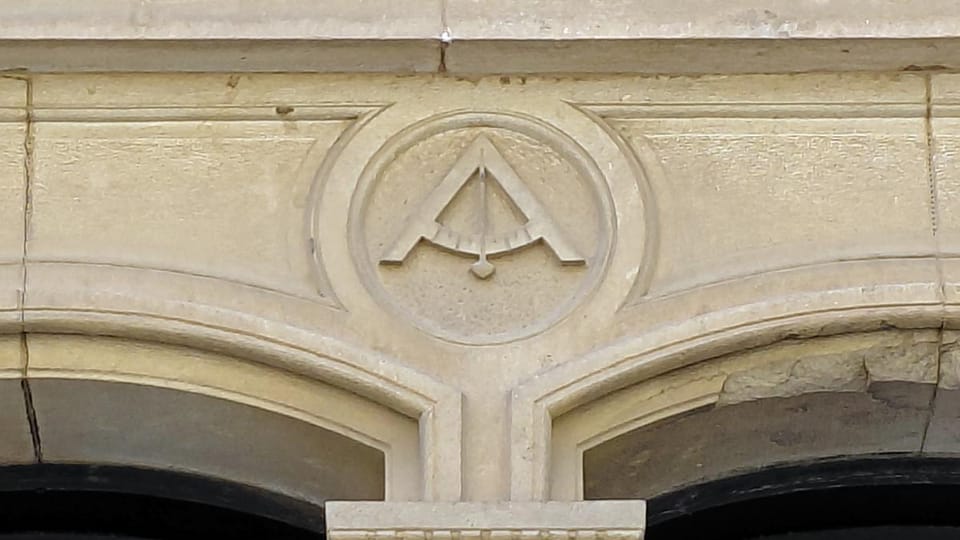
A compass and a level decorate the façade of number 105 Major de Sarrià in Barcelona, a building known as Casa Mumbrú. These architectural symbols, often mistaken for Masonic signs, are in fact guild emblems inherited from medieval builders' corporations, La Vanguardia reported. They reflect the professional activity of the building's promoter, contractor Ramon Mumbrú i Bordas.
Guastavino's Catalan Connection
Ramon Mumbrú commissioned the project from master builder Rafael Guastavino. Guastavino later achieved global recognition in New York and across the United States. He designed spectacular exposed brick domes for iconic buildings, including the Boston Library, Ellis Island, the New York City metro, and Grand Central Station in Manhattan. Guastavino and his son signed over a thousand domes throughout the country.
This master builder developed the volta catalana, also known as the Catalan vault, a traditional construction technique. Builders used this method across the Mediterranean for centuries. Guastavino significantly evolved this technique, making it lighter and stronger, and patented his innovations in the United States. The Major de Sarrià building is one of the few structures Guastavino left in Catalonia. His most significant work in the region was the Can Batlló factory, which now houses the Escola Industrial, a prominent educational institution in Barcelona.
Other Guild Symbols in Sarrià
The Mumbrú family property is not the only building in Sarrià displaying builders' guild symbols. Number 23 Calle Bonaplata, a street parallel to Major de Sarrià, features a stone lintel dated 1743. This lintel shows a carved drawing of a construction trowel and a pick. Additionally, Calle Jordà at number 13 has two paintings depicting various typical tools of masons and carpenters. These include squares, hammers, saws, pliers, levels, compasses, and rulers.
Sarrià's Independent Past
The presence of these symbols in the Sarrià district reflects a historical trend. When Sarrià was an independent municipality, before its annexation by Barcelona, many masons and contractors like Ramon Mumbrú settled there. One street in the old town, Calle Paletes, directly translates to "Trowels Street." This street forms a right angle, connecting the square where the district headquarters stands, formerly the town hall, with Major de Sarrià.
These enduring symbols offer a unique glimpse into Sarrià's past. They show the district's important role as a hub for skilled tradespeople and its connection to architectural innovation. For residents and visitors, these historical markers provide a tangible link to Barcelona's rich urban development story.
Sign up for our new entrepreneurs community Bizcelona, now accepting our second wave of applicants.
Originally published by La Vanguardia Barcelona. Read original article.