

A major environmental investigation has revealed a significant Tersa incinerator waste scandal. Large quantities of poorly processed waste from the publicly owned Tersa incinerator in Sant Adrià de Besòs are allegedly being buried illegally at a landfill site in Seva, Osona. A report by the Civil Guard’s Nature Protection Service (Seprona), submitted to a court in Vic, suggests a corruption scheme involving falsified documents and institutional complicity.
Investigators warn that the waste—referred to as slag—contains identifiable unburned materials including plastics, metals, and textiles. Consequently, this poses a significant environmental risk to the local area.
Your browser does not support the video tag.
Home » Tersa Incinerator Waste: Illegal Dumping Scandal at Seva Landfill
Unburned ‘Slag’ and Falsified Records in the Tersa Incinerator Waste Scandal
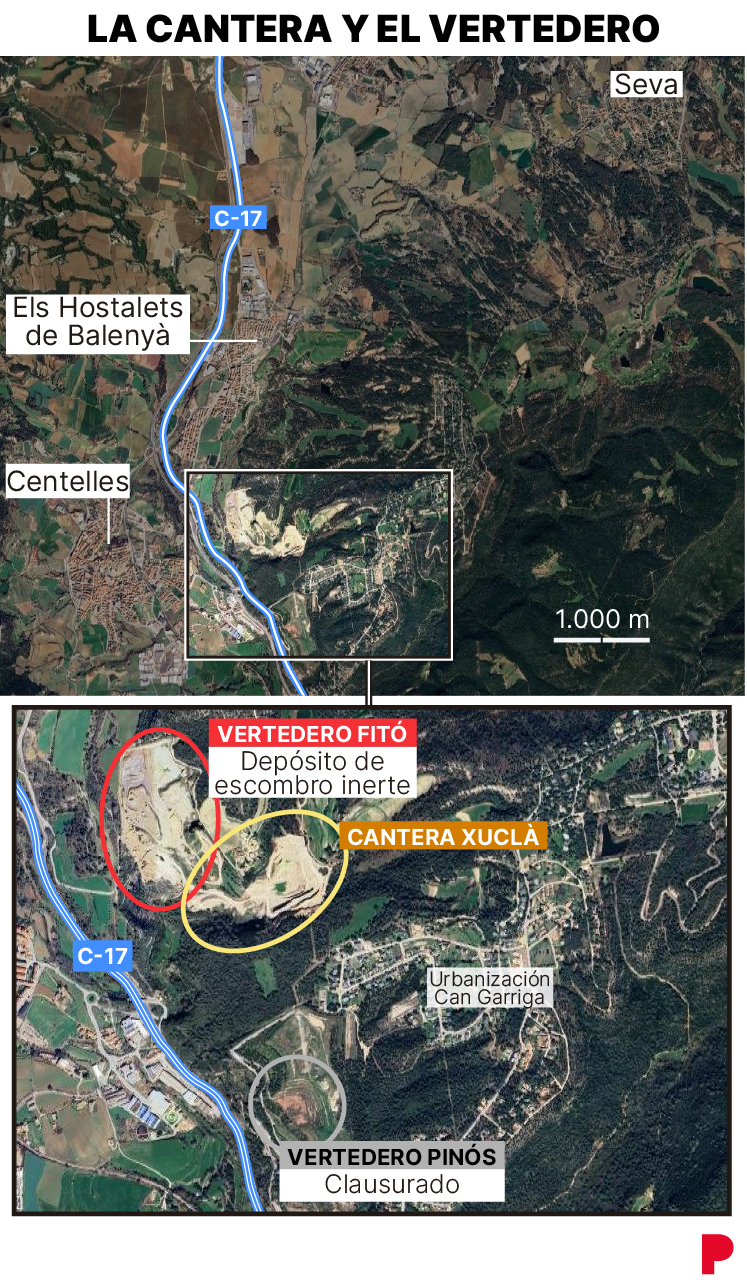
According to the 501-page police report, the Fitó landfill in Seva has been accepting industrial slag from the Tersa plant that has not been properly incinerated. While the facility is only licensed to handle specific inert rubble, inspectors found that roughly half of the material arriving from the incinerator was untreated.
Agents from Seprona, alongside inspectors from the Environmental Control Authority (ECA), discovered waste that was still clearly recognisable. The unburned matter included copper tubes, cutlery, rags, foams, and organic remains such as bones. Under standard regulations, this material should have been fully calcined into ash before disposal. This issue comes at a time of other challenges in the city’s waste management, such as Barcelona’s stalled rollout of smart waste containers.
The investigation suggests that up to eight lorries a day entered the site carrying this waste. To bypass regulations, the shipments were allegedly accompanied by false documentation classifying the toxic load as harmless soil or construction product. This reclassification also allowed the operators to avoid paying the standard waste disposal levies.
Allegations of Institutional Complicity
The scandal reaches beyond simple mismanagement, implicating high-ranking officials within the Catalan administration. The Civil Guard report explicitly points to Josep Simó, the director of infrastructures at the Catalan Waste Agency (Agència de Residus de Catalunya), accusing him of facilitating the scheme. This alleged institutional failure echoes broader concerns about chronic underinvestment in Catalan public infrastructure.
Investigators argue that the Agency had a vested interest in finding a cheap disposal route for the massive volume of slag generated by Tersa, a company controlled by Barcelona City Council and the Metropolitan Area. The report alleges Simó allowed the Fitó landfill to accept the waste “to solve the problem of where to put so much slag… without any cost.”
Furthermore, Seprona claims that officials ignored repeated infractions at the landfill site to keep the disposal route open. In December 2020, Simó reportedly authorised a “non-substantial” change to the landfill’s permit, allowing treated slag to be used as fill material—a move the police argue was actually a substantial modification requiring stricter oversight.
Environmental Risks and Defence in the Tersa Incinerator Waste Scandal
The environmental implications of the dumping are severe. The Fitó landfill is situated less than 30 metres from a torrential stream and carries a risk of flooding. Investigators state the site lacks the technical engineering required to contain the leachates from partially unburned industrial waste, threatening groundwater quality and the local ecosystem.
In response to the allegations, Tersa has distanced itself from the disposal process. The company stated that all slag from its plant is “managed externally by an authorised waste manager,” identifying the contractor as Reciclajes San Adrián. Tersa insists that this contractor certifies compliance with all applicable regulations.
However, Seprona’s surveillance paints a different picture. Agents reportedly observed trucks from the contractor delivering unfinished slag to the landfill on “almost all” surveillance operations between 2020 and 2024. Therefore, the police report concludes that the waste is being dumped “with awareness of its illegality and contamination,” prioritising cost-cutting over public health. The allegations of falsified documents mirror other large-scale investigations in the region, including a recent police operation dismantling a criminal fraud network in Barcelona.
Get all of the news delivered to your phone via our WhatsApp Broadcast Channel .
