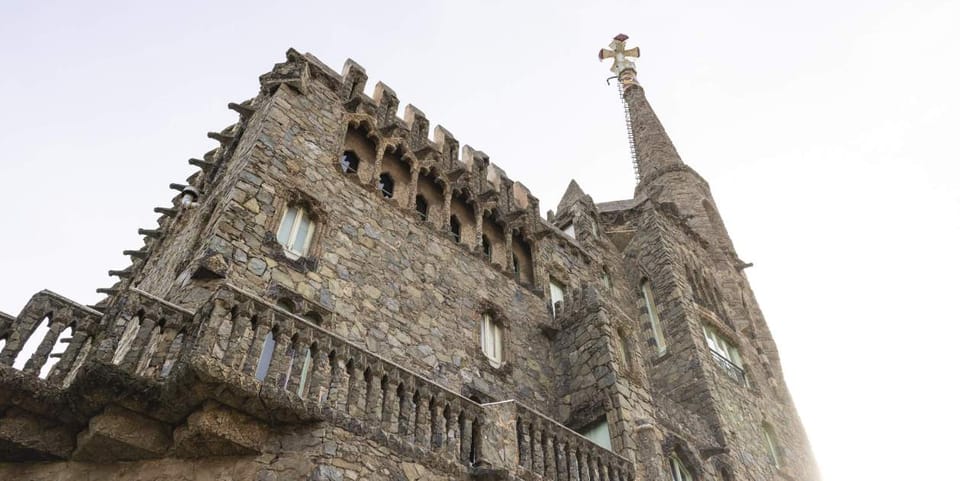
Antoni Gaudí's Torre Bellesguard, a distinctive Modernist structure, stands in Barcelona's Sant Gervasi-la Bonanova neighbourhood, offering a unique glimpse into the architect's Catalanist vision. Completed between 1900 and 1909, this lesser-known work pays homage to Catalonia's medieval past.
The property, located on Bellesguard street, sits atop the ancient Bellesguard castle ruins. This site was the final residence of King Martí l’Humà, the last monarch of the House of Barcelona and a direct descendant of Wilfred the Hairy. Gaudí intentionally used this location to connect the building with deep Catalan history.
Torre Bellesguard stands apart from Gaudí's more famous works, such as Sagrada Família or Casa Batlló, due to its strong symbolic and historical ties to Catalonia. Gaudí, known for his Catalanist beliefs, even faced arrest in 1924 for refusing to speak Castilian. He used the tower to express his political affiliation and honour the region's medieval era.
Architectural Features and Catalan Symbolism
The tower's design blends medieval castle aesthetics with Gaudí's signature Modernist language. Gaudí incorporated original remnants of the ancient walls and towers into his new construction. This reinforced the building's connection to its historical foundations.
Inside and out, the building features numerous symbolic elements. Mosaics, stained-glass windows, natural forms, and heraldic motifs all reference Catalonia. Even the trencadís benches at the entrance display patterns linked to the "four bars" of the Catalan flag and the grandeur of medieval Catalonia.
Gaudí's Distinctive Style
Despite its unique symbolism, Torre Bellesguard shares many architectural resources with Gaudí's other projects. The unfinished brick columns in the attics, for example, show construction details similar to those found in Palau Güell. Additionally, Gaudí rerouted Bellesguard street to build a viaduct. This structure features inclined columns, echoing the style seen in Park Güell.
The interior of the house maintains many characteristic Modernist elements. Visitors can observe colourful stained-glass windows, ornamental ironwork, and spaces filled with natural light. These features create an immersive experience for those exploring Gaudí's distinctive approach.
Visiting Torre Bellesguard in Barcelona
Torre Bellesguard is open to visitors, offering a chance to explore one of Gaudí's less-publicised but deeply significant works. It provides a unique perspective on his historical, symbolic, and Catalanist facets. The site offers a quieter alternative to Barcelona's more crowded tourist attractions.
This makes 2026 an especially interesting year to visit, as Barcelona celebrates "Any Gaudí," or Gaudí Year. This commemoration highlights the architect's lasting impact on the city. Exploring Torre Bellesguard allows both residents and tourists to appreciate a different dimension of Gaudí's genius.
Sign up for our new entrepreneurs community Bizcelona, now accepting our second wave of applicants.
Originally published by El Nacional. Read original article.