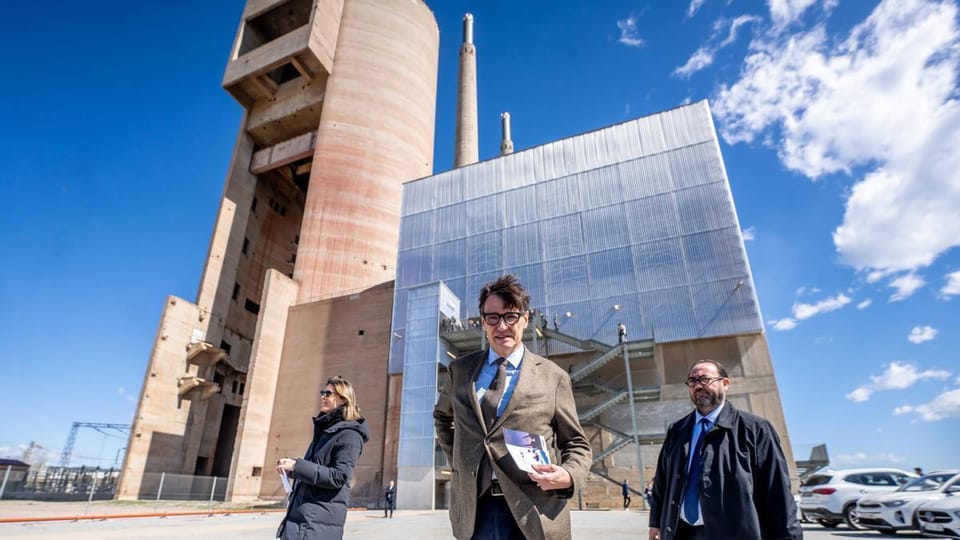
The Generalitat de Catalunya is exploring a plan to increase the number of social housing units at the future Tres Xemeneies neighbourhood. This site sits on the border of Sant Adrià de Besòs and Badalona. The initiative seeks to provide more affordable homes within the existing allocated land area, avoiding a lengthy revision of the current urban master plan.
Boosting Affordable Homes
The current Urban Master Plan (PDU) for the Tres Xemeneies site, approved in 2023, envisions 1,783 new homes. This includes 1,069 privately developed properties and 714 social housing units. However, the Generalitat and local neighbourhood groups now aim to boost the number of social housing units. They plan to do this without expanding the 74,121 square metres currently reserved for them.
This proposal aligns with Generalitat President Salvador Illa's commitment to "densify" cities. He aims to "build as much housing as possible." The Consorcio del Besòs, the body overseeing the redevelopment, is now evaluating how to implement this principle. Sources familiar with the project indicate that altering the percentages of private versus social housing, or the overall land allocation, would necessitate reopening the PDU. This "would significantly prolong the process," they warn.
Urban Transformation at Besòs River
The Tres Xemeneies site, a former thermal power plant, is undergoing a major transformation. The project will create a new neighbourhood alongside an audiovisual industry complex. This development spans 32.3 hectares between the Besòs River mouth and the beach. The current PDU stipulates that public housing units should average 75 to 78 usable square metres. They have a built area of 104 square metres. The new assessment considers flexible dimensions to accommodate more social homes under the same roof.
Earlier proposals to reduce social housing sizes faced opposition. In 2023, the Badalona City Council rejected a plan for 63 to 65 square metre social flats. This would have allowed for 1,959 homes, including 853 social units. Sant Adrià de Besòs also advocated for lower building density. However, the escalating housing crisis has shifted perspectives. Badalona's Urban Planning Councillor, Daniel Gracia, stated, "We respect and positively value the possible increase in population in the area, but we must study the proposal in detail." He added that flexibilising flat sizes could "cover the needs of the different types of family units present in today's society."
Addressing Diverse Housing Needs
José A. Gras, Sant Adrià's Sustainable Territory Deputy Mayor, supports increasing social housing. He noted, "The housing crisis is much more evident and intensified than years ago." Gras clarified that densification "will not be to the detriment of having habitable homes." It also will not increase the population of the future neighbourhood, which officials estimate at 4,500 to 5,000 people. He explained, "It is not a question of making micro-flats, but of being efficient with space to have different types of homes for different tenants or buyers. We are talking about offering more housing opportunities for different typologies, not increasing the number of inhabitants."
Community Collaboration and Future Plans
The proposal to increase social housing density stems from an agreement presented by Territori Minister Sílvia Paneque earlier this month. The Coordinadora Veïnal del Baix Besòs (CVBB), representing neighbourhood federations from Barcelona, Badalona, Santa Coloma de Gramenet, Sant Adrià, and Montcada i Reixac, signed this agreement with the Consorcio del Besòs. The Consorcio del Besòs includes the Generalitat, the Área Metropolitana de Barcelona (AMB), and the councils of the five cities. Pepe Sánchez, President of the CVBB, affirmed, "The objective is to offer a better range to residents and have more social housing to cater to more types of families, such as single-parent households." He suggested that more flats would align with the Vesta project, which supports women with dependent children facing severe residential exclusion in the Besòs area.
The Generalitat and other involved administrations aim for the first construction works to prepare the neighbourhood and the technology hub to commence in 2027. The entire new neighbourhood is expected to be completed by the middle of the next decade. This strategic move reflects a broader effort to tackle the critical shortage of affordable housing across the Barcelona metropolitan area.
Sign up for our new entrepreneurs community Bizcelona, now accepting our second wave of applicants.
Originally published by El Periódico Barcelona. Read original article.