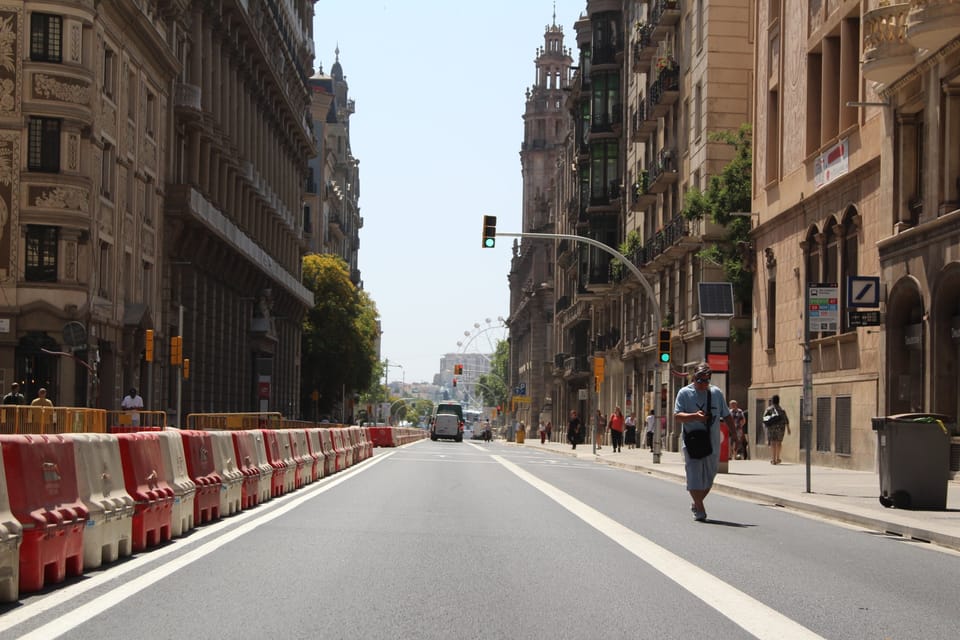
Barcelona's Via Laietana will begin issuing 90-euro fines from 27 April to unauthorised vehicles using its restricted uphill lane, ending a month-and-a-half warning period. This new enforcement measure targets drivers accessing the lane without specific registration or authorisation, aiming to prioritise public transport and local mobility.
New Traffic Restrictions and Penalties
The new regulations apply exclusively to the uphill lane, known as 'sentit muntanya', which connects the seafront to the Eixample district. Automatic licence plate recognition cameras will now detect non-compliant vehicles, processing penalties without direct agent intervention. The downhill lane, or 'sentit mar', remains open to general traffic without specific restrictions, providing an alternative route for drivers.
Who Can Use the Restricted Lane?
Only specific vehicle types and registered users may utilise the restricted uphill lane. This includes public transport buses, taxis, emergency services, and municipal vehicles. Residents of nearby neighbourhoods, such as Gòtic, Sant Pere, Santa Caterina i la Ribera, and Barceloneta, can also use the lane if their vehicle is authorised. Additionally, users of local car parks, individuals with reduced mobility holding an assigned space, and clients of hotels or workshops in the area have access. Goods distribution vehicles are permitted during specific hours: from 10:00 to 12:00 and again from 14:00 to 16:00, Monday to Saturday. Any other vehicle accessing the uphill lane outside these conditions will face a 90-euro penalty.
Merchant Concerns Over Access
These circulation restrictions have generated considerable concern among local merchants. Traders, including those at the Santa Caterina market, reported a sharp drop in sales during the three-year renovation period of Via Laietana. They believe the new traffic limitations will further hinder customer access, particularly for those travelling from other districts or carrying bulky purchases. Commercial associations in Ciutat Vella previously warned the Ajuntament that the "pacification" of the street could severely impact economic activity. They advocated for greater consensus with the Ajuntament before implementing the full restrictions.
Navigating Via Laietana's New Rules
The Ajuntament's objective is to ensure only vehicles linked to local mobility and essential services use this central thoroughfare. This new system follows three years of extensive renovation works on Via Laietana, a major artery connecting the Eixample district to the seafront and the historic Ciutat Vella. The city aims to improve air quality and reduce noise pollution in the densely populated Ciutat Vella district, which includes the Gothic Quarter and the Barceloneta neighbourhood. Drivers without authorisation must use alternative routes for uphill travel, such as parallel streets or other main axes within Ciutat Vella and the Eixample district. As automatic enforcement begins on 27 April, residents and visitors must understand the new rules to avoid penalties. The city continues its efforts to prioritise local mobility and public transport on this key Barcelona artery.
Sign up for our new entrepreneurs community Bizcelona, now accepting our second wave of applicants.
Originally published by Tot Barcelona. Read original article.