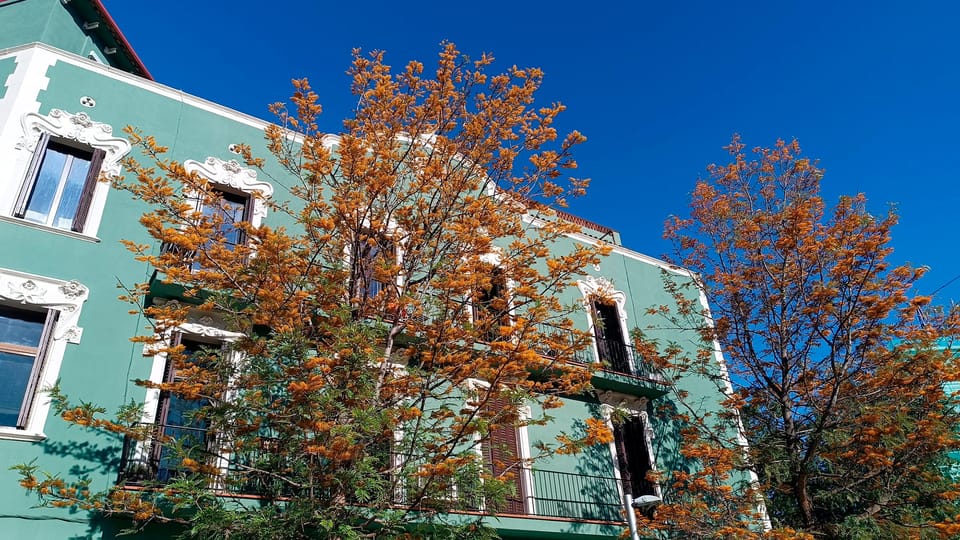
Barcelona's streets are currently displaying the striking yellow blooms of the Australian silky oak, a non-native tree species increasingly prominent across the city. From mid-May to mid-June, these large evergreen trees, known as Grevillea robusta, add a distinctive golden hue to various districts.
The Australian Silky Oak's Characteristics
The Australian silky oak, despite its common name, is not related to the native oaks of the Quercus genus. It originates from southeast Australia. This foreign tree thrives in Barcelona's climate, tolerating drought and moderate cold down to -8 °C. City planners use it widely in urban gardening due to its abundant yellow flowers and dense shade. Its distinctive tubular flowers, golden with reddish tones, group into brush-like inflorescences measuring 12 to 18 centimetres long. These upward-facing flowers produce significant nectar, attracting bees. However, only trees over ten years old flower profusely.
These trees are substantial, reaching 18 to 35 metres in height within Barcelona. They can grow up to 50 metres in their native Australia. Their large, compound leaves resemble ferns, with a silvery-green underside due to fine hairs. This characteristic gives them a distinctive silvery-green hue. The tree's wood is also valuable. It resists moisture and rot, making it suitable for musical instruments, including guitars. Its dry, arc-shaped black fruits, up to two centimetres long with a fine curved hook, open in winter. They then release one or two winged seeds, which the wind disperses.
Growing Presence in Barcelona's Green Spaces
Barcelona features several notable Australian silky oaks. A catalogued specimen on Via Augusta, planted in 1914, stands 17 metres tall. This tree is a significant example of the species' longevity in the city. Other examples line Carrer de Badajoz, Carrer de Bilbao, Carrer de Tànger, and Carrer del Clot. These alignments contribute to the green infrastructure of their respective neighbourhoods. Residents can also find them along Avinguda de Vallcarca and Carrer del Marroc in the Les Corts district. Additionally, the Jardins dels Drets Humans in the Sants-Montjuïc district hosts more of these trees, providing shade and visual interest.
The increasing presence of the Australian silky oak reflects Barcelona's ongoing efforts in urban greening. As the city adapts to changing climate conditions, this resilient and visually appealing tree offers a strong option for public spaces. Its continued growth enhances the city's diverse flora and provides ecological benefits for local insect populations, particularly bees.
Sign up for our new entrepreneurs community Bizcelona, now accepting our second wave of applicants.
Originally published by betevé. Read original article.